What $5B–$10B in XRP ETF Assets Would Do to Liquidity, Price Discovery and Adoption
Summary
Executive summary
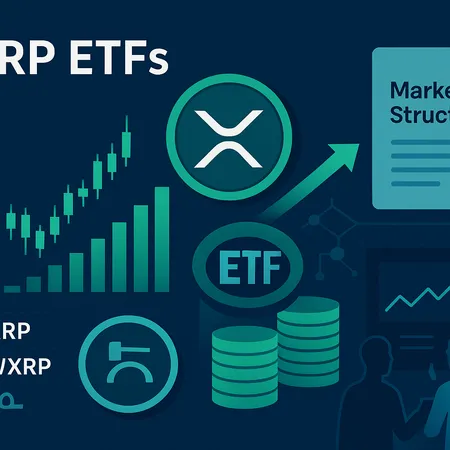
A continuous streak of daily net inflows into spot‑XRP ETFs has moved the conversation from theoretical to tactical. This article examines what those inflows mean for liquidity and price discovery, how the Cboe approval of the 21Shares XR ticker channels institutional and retail capital, and what could change if ETF assets scale between $5 billion and $10 billion. We then map scenarios for market structure, on‑chain activity (including wrapped exposures such as WXRP), regulatory catalysts like the Market Structure Bill, and practical sizing guidance for traders and ETF‑focused allocators.
Why the recent inflow streak matters
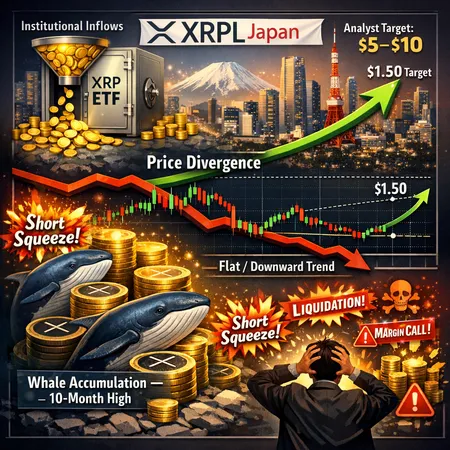
The last several weeks have seen a persistent stream of positive daily net flows into spot‑XRP ETF products, documented in the press and market notes as a behavioral shift from episodic buying to steady subscription. CoinTelegraph highlights this trend, noting the continued streak of positive spot‑XRP ETF flows and daily inflow data that traders are watching closely (CoinTelegraph).
Steady inflows matter because they alter the microstructure of the market. Instead of one‑off liquidity shocks from large buyers, ETFs provide a predictable, recurring bid. That pattern changes how market makers place inventory, how exchanges price risk, and how derivatives desks hedge. Over time, consistent ETF demand becomes a base‑load of liquidity rather than an occasional surge.
How a Cboe‑listed 21Shares XRP ETF channels demand
The recent Cboe approval of a 21Shares XRP ticker is a structural inflection: it gives institutional allocators and retail brokers a regulated vehicle to gain XRP exposure without custody complexity (CoinPaper). Mechanically, ETFs channel demand in two linked ways:
- Primary creation/redemption: Authorized participants (APs) assemble or dismantle ETF shares by delivering or receiving the underlying asset (or cash). That process directly converts off‑book demand into on‑book supply or vice versa, stabilizing premium/discount dynamics.
- Secondary market access: Retail investors buy ETF shares on traditional exchanges. Those orders are fungible and large, bringing institutional order flow and broker routing into what was once a niche crypto market.
Because the 21Shares vehicle trades on Cboe, a mainstream U.S. exchange, it reduces frictions for risk‑off institutional buyers and passive ETFs, expanding the potential buyer base beyond crypto‑native venues.
ETF inflows → liquidity & price discovery: the transmission mechanism
When ETF inflows are sustained, three effects compound:
- On‑book liquidity improvement. APs and market makers add XRP to inventories to support creation/redemption. That activity increases displayed depth on order books and narrows spreads.
- Improved price discovery. ETF flows align OTC, spot and derivatives desks; arbitrage between ETF NAV and underlying spot drives tighter cross‑market linkage, making the ETF price a reference point for valuation.
- Shift in volatility structure. Short‑term volatility may compress as an institutional bid anchors prices, but sudden stop flows can create outsized reversals if the ETF becomes a material liquidity sink.
These transmission channels also make derivatives hedging more durable. If an AP receives large ETF creations, they may hedge by buying underlying XRP or using futures — both actions reinforce market prices.
What $5B in ETF assets likely does: conservative scenario
If ETFs collectively reach roughly $5B AUM in XRP exposure, expect incremental but meaningful changes:
- Order book depth increases materially on major spot venues. Spreads compress especially during U.S. hours when ETF activity concentrates.
- Institutional desks treat ETF flows as a predictable component of dealer inventory management. That reduces slippage for large block trades.
- On‑chain settlement may pick up modestly as APs and custodians rotate assets between vaults and exchanges; wrapped variants like WXRP could see more usage as liquidity providers seek programmatic exposure to ETF‑driven flows.
- Price discovery improves across regions; ETF NAV arbitrage reduces persistent dislocations between U.S. trading and offshore venues.
This is the scenario where ETFs are an important demand source but not yet dominant; ETFs complement, rather than replace, spot exchange liquidity.
What $10B in ETF assets could do: an amplified regime
Scaling toward $10B pivots XRP into a different league. CoinPedia analyzes macro outcomes should XRP ETFs reach that size and highlights the potential for large structural shifts in demand behavior (CoinPedia). Key implications:
- Market‑making becomes institutionalized. Dedicated desks and APs build XRP inventories sized to ETF flows. That creates deeper, more resilient displayed liquidity, but also concentrates counterparty exposure in a few market makers.
- ETF flows dominate short‑term price moves. With $10B in AUM, daily inflows/outflows could meaningfully move prices, making ETF flows a primary driver of intraday price discovery.
- Stronger link between off‑chain ETF demand and on‑chain settlement. As ETF creation/redemption volumes rise, custodial operations and cross‑custody settlement will increase on ledgers that support XRP settlement. Bridged liquidity (e.g., into SOL or other ecosystems for DeFi activity) could expand, raising total on‑chain activity.
- Greater derivative market depth and potential systemic interactions. Futures and options desks will scale exposure, improving hedging but also increasing the systemic footprint of XRP market risk.
In short, $10B could make ETF flows a dominant and durable source of demand — but it would also concentrate where liquidity lives and who controls it.
Regulatory and market‑structure catalysts: Market Structure Bill and beyond
Two regulatory threads are particularly relevant:
- The Market Structure Bill and related U.S. policy shifts. Coverage from FXEmpire ties recent positive price action and ETF optimism to moves like the Market Structure Bill, which could change exchange access, clearing mechanics, or custody rules and thereby amplify ETF effects (FXEmpire). If the Bill lowers frictions for crypto‑adjacent ETFs or clarifies custody frameworks, that increases institutional comfort and accelerates AUM growth.
- Ongoing ETF approvals and exchange venues. Wider listing across regulated exchanges increases distribution; Cboe’s early approval for 21Shares is the first step but not the last. Greater distribution reduces concentration risks and improves the ETF’s role as a price discovery hub.
Regulatory clarity tends to amplify ETF demand. Ambiguity, conversely, can produce flight risk: sudden policy shifts could force redemptions or throttle custodial flows, exposing concentrated positions.
On‑chain activity, wrapped exposures and DeFi interplay
As ETF AUM grows, expect nuanced changes in on‑chain metrics:
- Transfers between custodians and exchanges will rise. APs move XRP for creation/redemption; that shows up as increased custody transfers and settlement events.
- Wrapped tokens and cross‑chain liquidity may expand. Products like WXRP (wrapped representations or tokenized claims on underlying ETF exposure) can appear to serve DeFi yield strategies. That intertwines ETF demand with DeFi liquidity pools and lending markets — potentially amplifying leverage cycles.
- Bridging to other chains (SOL, etc.) could increase. Traders and protocols may bridge XRP liquidity into networks like SOL to capture yield or enable programmatic market‑making.
These flows increase the total addressable liquidity for XRP but also introduce new counterparty and smart‑contract risks that ETF investors should monitor closely. For DeFi‑adjacent allocation decisions, see activity on DeFi platforms where wrapped or tokenized ETF exposure could surface.
Risks and failure modes investors must watch
ETF inflows are powerful, but not risk‑free. Key risks:
- Concentration risk. If a handful of APs or custodians hold most of the ETF‑sourced XRP, operational glitches (custody outages, settlement fails) could trigger outsized market moves.
- Liquidity cliff. A persistent inflow makes market makers comfortable holding inventory. A sudden reversal could expose thin liquidity and cause larger price dislocations than before ETFs existed.
- Regulatory shock. New rules, delisting risk, or policy reversals could freeze distribution channels and force rapid deleveraging.
- DeFi coupling. Tokenized/wrapped ETF exposure in DeFi pools can create synthetic leverage. A market shock that forces liquidations in those pools could feed back into spot markets.
Hedging, position sizing and monitoring of AP behavior and custodial flows become essential risk‑management practices for investors sizing exposure.
How to think about sizing exposure
For investors and ETF‑focused analysts assessing whether XRP ETFs are a durable demand source, consider a three‑layer approach:
- Baseline allocation (core). Small, permanent allocation that assumes ETFs will provide steady, long‑term demand. This layer reflects belief in the structural adoption story and is appropriate for allocators comfortable with medium‑term volatility.
- Tactical allocation (satellite). Size relative to expected AUM growth. If flows are trending toward $5B, incremental sizing is reasonable; if growth appears to accelerate to $10B, a larger tactical overweight may be justified — but capped to limit concentration and regulatory risk.
- Risk overlay (hedge/trades). Use derivatives or dynamic hedges to protect against liquidity cliffs and regulatory shocks. Monitor AP inventories, ETF NAV premiums, and custody flow data daily.
Practically, institutional allocators often peg exposure not to market cap but to projected ETF share of daily volume and their own risk budgets. Retail investors should be conscious that ETF listing reduces custody friction but does not eliminate market or regulatory risk.
Final takeaways for investors and analysts
- The recent streak of daily net inflows into spot‑XRP ETFs represents a meaningful change in how demand is sourced and routed. CoinTelegraph and other outlets have documented this persistent flow pattern, which is worth monitoring as a leading indicator of market regime change.
- Cboe listing of the 21Shares XR ticker is a distributional milestone: it converts a broader investor base into potential buyers and strengthens ETF mechanics as a channel for price discovery (CoinPaper).
- At ~$5B AUM the market sees consistent liquidity improvements; at ~$10B the ETF could become a dominant price driver, with deeper institutional market‑making but also concentration and systemic considerations. CoinPedia explores these macro scenarios in more detail (CoinPedia).
- Regulatory initiatives such as the Market Structure Bill can either accelerate or constrain ETF impact. Coverage linking policy optimism to recent price action provides context for how quickly capital might rotate in or out (FXEmpire).
For traders weighing exposure, the practical path is to size allocations relative to projected ETF AUM, keep a vigilant eye on AP/custodial flows, and use hedges to protect against liquidity cliffs. Platforms that provide ETF access and fiat rails, including custodial services like Bitlet.app, will play an operational role in how smoothly this transition unfolds.
Sources
- Swift/XRP ETF and Cboe approval coverage — CoinPaper: https://coinpaper.com/13093/swift-is-building-a-blockchain-ledger-could-xrp-ledger-be-at-the-center?utm_source=snapi
- Daily inflow streak reporting — CoinTelegraph: https://cointelegraph.com/news/xrp-bulls-gainig-ground-over-the-bears-on-social-media?utm_source=rss_feed&utm_medium=rss&utm_campaign=rss_partner_inbound
- Macro analysis on $10B XRP ETF AUM — CoinPedia: https://coinpedia.org/news/heres-what-could-happen-if-xrp-etfs-reach-10-billion/
- Market Structure Bill and ETF flow context — FXEmpire: https://www.fxempire.com/forecasts/article/xrp-news-today-xrp-steadies-above-2-on-etf-and-policy-optimism-1567357