Japan's FSA Embraces Stablecoins: Impact on Crypto Adoption and Investors
Published at 2025-11-08 18:16:58
Japan's FSA Embraces Stablecoins: Impact on Crypto Adoption and Investors – cover image

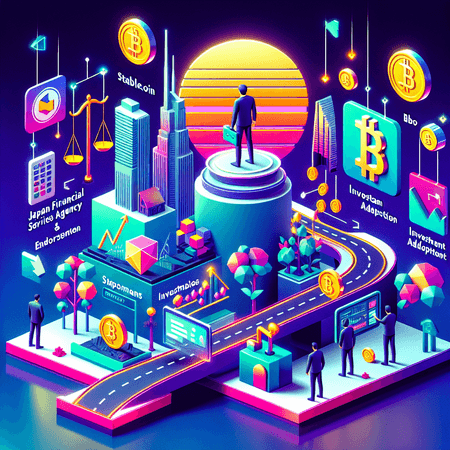
Japan's Financial Services Agency (FSA) has taken a significant step by officially embracing stablecoins, highlighting the country's growing openness towards digital currencies. This endorsement by the regulatory body is expected to boost confidence among investors and encourage wider crypto adoption within Japan and beyond.

Stablecoins, digital currencies pegged to stable assets like the US dollar, offer price stability compared to volatile cryptocurrencies like Bitcoin and Ethereum. With the FSA's support, stablecoins can now be integrated more confidently into financial systems and products.

For investors, this development offers new avenues to diversify crypto portfolios while managing risk. It also opens the door for innovative financial solutions and services centered around stablecoins.

One such innovation is provided by platforms like Bitlet.app, which offers a Crypto Installment service allowing investors to buy cryptocurrencies immediately but pay in monthly installments. This lowers the barrier to entry for many users looking to engage with the crypto market, aligning well with the increasing regulatory clarity in regions like Japan.

Overall, Japan's stance on stablecoins is a promising indicator of crypto's future, suggesting more regulated integration and mainstream acceptance. For investors and enthusiasts, keeping an eye on such developments and leveraging services from platforms like Bitlet.app can lead to smarter and more flexible crypto investment strategies.
Share on:

Related posts

Why Solana Is the Preferred On‑Chain Infrastructure for Stablecoins and Tokenization in 2026 – cover image
Why Solana Is the Preferred On‑Chain Infrastructure for Stablecoins and Tokenization in 2026

Solana’s combination of high throughput, sub‑cent fees, and recent upticks in on‑chain activity make it a strong candidate for USD stablecoin issuance and tokenization rails in 2026. Product and treasury teams should weigh technical advantages against regulatory, custody, and market risks before choosing Solana for high‑volume payment rails.

Stablecoins as Native Brokerage Rails: USDC, RLUSD, PYUSD and the 24/7 Funding Shift – cover image
Stablecoins as Native Brokerage Rails: USDC, RLUSD, PYUSD and the 24/7 Funding Shift

Stablecoins are moving from crypto-native use cases into core brokerage rails, enabling 24/7 funding and faster on‑chain settlement. This feature analyzes recent integrations—Interactive Brokers' USDC rollout, LMAX Group's RLUSD partnership, and new entrants like ctUSD—and what they mean for custody, settlement, risk and regulation.

Published at 2026-01-16 13:04:42
USD1 and Bitcoin Credit: Remittance Experiments in Pakistan and Argentina – cover image
USD1 and Bitcoin Credit: Remittance Experiments in Pakistan and Argentina

Two divergent experiments — Pakistan’s USD1 stablecoin partnership and Argentina’s grassroots bitcoin-credit movement — reveal how emerging markets test payments solutions under high inflation. These cases highlight trade-offs between regulatory control, on-ramps, and practical remittance needs for product teams and policymakers.