Avalanche

A six‑month onchain tally shows roughly $180M in AVAX moved to Coinbase — a signal many interpret as selling, but onchain context matters. This article gives traders and onchain analysts a framework to distinguish custody onboarding from distribution, and practical monitoring and risk‑management steps.
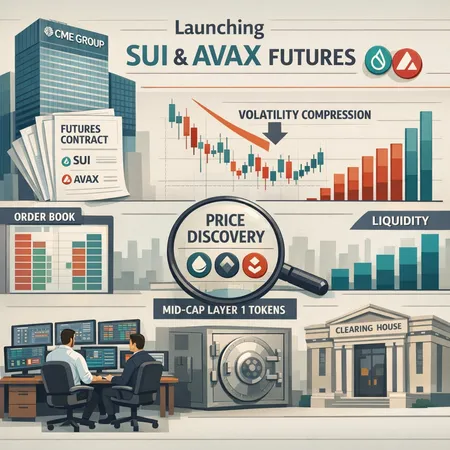
CME’s decision to list SUI and AVAX futures marks a meaningful step in the institutionalization of mid‑cap layer‑1 tokens. This explainer assesses how futures listings change liquidity, compress volatility, improve price discovery, and what practical hedged trade ideas institutions can use.
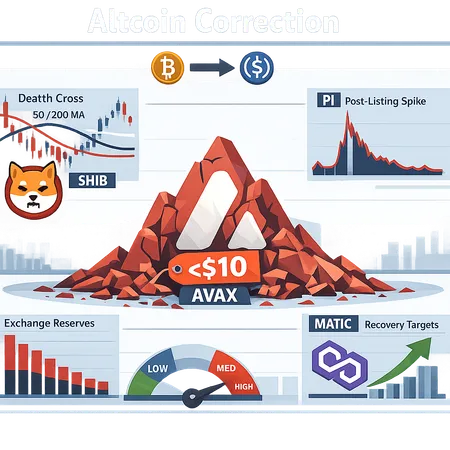
A tactical diagnosis of the recent altcoin sell-off: why Avalanche plunged under $10, Shiba Inu formed a death cross, and PI lost post‑listing gains — with recovery targets and a trader framework to separate washouts from structural breaks.
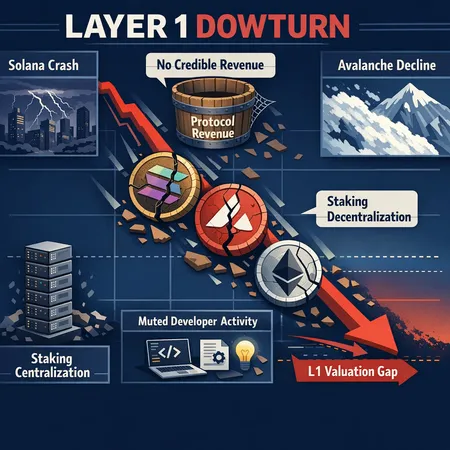
In 2025 major Layer‑1 tokens like SOL and AVAX plunged as market expectations collided with weak protocol revenue and growing centralization risks. This post‑mortem explains what broke, with a practical investor framework to separate durable L1s from hype.
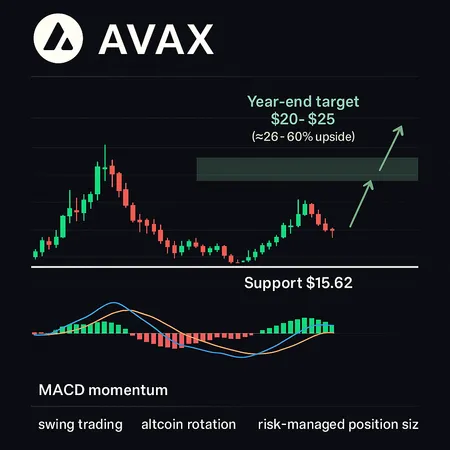
A practical breakdown of AVAX’s near-term bullish thesis: why a MACD-driven breakout could lift price into a $20–$25 range, and how swing traders should size positions and place stops around the ~$15.62 support. Includes scenario math (28–60% upside), relative strength vs other L1s, and concrete risk rules.

Sierra Protocol introduces SIERRA, a Liquid Yield Token (LYT) on Avalanche that accrues yield instantly without staking delays. This feature explores SIERRA’s mechanics, contrasts with liquid staking derivatives and CeFi yield, and outlines benefits, risks, and institutional adoption paths for AVAX DeFi and stablecoin pools.
DeFi
All DeFi postsBitcoin
All Bitcoin postsDerivatives
All Derivatives posts- Uncovering XRP’s Hidden Bull Case: Futures Surge, Ichimoku Flip, Reserve Decline and Institutional Signals
- Privacy‑Coin Resurgence: Why ZEC, XMR, DASH and DCR Ripped Higher in April 2026 — Risks & Trade Rules
- XRP’s Quiet Buildup: Do Derivatives, On‑Chain Flows and Ledger Resilience Signal a Real Breakout?