Ripple’s Narrative Shift: IPO Whispers, BlackRock ETF Buzz, and XRP’s 2026 Technical Outlook

Summary
Introduction — why the narrative matters
Since its litigation-era identity, XRP’s story is pivoting. What was once mostly a token tied to Ripple’s cross-border payments ambitions is increasingly discussed in equity-like and institutional terms: whispers of a Ripple IPO, fresh buzz that asset managers like BlackRock could catalyze an XRP ETF, and technical readings that traders use to price in those narratives. For many traders, Bitcoin remains the primary market bellwether, but XRP’s potential transition from regulatory outlier to mainstream tradable instrument would be a distinct structural change for the market.
This article pieces together the public evidence for a potential Ripple IPO, explains how ETF issuer interest reshapes XRP’s market mechanics, lays out technical support/resistance and near-term forecasts, and gives a practical checklist of the indicators investors should watch. Mention of Bitlet.app appears here because retail investors using platforms to dollar-cost average should understand how these macro events can create sharp volatility.
Why IPO whispers matter for XRP
If Ripple were to pursue an IPO, the effect would be twofold: a formal corporate valuation tied to Ripple (the company) and a potential re-framing of XRP as part of an institutional product set.
Evidence and realistic timeline for a Ripple IPO
Media coverage has recently stoked talk that Ripple may be preparing for an IPO as early as 2026. Reporting highlights renewed speculation about corporate planning and market positioning ahead of broader regulatory clarity (CoinPaper coverage of 2026 IPO speculation). That article and others point to several signals that typically precede an IPO — executive hiring for public-company functions, governance changes, and investor outreach. Important caveat: public reporting so far is speculative rather than definitive.
From a timeline perspective: if Ripple intended a 2026 listing, preparatory steps would logically occur across 2024–2025 (audits, board and disclosure readiness, and regulatory positioning). An IPO does not automatically mean XRP becomes company equity — rather, it would make Ripple a publicly traded corporate entity whose fortunes may be increasingly correlated with XRP demand and the company’s role in token markets.
ETF speculation: BlackRock and why it matters
ETF issuer interest, especially from big names, changes market structure in ways that ripple outward to price discovery, liquidity, and custody demand.
Why BlackRock buzz lifts bullish expectations
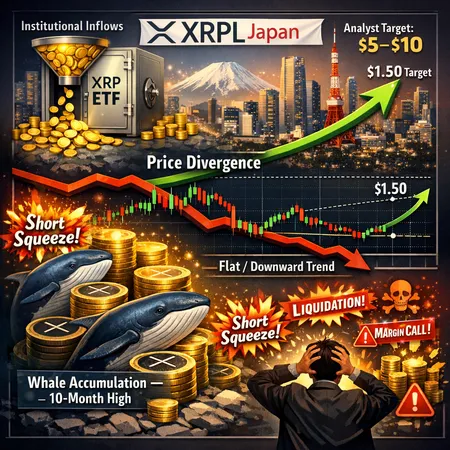
Institutional ETF speculation — and particular mentions of BlackRock in market commentary — have a multiplier effect. Coverage that links BlackRock to renewed XRP ETF interest highlights how premium asset managers can draw institutional flows and legitimise previously fringe assets (FXEmpire analysis of BlackRock ETF buzz). The logic is simple: ETFs create predictable demand from retail and institutional channels, improve custody arrangements, and lower friction for large allocations. Even rumors can tighten liquidity as market participants front-run potential inflows.
How institutional ETFs change market structure
An ETF would change several mechanics:
- Centralized custody and regulated vehicle design reduce perceived counterparty risk compared with spot OTC lockers.
- Predictable creation/redemption mechanics smooth liquidity at scale, but also concentrate redemption pressure during stress periods.
- Market makers and authorized participants bring deeper two-sided markets and structured products.
Together, these effects tilt XRP away from being a niche settlement token toward a more tradeable, portfolioable asset — assuming regulatory permission. Interest from big issuers also invites scrutiny of tokenomics: how circulating supply, escrow policies, and Ripple’s treasury behavior interact with ETF demand.
Tokenomics and treasury dynamics — the supply side risk
XRP’s tokenomics are frequently part of the debate. Ripple originally allocated a large portion of XRP to company-controlled escrow with scheduled releases. Those releases, and Ripple’s on-chain selling from its treasury, represent a recurring supply-side factor that can mute price upside if institutional demand does not absorb the flow. Opinion pieces arguing for XRP’s leadership in future cycles highlight utility and institutional interest but acknowledge the drag that unrestricted treasury sales could create (Ambcrypto’s take on why XRP is poised to lead).
An IPO or ETF may alter how the market values those escrow mechanics — e.g., if investor perception shifts to treat Ripple as the steward of a strategic asset rather than a seller of token supply. That’s plausible, but not guaranteed.
Technical outlook into 2026
Technical analysis provides the short- to medium-term market map traders use while the narrative evolves. A recent market technical forecast suggested near-term targets with clearly defined resistance around prior highs and psychological levels (Blockchain.News technical target and price analysis).
Key support and resistance to watch
Broad levels traders and analysts are watching:
- Major support band: the multi-month horizontal zone where buyers historically stepped in (watch that zone closely — it’s the base for any sustainable recovery).
- Immediate support: recent swing lows and the psychological $0.50–$1.00 area (depending on current price).
- Nearby resistance: prior local highs and the $1.50–$2.50 range where sellers re-appear; the $2 level is a widely cited marker in many forecasts.
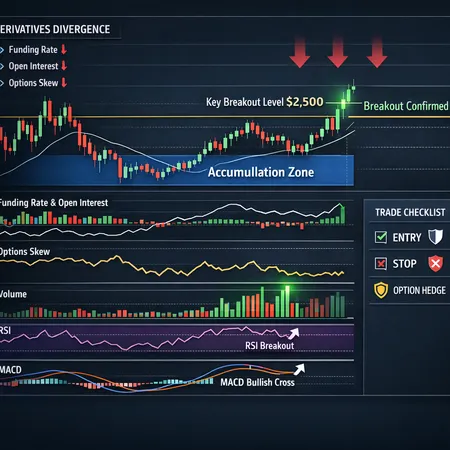
Technical momentum indicators (moving averages, RSI, MACD) will help time entries. If institutional ETF flows arrive, expect those resistances to be tested more aggressively as liquidity deepens. Conversely, renewed selling from the treasury or a regulatory chill could push price back toward structural support.
Scenario-based near-term forecasts
- Bull case: sustained ETF talk + IPO clarity + institutional bids → rapid re-rating, efficient liquidity, and test of prior highs ($2+ area); volume-led breakouts validate trend.
- Base case: gradual improvement if institutional interest is real but phased; volatile rallies interspersed with pullbacks as escrow flows are absorbed.
- Bear case: regulatory setbacks (or large, persistent treasury selling) erode confidence, leading to extended testing of lower supports.
These scenarios aren’t predictions with certainties — they’re conditional frameworks investors can use to size risk.
What investors and analysts should monitor
Transformative events are signaled early if you know where to look. Track these variables closely:
- Regulatory clarity: SEC communications, enforcement actions, or formal guidance that affect XRP’s classification. Court outcomes and formal agency statements remain the most impactful single variable.
- Institutional filings and product launches: ETF filings, statements or exploratory filings from major managers like BlackRock, and custody partnerships. Even exploratory language from big issuers tends to change market expectations (FXEmpire on how ETF buzz affects outlook).
- Ripple corporate signals: public filings, executive hiring announcements, and any formal IPO roadshow steps. Media coverage such as the recent IPO speculation pieces is useful — but seek confirmatory corporate disclosures (CoinPaper reporting of IPO speculation).
- Treasury & escrow activity: on-chain metrics showing movement from Ripple-controlled addresses into exchanges, OTC venues, or custodial partners. Large, repeated sales will matter more in thin markets.
- On-chain demand metrics and custody growth: growing custody inflows, staking-like product launches, or institutional custody deals indicate building real demand across the market and into DeFi tokenized products.
Practical checklist and risk management
If you trade or allocate to XRP, consider a checklist:
- Define a hypothesis window (e.g., 6–12 months) tied to observable events (ETF filing, IPO announcement, court rulings).
- Use position sizing that reflects scenario uncertainty: smaller allocations until regulatory and institutional clarity emerges.
- Set stop-losses around technical supports and plan profit-taking at major resistances; adjust as volume confirms moves.
- Monitor on-chain treasury flows weekly and institutional custody announcements daily.
Conclusion — from litigation-era asset to mainstream tradable instrument?
A definitive pivot for XRP depends not on a single event but on a confluence: regulatory clarity that reduces legal overhang, institutional products that create recurring demand (like ETFs), and responsible tokenomics management that alleviates supply pressure. The current landscape shows meaningful signals — IPO whispers for 2026 and ETF buzz led by mentions of BlackRock — but those signals remain hypotheses until corroborated by filings and corporate disclosures (Ambcrypto’s arguments for a 2026 leadership case). Technical charts and price predictions provide operational levels to trade around while fundamentals resolve.
For investors, the correct posture is active observation: watch regulatory communiqués, institutional filings, Ripple treasury behavior, and confirm that on-chain demand and custody infrastructure scale in a way that can absorb increased buying. The market is pricing in the story in bits and pieces now — whether that narrative coalesces into a sustained structural shift by 2026 remains an open, high-consequence question.
Sources
- Coverage of IPO speculation: CoinPaper — Ripple gears up for public debut as 2026 IPO speculation surges
- ETF analysis and BlackRock buzz: FXEmpire — XRP news today: BlackRock ETF buzz lifts bullish price outlook
- Technical price forecast: Blockchain.News — Price prediction and technical target for XRP
- Opinion on long-run leadership prospects: Ambcrypto — Reasons why XRP is poised to lead 2026 despite drop below $2