What $545M+ Outflows from US Spot BTC ETFs Mean as Bitcoin Tests $70K

Summary
Executive snapshot
As BTC tested the $70,000 area, US spot Bitcoin ETFs recorded more than $545 million in daily outflows — a meaningful drainage of institutional liquidity that coincided with a brutal liquidation wave and signs of miner stress. For many market participants the combination of ETF redemptions, institutional campaign selling and on-chain bearish signals turned a routine pullback into a sharper correction. This analysis walks through the drivers, what the chain and miner metrics are telling us, how leverage amplified the move, and practical trade and portfolio responses for intermediate traders and allocators.
Immediate drivers: ETF redemptions, institutional selling and sovereign flows
The most visible headline was the large daily ETF outflow: reports counted roughly $545M+ drawn from US spot Bitcoin ETFs as BTC neared $70k [Cointelegraph]. Independent market trackers confirmed the scale, noting that aggregate ETF flows can flip from inflows to sizable outflows very quickly and that redemption mechanics create direct selling pressure into the market (Invezz).
Why does ETF outflow matter? When a spot ETF sees net redemptions, authorized participants generally sell underlying BTC to meet redemptions or source liquidity, which injects supply straight into the spot order books. That selling is particularly potent when combined with programmatic institutional rebalancing or a short-term campaign of risk-off selling from large allocators.
Add to that potential sovereign or treasury moves (some public and private investors rebalance treasuries and reserves during periods of higher fiat yields or geopolitical stress). These actors can be large, non-price sensitive sellers that exacerbate any technical weakness.
On-chain signals: are bears actually in control?
On-chain analytics started flashing caution signs as price undercut support levels. Glassnode-style indicators cited in market commentary showed metrics consistent with weakening demand and increased supply on exchanges, signaling that bears were gaining control as BTC slid toward $70k [Coinpedia — Glassnode].
Key on-chain points to watch now:
- Exchange inflows: elevated inflows into centralized exchanges suggest more coins available for sale rather than long-term off-chain custody.
- Realized price and net position change: when realized price trends flatten or fall while market price declines, newer units are underwater and selling pressure increases.
- Spent outputs and age distribution: a rise in short-term coin movement (coins younger than 1 year) typically aligns with capitulation phases.
These signals don't guarantee a new bear market, but they do indicate increased downside risk in the near term. Traders should weigh these indicators alongside macro liquidity and ETF flow data.
Miner and production-cost stress: fundamentals under pressure
Miners are a cyclical liquidity provider but become forced sellers when economics deteriorate. Recent reporting highlighted miners are under stress as BTC traded roughly 20% below estimated production cost, tightening margins and increasing the likelihood of miner sell-side pressure to meet operating costs or deleveraging needs (CoinDesk).
Why miner stress matters:
- Miners sell to pay electricity, service debt, and maintain rigs. Collective selling can increase supply pressure, especially if major pools or publicly traded miners raise cash.
- When BTC is below a sector’s average breakeven, miner behavior shifts from hodling to active selling, which can lengthen or deepen corrections.
Pair miner stress with ETF redemptions and institutional selling and you get a one-two punch: two different classes of sellers acting at the same time increases the market’s vulnerability to price cascades.
Liquidations and leveraged positions: how momentum amplified the drop
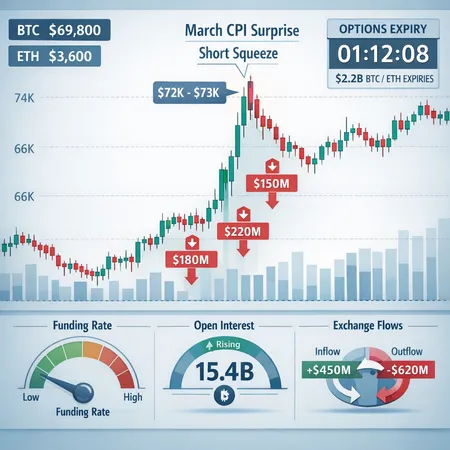
Margin and derivatives leverage are the shock accelerant. Recent market structure reports pointed to a $700M+ liquidation wave across BTC, ETH and other altcoins as positions were force-closed during the sell-off (Coinpedia — Liquidations).
Mechanism in brief:
- ETF redemptions and sell-side flow push price lower into key derivatives support levels.
- Liquidations of long futures and perpetual swaps cause automated deleveraging, which requires further market selling as exchanges offset exposure.
- That additional market selling feeds into spot, creating a feedback loop before liquidity providers step in.
This explains why a flow event (ETF redemptions) can produce outsized price moves when leveraged positioning is high. Traders should always check funding rates, open interest and aggregated liquidation heatmaps before committing new risk.
Pragmatic trade and portfolio scenarios for intermediate traders and allocators
Below are actionable frameworks and guardrails that intermediate traders and allocators can use to navigate ETF-driven volatility.
1) Position sizing and risk limits
- Core-satellite approach: keep a core allocation (e.g., 40–70% of crypto exposure) in long-term holdings sized to conviction and risk tolerance; allocate the satellite portion for opportunistic trading.
- Per-trade risk: limit downside risk to 1–3% of total capital per trade. That means pre-defining stop-loss levels and position sizes such that a stop triggers within that risk budget.
- Volatility-adjusted sizing: use ATR or historical realized vol to scale sizes; higher volatility → smaller exposure.
2) Hedging tools and when to use them
- Futures: shorting targeted future contracts or using inverse ETFs can hedge spot exposures quickly. Keep tenor short to avoid decay risk for long hedges.
- Options collars: buy put protection and sell calls to reduce hedging cost if willing to cap upside. Collars are attractive for allocators wanting capital preservation without exiting exposure.
- Structured rebalancing: for larger allocators, ladder hedges (staggered expiries/strikes) reduce timing risk when flows are uncertain.
3) Re-entry criteria and signals to watch
Avoid binary timing. Favor rule-based re-entry such as:
- On-chain confirmation: sustained drop in exchange inflows and a reversal in net position change across wallet cohorts.
- Price structure: hold until reclaim of a defined technical level (e.g., reclaiming the 21–50 day EMA or a specific liquidity zone) on increased volume.
- Macro & flow alignment: ETF flows returning to net inflows or neutral, and funding rates stabilizing, reduce the odds of immediate re-liquidity events.
Example re-entry plan for a satellite trade: scale back into position in 3 tranches — 40% at first signal (reduced exchange inflows), 30% at price reclaim of the 21-day EMA, 30% on sustained net ETF inflows.
4) Stress-test your portfolio
- Scenario analysis: model drawdowns given 20–30% BTC moves and correlate with other holdings like ETH or altcoin exposures (memecoins, NFTs, DeFi-linked tokens).
- Liquidity needs: ensure reserve fiat/cash to meet margin calls or redemptions without forced selling under duress.
Tactical checklist for the next 7–30 days
- Monitor ETF fund flows daily — outflows of hundreds of millions can persist and alter market structure. See flow reports such as the recent coverage from Cointelegraph and Invezz.
- Watch miner behavior and production-cost commentary — miners under stress are likely sellers (CoinDesk).
- Keep an eye on liquidation heatmaps and open interest — sudden spikes point to vulnerability in the derivatives plumbing (Coinpedia liquidation report).
Framing for allocators: long-term conviction vs. short-term flow risk
For institutional allocators, the current environment is a reminder that market structure (ETF mechanics, miner economics, derivatives leverage) can temporarily dislocate spot price from long-term fundamentals. A sensible approach is to blend conviction with liquidity and hedges: maintain core allocations sized to strategic thesis, use derivatives for short-term volatility control, and keep a rebalance plan that accounts for ETF-era liquidity dynamics.
If you trade or manage crypto allocations, incorporate these insights into position sizing and rebalancing rules. Tools like limit orders, staged re-entry and options collars can help manage risk without losing long-term exposure.
Closing thoughts
ETF outflows of the magnitude reported are not trivial: they create direct sell pressure, interact with miner economics and can cascade through leveraged markets. None of this proves a structural bear market by itself, but it raises the odds of a deeper short-term correction. Combine flow monitoring, on-chain indicators and miner data with disciplined risk management to navigate these episodes. For a practical platform view and tools to manage positions and hedges, platforms such as Bitlet.app provide integrated options for installment and P2P adjustments as you execute your plan.
Sources
- Cointelegraph — Bitcoin ETF $545M outflows: https://cointelegraph.com/news/bitcoin-etf-545-million-outflows-btc-nears-70k?utm_source=rss_feed&utm_medium=rss&utm_campaign=rss_partner_inbound
- Invezz — BTC ETFs see over $500M in outflows: https://invezz.com/news/2026/02/05/btc-etfs-see-over-500m-in-outflows-as-bitcoin-struggles-to-stay-above-71k/?utm_source=snapi
- Coinpedia — Crypto liquidations top $700M: https://coinpedia.org/price-analysis/crypto-liquidations-top-700m-as-bitcoin-ethereum-and-altcoins-extend-selloff/
- Coinpedia — Glassnode says bears in control: https://coinpedia.org/price-analysis/bitcoin-price-slides-to-70000-as-glassnode-says-btc-bears-are-in-control-50000-at-risk/
- CoinDesk — Miner stress & production cost: https://www.coindesk.com/markets/2026/02/05/bitcoin-trades-20-below-its-production-cost-as-miner-stress-intensifies
For context on Bitcoin narratives and market mechanics, many traders also follow on-chain and derivatives dashboards and research on Bitcoin and DeFi.