How ETF Design and Flows Are Rewiring Institutional Bitcoin Demand

Summary
Thesis: ETF mechanics are changing where Bitcoin demand comes from
The rise of U.S. spot Bitcoin ETFs turned a previously fragmented institutional pathway into a cleaner, on‑ramp. But not all flows are equal: product architecture, options plumbing, and policy developments now shape whether inflows translate into lasting spot demand or temporary paper adjustments. This article unpacks why recent ETF outflows may actually signal a short‑term bottom, what Nasdaq’s options rule change means for derivatives liquidity, and how product innovation — like Bitwise’s bitcoin+gold offering — plus state plays such as the Kansas Bitcoin Reserve can rewire institutional demand for BTC.
For many traders, Bitcoin remains the primary market bellwether; understanding the ETF plumbing around it is now essential for institutional allocators and crypto‑savvy retail.
1) ETF flow data: why outflows can mark a local bottom
Large headline outflows from U.S. spot Bitcoin ETFs are alarming in isolation, but context matters. Recent reporting shows this week’s outflows were the largest since November — sizeable, yes, but not unprecedented — and some analysts interpret them as a contrarian signal that a local bottom is near rather than the start of a prolonged sell cycle (CoinDesk).
Why might outflows be a bottom signal? There are three mechanics to keep in mind:
- Rebalancing and tax fencing: ETFs experience tactical outflows around quarter‑end, tax windows, or rebalancing that do not equate to permanent liquidation of the underlying asset. Large sellers in the ETF wrapper often come from tactical portfolios rather than strategic holders.
- Market makers and authorized participants (APs): APs can absorb redemption pressure intraday and convert ETF shares back to spot through creation/redemption channels. When outflows spike, APs and liquidity providers can short the ETF and hedge in the spot market, temporarily pressuring price, but that hedging flow often flips when those short positions are covered.
- Mean‑reversion of flow cycles: Historically, sharp outflows from ETF products can exhaust short‑term sellers and set the stage for fresh strategic buying — particularly from allocators waiting for better marks to enter.
Put together, the flow episode documented by CoinDesk looks like a tactical shakeout more than structural capitulation. That doesn’t guarantee a V‑shaped recovery — volatility can persist — but it lowers the bar for a local rebound as long as structural demand channels remain intact.
2) Technical and on‑chain pressure zones: where supply meets demand
ETF flows interact with the same technical and on‑chain price anchors traders have used for years. Think of these as pressure zones where latent liquidity (sellers) meets potential buyers.
- Exchange balances: When exchange reserves fall, the structural sell pressure to the market declines. ETFs that take custody off exchanges amplify that effect by reducing available float.
- Realized price bands and cost basis: Large cohorts of holders have concentrated cost bases in specific bands. Sudden outflows that push price below these bands can trigger stop‑loss clusters, but once those are cleared, long‑term buyers often step in.
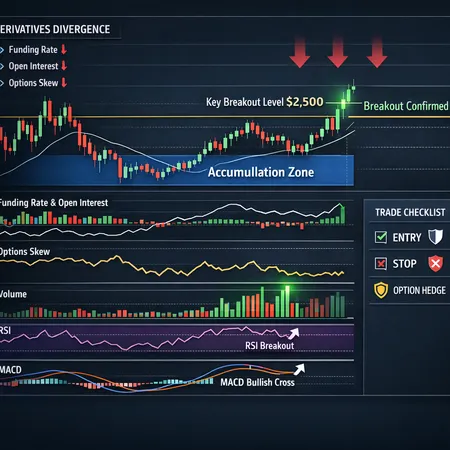
- Open interest and liquidations: Derivatives activity around key technical zones—e.g., round numbers, previous highs/lows—can create short squeezes or cascade liquidations, depending on positioning.
On‑chain indicators such as net exchange inflows/outflows, long‑term holder accumulation, and realized profit metrics remain the most reliable real‑time gauges of whether an ETF outflow is converting into meaningful spot supply or merely rotating paper positions. Institutional allocators should track those alongside ETF flow dashboards.
3) Nasdaq removes options position limits — what that means for liquidity and volatility
Nasdaq’s decision to lift position limits on options for Bitcoin and Ethereum ETFs is a significant derivatives market development (reporting summarized by CoinCu). Removing those caps has immediate and medium‑term implications:
- Deeper liquidity and tighter spreads: Market makers can hold larger delta and vega exposures, enabling them to quote wider size without hitting regulatory position ceilings. That generally improves market depth and reduces the price impact of large orders.
- More efficient hedging: Larger position allowances let APs and market makers knit together ETF option hedges with underlying spot, futures, and other derivatives more flexibly. That reduces hedging slippage and can compress implied volatility premia.
- Potential for episodic leverage and volatility: Liquidity isn’t the same as restraint. With higher permissible positions, large directional option trades become feasible. If large funds deploy concentrated option overlays, short‑term volatility spikes can be magnified as hedging flows cascade through the spot and futures markets.
For options market makers, the rule change lowers a regulatory constraint that previously limited sophisticated strategies. For allocators, this means better execution on option overlays and a wider set of risk management tools, but it also requires closer monitoring of concentration risk in the options market.
4) Product innovation: Bitwise’s bitcoin+gold active ETF and strategic positioning
Product design matters. Bitwise’s launch of an actively managed Bitcoin+Gold ETF — often discussed under the label Bitwise BPro in market conversations — signals an important cross‑asset framing: BTC is being packaged explicitly as a currency‑risk or inflation hedge alongside traditional stores of value (TheNewsCrypto).
Why this matters for institutional demand:
- Broader allocator appeal: Multi‑asset and actively managed wrappers lower the behavioral barrier for allocators who want exposure to BTC but must justify it through portfolio construction rules or mandate guidelines that already cover commodities like gold.
- Tactical overlay capacity: Active managers can adjust weightings between BTC and gold based on macro views, volatility regimes, or stress events — offering a dynamic hedge not available through a static spot ETF.
- Cross‑product flow effects: Capital that flows into a hybrid product may reduce direct spot ETF flows at the margin but still results in net spot demand if the fund takes custody of BTC. Over time, a mosaic of products (spot ETFs, active hybrid funds, futures‑based solutions) creates a thicker, more resilient institutional demand base.
Product innovations like Bitwise BPro therefore broaden the demand curve for BTC, attracting macro desks, risk parity allocations, and corporate treasuries that want a packaged message for governance committees.
5) State adoption proposals: the Kansas Bitcoin Reserve and custody implications
Public‑sector interest changes the game. The Kansas bill to create a state Bitcoin reserve (now advancing through committee stages) is a vivid example of how policy can translate to institutional demand and new custody norms (The Block).
Possible effects if states adopt similar frameworks:
- New, high‑profile buyers: State treasuries or reserves would be large, long‑dated holders, reducing circulating float and improving the supply/demand balance.
- Custody standards and insurance: States buying BTC will demand institutional‑grade custody, insurance, and auditability. That creates scale opportunities for qualified custodians and raises the industry bar for custody protocols.
- Regulatory precedent: State adoption normalizes public holdings of crypto and can pressure federal regulators and private institutions to enable parallel participation (banks, pension funds, insurers).
This is not mere symbolism. If multiple states adopt reserve programs or allow public institutions to allocate to BTC, the market could see a durable buyer cohort that does not react to short‑term price noise. That structural demand could reinforce the positive effects of ETF creations and product innovation.
Synthesis: how flows, product design, and policy interact
Put these elements together and you get a changing demand landscape for BTC:
- Short‑term ETF outflows can be dislocative, but when combined with strong structural demand channels (AP hedging, deeper derivatives liquidity after Nasdaq’s rule change, hybrid product buy‑ins, and state‑sized buyers), they are less likely to trigger a rout. They may instead mark tactical clearing.
- Product innovation makes it easier for different kinds of institutional mandates to allocate to BTC without forcing a binary governance decision. Active and hybrid ETFs expand the investor base while increasing cross‑product complexity.
- Policy actions like the Kansas bill can act as a multiplier: institutional flows to custody will increase demand and raise custody standards, which in turn makes more institutional entry points viable.
For allocators, the key is to distinguish between transient flow noise and structural demand signals. The former creates trading opportunity; the latter changes portfolio construction.
Practical takeaways for allocators and informed retail
- Watch flow and positioning, not just price: ETF outflows are a signal, but pairing them with on‑chain exchange balances and derivatives positioning gives a fuller picture.
- Monitor options open interest and concentration: Nasdaq’s removal of position limits improves liquidity but also raises the bar on surveillance for outsized positions.
- Consider product fit, not just headline exposure: Hybrid offerings like Bitwise’s bitcoin+gold ETF (Bitwise BPro) can be attractive for mandate‑constrained allocators seeking macro hedges.
- Track policy developments: State moves such as the Kansas Bitcoin Reserve are early indicators of potential long‑term, low‑turnover buyers.
- Operational readiness matters: Custody, insurance, and governance will be the gating factors for many institutions. Vendors and platforms (including Bitlet.app) that make those components smoother will play a role in allocation decisions.
Sources
- "U.S. Bitcoin ETF outflows largest since November may signal imminent price rebound" — CoinDesk: https://www.coindesk.com/markets/2026/01/23/u-s-bitcoin-etf-outflows-largest-since-november-may-signal-imminent-price-rebound
- "Nasdaq removes ETF position limits" — CoinCu: https://coincu.com/news/nasdaq-removes-etf-position-limits/?utm_source=snapi
- "Bitwise launches active ETF combining Bitcoin and Gold" — TheNewsCrypto: https://thenewscrypto.com/bitwise-launches-active-etf-combining-bitcoin-and-gold-to-hedge-against-currency-risk/?utm_source=snapi
- "Kansas Bitcoin Reserve bill advances" — The Block: https://www.theblock.co/post/386820/kansas-bitcoin-reserve-bill-advances-to-senate-financial-institutions-committee