Bitcoin fills CME gap but $240M whale dump curbs $104K rebound
Summary
Gap fill at the Wall Street open: what happened
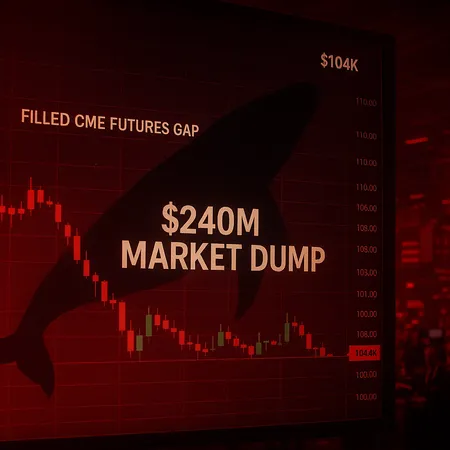
Bitcoin dropped into the opening of U.S. trading to fill its most recent CME futures gap, a familiar technical event for derivatives traders. These gaps form because CME futures stop trading on weekends while spot markets remain open; when the market reopens, price often reclaims the vacant zone. This fill looked routine on the surface, but it set the stage for a sharper reaction once large sell orders hit the tape.
Whale selling pressure interrupted the rebound
Shortly after the gap was filled, concentrated selling pressure — reported at about $240M — emerged and capped a recovery attempt. That selling prevented Bitcoin from reclaiming and sustaining levels near $104K, turning what could have been an orderly bounce into a volatile chop. In practice, big sell blocks drained available liquidity in the order book, triggered short‑term slippage and created a cascade of smaller stops that amplified the move.
Market structure and trader implications
The episode highlights how futures market structure and on‑chain flows interact: a gap fill drew attention, but large off‑exchange or whale orders defined real execution. Traders should watch funding rates, open interest and exchange inflows closely — rising inflows or a spike in open interest alongside negative funding often signals short bias. Platforms like Bitlet.app and other trading hubs saw increased activity as users reassessed position sizing following the dump.
What to monitor next
Key levels and metrics matter now: look for how Bitcoin handles nearby support and whether bids reappear above the prior high. On‑chain indicators such as net exchange flows, large wallet movement and liquidity at top order‑book levels will clarify intent. Also monitor broader risk appetite in the crypto market and correlated asset classes like NFTs or memecoins — sudden shifts in DeFi activity can change funding dynamics quickly. This is not financial advice, but staying attentive to these signals helps manage short‑term risk.
Conclusion The CME gap fill was textbook, but the subsequent $240M whale dump showed how concentrated liquidity can rewrite expected outcomes. For traders and observers, the next directional clue will likely come from derivatives metrics and exchange flows rather than technical patterns alone. Stay disciplined, watch funding and on‑chain moves, and consider how broader DeFi and blockchain activity could influence volatility.