What Binance’s Bitcoin Scarcity Index Plunge Means for Liquidity and Price Discovery

Summary
Executive snapshot
Binance’s “Bitcoin scarcity index” recently fell to extreme negative readings — levels not seen since 2021 — driven by a visible increase in BTC sitting on exchange addresses. That shift matters to institutional traders because on‑exchange balances are a direct input to available tradable supply, which alters market microstructure: order‑book depth, bid‑ask spreads, market impact, and the mechanics of price discovery. In short: when scarcity weakens, execution risk changes and so should trading strategy.
What the Bitcoin scarcity index measures and why the drop matters
The scarcity index is a supply‑centric indicator that uses exchange‑associated on‑chain balances (in this case Binance’s) to estimate how much BTC is readily available to market participants. A positive reading historically implies relatively limited on‑exchange supply (greater scarcity); a negative reading implies abundance. According to Binance data reported by Blockonomi, the index has plunged into extreme negative territory, a signal that more BTC than usual is sitting on Binance and therefore more immediately tradable source.
Why does that matter for institutional desks? Because available supply is not an abstract number — it’s the liquidity that underwrites execution. When exchanges hold more BTC, the marginal price impact of large sell orders is different than when liquidity is thin. For allocators and execution desks, this changes the calculus for block trades, algos and cross‑asset hedges.
Drivers of rising on‑exchange balances: ETF flows, whales and custodial activity
There are several proximate drivers that can inflate on‑exchange balances: institutional ETF flows (both in and out of custodial vehicles), large whale transfers, custodian rebalancing, and arbitrage/settlement flows from derivatives desks. Recent reporting points to meaningful outflows from US‑listed Bitcoin ETFs in December, which creates a liquidity loop: ETFs redeem or sell into spot markets, routing supply back to exchanges and adding to on‑exchange balances source. Separately, spot ETF outflows and withdrawal pressure have been flagged as sources of short‑term market strain by market commentators, reinforcing the connection between ETF flows and exchange balances source.
Whales and custodians compound the picture. Large transfers from cold wallets to exchange hot wallets — whether for selling, hedging, or custodial reshuffles — increase on‑exchange supply even if they are not immediately traded. For desks that track execution risk, distinguishing between transient settlement flows and intent to sell is critical; the same raw balance number can have very different implications depending on the context.
How the scarcity plunge reshapes market microstructure and price discovery
From a microstructure perspective, a sudden rise in on‑exchange BTC typically increases resting sell liquidity at the top of the book, which can reduce instantaneous price impact for medium‑sized sell orders. But the effects are nuanced. Increased inventory can reduce slippage for aggressive sellers while simultaneously encouraging market makers to widen posted spreads if they perceive higher inventory risk or elevated adverse selection.
Price discovery dynamics also shift. When more BTC is concentrated on exchanges, price moves are more tightly coupled to exchange order flow and less to off‑market OTC settlements. That can make realized volatility spike in short bursts as large orders interact with concentrated liquidity pools, even while long‑term realized volatility may compress if selling pressure is absorbed by deeper books.
For execution desks, the upshot is twofold: adapt order‑sizing and algorithm selection to the new depth profile, and increase monitoring of on‑chain transfer annotations and ETF flow reports to anticipate transient liquidity drains or inflows.
Short‑term volatility vs long‑term supply dynamics
A key distinction: on‑exchange balances matter most to short‑ and medium‑term market behavior; they do not directly change Bitcoin’s fixed issuance schedule or the economic incentives of long‑term holders. That said, persistent elevation of exchange balances can alter market psychology and liquidity provisioning over longer horizons. If exchanges accumulate and hold larger inventories for extended periods, that can mute scarcity narratives and give market participants greater confidence in execution — potentially lowering risk premia demanded by market makers.
Historically, moves to the kinds of negative scarcity readings reported this month have coincided with phases of heavier selling and re‑distribution across market participants. But context matters: a one‑off spike in exchange balances tied to ETF redemptions is different from a structural shift of coins exiting long‑term custody into exchange hot wallets.
Practical takeaways for traders and institutional allocators
- Recalibrate execution algorithms: In a higher on‑exchange supply environment, prefer opportunistic TWAP/VWAP slices for buys and consider implementation‑shortfall‑aware strategies for sells. Increase granularity in child order sizing to exploit deeper resting liquidity while avoiding market impact.
- Increase pre‑trade liquidity checks: Don’t rely on posted depth alone. Monitor time‑weighted order‑book resilience, recent taker volume, and funding/futures basis as cross‑checks on true liquidity.
- Hedge and size conservatively: If ETF outflows and whale transfers are inflating exchange balances, short‑term price volatility can rise even if immediate liquidity looks healthy. Use tighter stop frameworks and dynamic hedges for large allocations.
- Use flow intelligence: Combine on‑chain transfer alerts, custody reporting, and ETF flow data to separate transient settlement flows from persistent supply shifts. Services and platforms that surface these signals can materially improve timing and execution costs; applications like Bitlet.app participate in this evolving ecosystem by offering flow and access primitives relevant to allocation strategies.
- Coordinate block trades with OTC desks: When dealing with very large sizes, prefer matched OTC execution or multi‑dealer auctions to minimize signaling risk and take advantage of off‑exchange liquidity that isn’t reflected in on‑exchange balances.
Monitoring checklist: signals and thresholds that matter
Institutional desks should maintain a real‑time dashboard that includes:
- On‑exchange balances (by major custodians and exchanges) and the Binance scarcity index as a quick barometer.
- ETF flows and NAV movements — large net outflows or redemptions are leading indicators of potential exchange inventory increases. See reporting on recent ETF outflows for context source.
- Large on‑chain transfers (wallet tags for custodians and known whales).
- Order book liquidity metrics: depth at N levels, liquidity turnover, and time‑to‑fill for benchmark sizes.
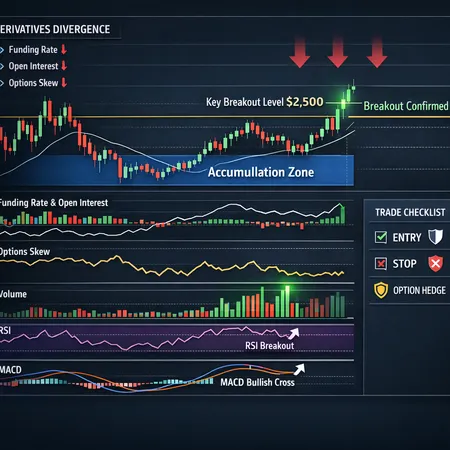
- Derivatives metrics: funding rates, basis, open interest shifts (which often foreshadow balance changes when desks de‑risk).
Combine these signals rather than reacting to any one in isolation; for example, a spike in exchange balances coincident with neutral derivative hedging suggests deposit for custody rather than intent to sell.
Conclusion
Binance’s scarcity index plunging to 2021‑like lows is a clear market signal: more BTC is available on exchange, and that availability reshapes how liquidity behaves and how prices are discovered in the short run. For institutional traders and allocators, the correct response is data‑driven — adjust execution algorithms, tighten pre‑trade liquidity checks, and use flow intelligence to discern transient settlement from persistent supply shifts. Over the long term, higher exchange balances change market mechanics more than Bitcoin’s issuance story, but they can meaningfully alter risk premia and trading costs while the situation persists.