El Salvador
A Brazilian bill to criminalize crypto-related foreign-currency tax evasion is gaining momentum, while El Salvador completes its Bitcoin Diploma 2.0 education push; energy giant Engie is also exploring bitcoin mining in Brazil.
El Salvador's National Bitcoin Office, in partnership with Wespark, will roll out a revised Bitcoin Diploma curriculum for public school students in the upcoming term. The program aims to teach Bitcoin and core monetary concepts as the country finalizes its second Bitcoin Diploma.
El Salvador says it will continue buying Bitcoin despite the market downturn, with Vice President Félix Ulloa calling BTC part of the country's reserve strategy and a hedge against a future without fiat. The government rejected critics who warned of volatility and fiscal risk.
Treasury Chief Scott Bessent urged crypto actors who reject regulatory clarity to leave the U.S. for places like El Salvador, and reiterated banking lobby worries about a pending bill during Senate testimony Thursday.
El Salvador has reinforced its Bitcoin-focused strategy, pushing broader adoption while pursuing a role as an AI hub; the plan could boost BTC demand and attract tech capital, though challenges remain.
The IMF says talks with El Salvador over a potential sale of the Chivo e-wallet are well advanced and discussions on the country's Bitcoin accumulation will continue. The update signals ongoing engagement on fiscal and crypto policy between the Fund and San Salvador.
El Salvador bought nearly 1,100 BTC during the recent market dip, underscoring its continued accumulation strategy. Meanwhile Brazil rolled out stricter crypto tax reporting rules and Argentina published a critical report on Libra, raising regulatory pressure across the region.
El Salvador purchased 1,090 BTC during a sharp market sell-off on Nov. 18, 2025, reinforcing its national bitcoin holdings despite pressure from the IMF.
Steak 'n Shake, which began accepting Bitcoin in May, is opening new locations in El Salvador as of Nov. 15, 2025. The move brings a U.S. fast-food brand into a country that made Bitcoin legal tender in 2021, widening on-the-ground crypto payment options.
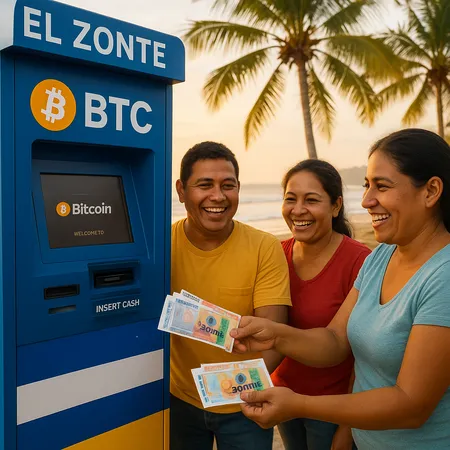
Satnotes will deploy a community ATM in El Zonte starting January 1, 2026, dispensing physical banknotes valued at 500 satoshis each. The pilot aims to boost grassroots Bitcoin adoption and provide a cash-like entry point for locals and visitors.
DeFi
All DeFi postsBitcoin
All Bitcoin postsDerivatives
All Derivatives posts- Uncovering XRP’s Hidden Bull Case: Futures Surge, Ichimoku Flip, Reserve Decline and Institutional Signals
- Privacy‑Coin Resurgence: Why ZEC, XMR, DASH and DCR Ripped Higher in April 2026 — Risks & Trade Rules
- XRP’s Quiet Buildup: Do Derivatives, On‑Chain Flows and Ledger Resilience Signal a Real Breakout?