Bitcoin's (BTC) Risk-Reward Ratio Is Collapsing — Here's What Comes Next
Summary
Intro: A tighter risk profile for BTC
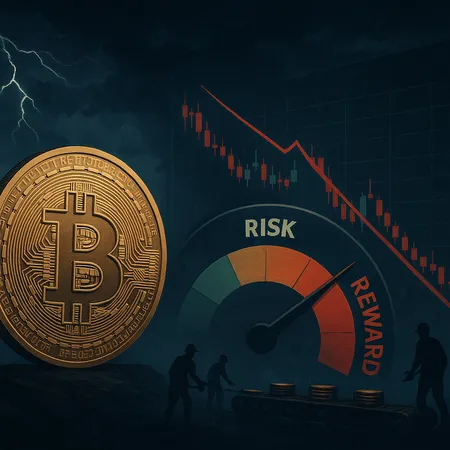
Bitcoin (BTC) has moved into a phase where the risk-reward calculus looks compressed. Several on-chain metrics and market signals suggest that downside risk has risen while the path to a sustained rally requires renewed conviction. This environment typically precedes bursts of volatility: the market either shakes out weaker hands and resumes an uptrend, or it corrects deeper and re-prices risk. Understanding the drivers behind the compression will matter for positioning in the coming weeks.
Why the risk-reward ratio is collapsing
Multiple indicators point to a deteriorating risk backdrop. Realized volatility and option market skew have shifted, implying traders are paying more to hedge against downside tails. On-chain metrics such as SOPR and MVRV are showing less convincing buyer behavior, and aggregated exchange inflows have ticked higher at moments of weakness. At the same time, liquidity beneath key support zones appears thinner than during prior consolidations, meaning even modest sell pressure can amplify moves. Put together, these signs reduce reward per unit of risk for new long positions.
What miner outflows and on-chain signals are telling us
Miners have been a constant watchpoint for BTC supply dynamics. Recently observed slowing in miner outflows reduces the immediate selling stampede — that can be constructive — but it also removes a predictable, steady buyer of hash-revenue-converted coins when outflows resume. In short, slower miner outflows lower continuous selling pressure but raise the chance of episodic volatility when miners do move coins. Combine that with elevated funding rates and option demand for protection, and the market is primed for sharper directional moves rather than soothing sideways chop.
Trading implications and how to prepare
Traders should favor flexibility. Short-term strategies include using smaller position sizes, staggered entries, and protective hedges (options or inverse products) to guard against tail risk. Longer-term investors can use systematic buys or installment plans to average into exposure and avoid mistimed lump-sum entries — a strategy supported by platforms like Bitlet.app for retail users. Keep an eye on funding rate divergences, option skew changes, and miner flow resumption as actionable signals. If funding turns heavily negative and option skew eases, the market may be signaling a lower-risk buying opportunity.
Watchlist: indicators to monitor now
- Funding rates and perpetual basis for signs of speculative capitulation or euphoria.
- Option skew and implied vols to detect demand for downside protection.
- Miner outflows and exchange reserves to gauge supply pressure.
- On-chain metrics (SOPR, MVRV) for realized profit-taking vs. long-term accumulation.
Also track broader macro liquidity and risk appetite in the blockchain and DeFi ecosystems, as cross-market flows often accelerate Bitcoin moves.
Conclusion: expect volatility — manage risk and opportunity
A collapsing risk-reward ratio is a warning, not a forecast of doom. It signals a period where disciplined risk management and active monitoring outperform reckless conviction. For those wanting exposure, consider measured, repeatable approaches (DCA/installments, hedges) and watch the miner flow and derivative indicators for clearer entry points. With proper sizing and tools, traders can both protect capital and capture upside when volatility resolves.