Coinbase Disclosure: Monad ICO Loans 160M MON to Five Market Makers
Summary
Coinbase disclosure lays out market-maker loans
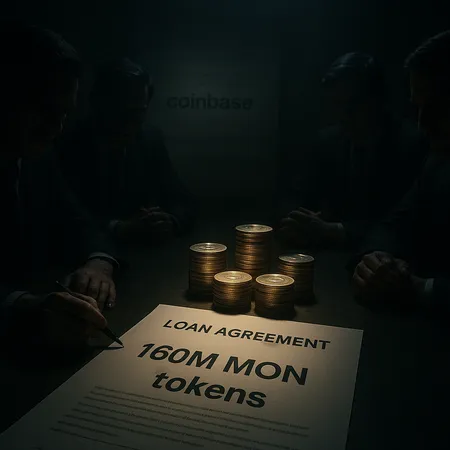
Coinbase's recent token sales disclosure for the Monad ICO contains unusually granular information: the issuer has loaned 160 million MON tokens to five market makers, and the exchange published operator-level details and the amounts assigned to each firm. For traders and token holders this is a double-edged sword — greater transparency on counterparties and allocations, but also a clear map of where large token pressure could originate.
The disclosure is notable because it names the participating market maker operators and quantifies the loans, not merely aggregated totals. That level of detail helps on-chain analysts and compliance teams trace potential sell-side flows, yet it also confirms that a sizable portion of the ICO supply is effectively off-exchange control and accessible to professional liquidity providers.
What the data implies for MON supply and liquidity
On paper, loaning tokens to market makers supports liquidity and tighter spreads, which benefits trading venues and retail participants. In practice, however, 160 million MON distributed across five market makers can translate into significant short-term selling pressure if firms choose to monetize positions or rebalance risk.
Market makers typically provide two-way liquidity, but their inventory actions depend on funding, hedging strategies and loan covenants. If loans are tied to performance incentives or short-term trading mandates, MON could face amplified volatility. Traders watching the broader crypto market should prepare for spikes in volume around token unlocks or contractual milestones.
Regulatory and market-integrity considerations
Publicizing operator identities reduces opacity, yet it also invites regulatory scrutiny. Concentrated token loans raise questions about potential conflicts of interest, coordinated trading, or improper wash activity — issues that fall squarely into the remit of securities and market-integrity regulators in several jurisdictions.
Exchanges and issuers that use market makers must balance liquidity goals with robust disclosure and controls. Observers may compare centralized token loan practices with decentralized approaches in DeFi, where liquidity incentives are often on-chain and permissionless, but not necessarily free from manipulation risk.
What MON holders and traders should monitor
Active participants should track a few concrete items: loan terms and maturities, any vesting schedules tied to those loans, on-chain transfers from known market-maker wallets, and sudden increases in sell-side orderbook depth. Tools that surface large transfers and wallet attribution will be useful for identifying when these loaned tokens move toward exchanges.
For users trading MON, consider position sizing and use limit orders to avoid adverse fills during high volatility. Platforms like Bitlet.app can be useful for monitoring liquidity and executing trades with installment or P2P options if you prefer alternative execution pathways.
Bottom line: transparency with caveats
Coinbase’s disclosure brings welcome clarity about how much of the Monad ICO supply is with market makers — 160M MON across five firms — but it also elevates risk signals for price stability and market integrity. Greater transparency helps auditors, analysts and traders, yet the practical effect on the token’s market depends on loan terms and the behavior of those market makers. Keep an eye on on-chain flows, contractual milestones, and order-book signals to gauge whether this transparency becomes a stabilizer or a catalyst for volatility.