SWIFT Adopts ISO 20022 Standard, Opening the Door for XRP and Utility Coins
Summary
A foundational upgrade to global payments
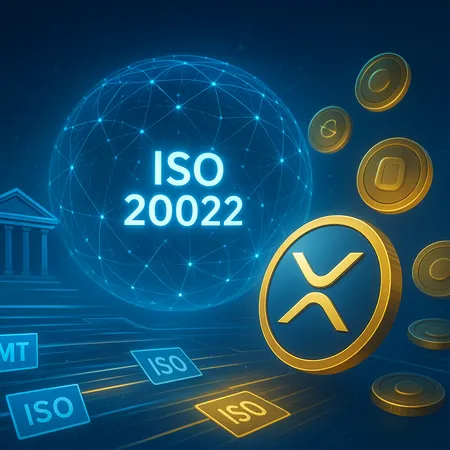
SWIFT’s long-expected cutover to ISO 20022 in November 2025 marks a major infrastructure milestone. The retirement of the legacy MT messages replaces short, often ambiguous fields with richer, structured data models that improve clarity, reconciliation and automated processing across correspondent banks. For the crypto world, this is not just a messaging change — it lowers a key technical barrier between traditional finance and digital asset rails.
Why ISO 20022 matters for crypto liquidity
ISO 20022 enables banks to carry more contextual information with each payment: remittance details, regulatory flags, and asset metadata. That matters for tokenized instruments, CBDCs and algorithmic settlement because it makes compliance and reconciliation far easier at scale. In practice, this can:
- Reduce manual intervention and failed transfers.
- Allow faster proof-of-funds and automated reconciliation between ledger systems.
- Make integration with tokenized rails more predictable for legacy banks.
These improvements create a more hospitable environment for on-demand liquidity solutions and interoperable tokens such as XRP, which are designed to move value quickly and cheaply across rails. While ISO 20022 doesn’t mandate the use of any particular digital asset, the standard’s structured messages make it simpler for institutions to route and account for value sent via crypto liquidity providers.
What this opens up for XRP and utility coins
XRP and other low-latency utility coins stand to gain because banks and payment providers can now attach richer metadata and compliance information to settlements. That means a bank could more confidently use an external liquidity provider to bridge currencies if the payment message includes robust provenance and regulatory fields. Specifically:
- Faster corridor testing: Payment corridors that previously failed reconciliation may now be tested with fewer false positives.
- Cleaner audits: ISO 20022’s structured fields improve traceability for compliance teams.
- Better tokenization fit: Tokenized fiat, stablecoins and utility coins can piggyback on standard fields to describe intent and regulatory status.
These technical advantages could accelerate institutional experimentation, but adoption depends on vendor integrations, bank strategy and national regulation.
Broader market implications and risks
The migration may improve fiat on/off ramps and reduce frictions that once deterred banks from interacting with crypto providers. That could boost liquidity, shrink spreads, and make instant settlement use cases commercially viable. However, several caveats remain:
- Regulatory clarity is uneven. Jurisdictions will vary in how they treat crypto-linked settlement.
- Legacy systems still need connectors. ISO 20022 is a common language, but middlewares and custodians must implement it robustly.
- Not every token is equal. Memecoins and many speculative tokens lack the compliance features required by banks, while utility coins and stablecoins with clear governance are better positioned.
What traders, institutions and platforms should do now
Market participants should watch corridors where banks and crypto liquidity providers have already announced pilots. Institutions should prioritize vendors that support ISO 20022 natively and can translate between SWIFT messages and distributed ledgers. For retail and P2P platforms, including services like Bitlet.app, the change could mean smoother fiat flows and improved settlement transparency — but preparation is essential: update reconciliation tooling, enforce KYC/AML on rails, and monitor regulatory guidance.
Bottom line
SWIFT’s ISO 20022 migration is a structural enabler for tighter interoperability between banking rails and digital assets. It doesn’t guarantee that banks will use XRP or any single token, but it lowers a major operational barrier and makes experimentation far more practical. Over the next 12–24 months expect more pilots, clearer integrations with tokenized products, and incremental improvements to on/off ramps that could reshape the crypto market landscape.
For readers tracking payments innovation, keep an eye on corridors, custodians and the first wave of live integrations — those will be the clearest signals that ISO 20022 is translating into real crypto liquidity.