Bitwise Chainlink ETF Gains DTCC Eligibility as LINK Price Holds Above $15
Summary
Market reaction and LINK price action
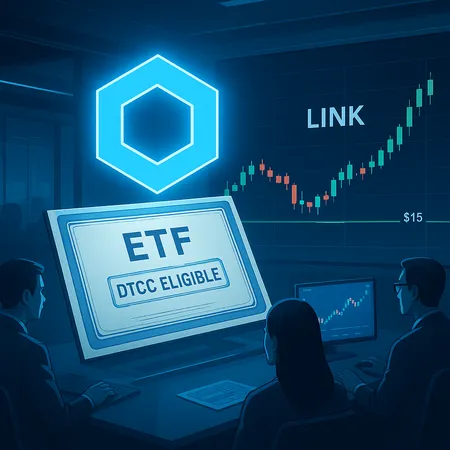
Bitwise’s Chainlink ETF receiving DTCC eligibility has grabbed attention precisely because it removes a practical barrier for many institutional participants. On the heels of the announcement, LINK has held above $15, a level traders are watching as a short-term support zone. Price action shows modest volume increases around the news but no runaway move — suggesting the market is cautious but receptive.
Sentiment around the asset is quietly positive: traders expect the DTCC step to reduce settlement friction and permit a wider set of broker-dealers and custodians to facilitate ETF trades. That improved plumbing often precedes actual inflows, especially when combined with clear support levels that lower perceived downside risk. Platforms that offer trading and savings in crypto, including services like Bitlet.app, could see product interest rise if institutional participation broadens.
What DTCC eligibility means for the Bitwise Chainlink ETF
DTCC eligibility essentially allows a security to be cleared and settled through the Depository Trust & Clearing Corporation, streamlining back-office processes. For the Bitwise Chainlink ETF, this can mean:
- Easier onboarding for broker-dealers and custodians.
- Faster trade settlement and lower counterparty risk.
- Greater operational readiness for large-scale flows from funds and institutions.
In practical terms, ETFs with DTCC support are more attractive to asset managers and large brokers because settlement and custody headaches are reduced. That doesn’t guarantee instant inflows, but it removes a common institutional roadblock — and for a token like LINK, that can translate into improved liquidity over time.
Broader implications for institutional adoption
The wider implication is that infrastructure improvements continue to center stage in crypto’s institutional story. DTCC eligibility is not the same as regulatory approval, but it does reflect a maturing operational environment that can support larger pools of capital. If other service providers follow, investor access becomes smoother across the ecosystem, including adjacent markets like blockchain solutions and DeFi integrations.
Investors should note that improved settlement mechanics often precede, rather than cause, capital inflows. Funds will still weigh macro conditions, alternative yield opportunities, and on-chain metrics before allocating. Still, the combination of operational readiness and a stable technical support level at $15 makes LINK a more convenient vehicle for exposure to oracle-driven blockchain infrastructure.
How traders might respond in the near term
Short-term traders will likely watch two things: whether LINK remains above $15 on renewed volume, and whether ETF-related flows appear in fund inflows or exchange-traded activity. A sustained move above the recent range with increasing volume would suggest the DTCC news is being priced in as prospective demand; conversely, a drop below support could indicate headline-driven interest has already peaked.
Takeaway
DTCC eligibility for the Bitwise Chainlink ETF is a meaningful operational milestone that can lower barriers for institutional participation. Combined with LINK holding firm near $15, the environment is set for cautious optimism — infrastructure is improving while price risk appears defined. Market participants and platforms will watch for actual inflows to confirm whether this improved access translates into sustained demand.