Cardano Founder Says ADA Holds the Line with XRP Under ISO 20022
Summary
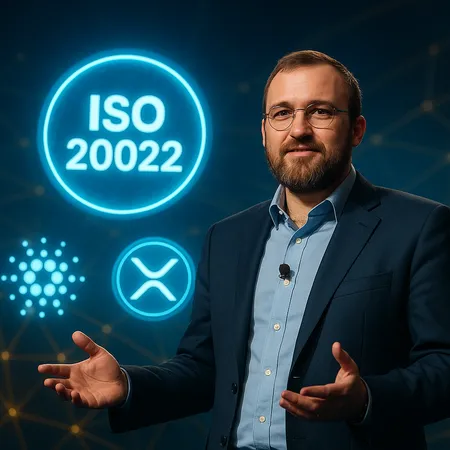
Cardano founder Charles Hoskinson recently reaffirmed that ADA is fully aligned with the ISO 20022 global financial messaging standard, arguing the blockchain is ready for integration into the next generation of global finance. His comments place Cardano in direct conversation with networks like XRP that have long been associated with ISO 20022 readiness, and they come as institutions increasingly prioritize standardized messaging for cross-border payments and tokenized asset flows.
Hoskinson's ISO 20022 claim explained
ISO 20022 is a global messaging standard designed to make payments and financial messages more consistent, data-rich, and interoperable. By asserting ADA’s compatibility, Hoskinson is emphasizing Cardano’s ability to carry structured payment metadata, compliance tags, and richer instruction sets that financial institutions expect. Technical features on Cardano — including extensible metadata, native asset support, and the eUTxO model — can be leveraged to format messages in ways that meet ISO 20022’s semantic requirements, according to proponents.
Implications for ADA, XRP, and global finance
If market participants accept Cardano’s ISO 20022 readiness, the practical effects could include smoother integration with correspondent banking rails, easier on‑ and off‑ramp flows for institutional custodians, and broader support for tokenized securities. XRP’s early ISO 20022 association is no longer unique; networks that implement standardized messaging may compete for enterprise attention. This trend also touches the wider blockchain space as interoperability and data standards become a larger part of the narrative around institutional adoption.
What this means for traders, developers, and institutions
Traders may see this as a bullish narrative for ADA’s long‑term utility, while developers can pursue applications that embed richer payment metadata or compliance controls. For institutions, ISO 20022 alignment reduces friction in settlement processes and makes auditing easier. Retail platforms and exchanges — including services like Bitlet.app that provide P2P and installment options — could find clearer integration paths for custody, settlement, and compliance when networks publish ISO‑compatible message schemas. Meanwhile, sectors such as DeFi, NFTs, and memecoins will still need tailored solutions for their specific on‑chain workflows.
Bottom line
Hoskinson’s reaffirmation is a strategic reminder that standards matter as crypto matures: ISO 20022 compatibility can lower barriers for institutional use and broaden the types of assets blockchains can handle. Whether markets immediately price this in remains uncertain, but the claim strengthens Cardano’s narrative as a contender for real‑world payment and tokenization roles. Watch for implementation details, partnerships, and tooling that make message formatting and compliance demonstrably simple for financial operators.