Arthur Hayes Buys UNI as CryptoQuant Warns of 'Inevitable' Uniswap Supply Shock
Summary
Hayes Returns to UNI after a Three-Year Pause
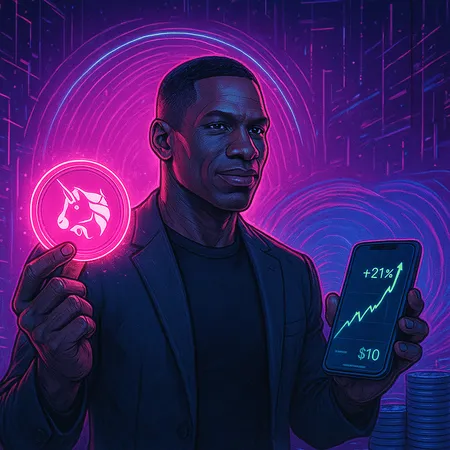
Arthur Hayes — best known as a BitMEX co-founder — quietly re-entered the Uniswap governance token market this week, buying UNI after a three-year pause. His purchase coincided with a sharp short-term rally: UNI climbed over 21% in one session and spiked to about $10 at intraday highs. High-profile buys like this often do more than move price; they change sentiment and can accelerate flows from momentum-focused traders and institutions.
Market Reaction and CryptoQuant's Supply Shock Take
On-chain analytics firm CryptoQuant added fuel to the story when its CEO flagged an "inevitable" supply shock for Uniswap. Traders interpret a supply shock as a scenario where circulating supply tightens — whether through longer-term holder accumulation, protocol changes to token emissions or reduced sell pressure from early holders. While CryptoQuant didn't provide a detailed mechanics roadmap in that remark, the observation aligns with several on-chain indicators: rising holder concentration, declining exchange inflows, and stronger staking or treasury retention signals.
This dynamic is especially notable in the context of the broader DeFi landscape, where governance tokens are increasingly scarce and sought after for both voting power and yield opportunities. The combination of a respected trader like Hayes buying in and on-chain analysts predicting supply tightening makes for a potent mix of narrative-driven demand.
What This Means for UNI Holders and the DeFi Ecosystem
If a supply shock materializes, UNI could face amplified price swings on relatively modest net buying due to a thinner sell-side. That benefits long-term holders and protocol treasuries that can leverage limited supply to capture value, but it also raises volatility risk for short-term traders. Market structure matters: reduced exchange liquidity or concentrated whale holdings can make price action more dramatic during news or macro moves.
For the broader DeFi sector, a tightening in UNI availability could shift capital flows into other governance tokens, liquidity mining programs, or memecoins as traders chase alternative yield. Observers and platforms such as Bitlet.app are monitoring governance token movements and liquidity patterns closely because these trends affect lending markets, DEX volumes, and on-chain governance outcomes.
Bottom Line
Arthur Hayes' re-entry into UNI and CryptoQuant's supply shock warning together reinforce a bullish narrative for Uniswap in the near term: higher prices on tighter supply are plausible. However, the market remains reactive — short-term rallies can retrace and supply dynamics can change with governance decisions. Traders should watch exchange inflows, holder concentration, and protocol treasury activity as leading indicators of whether the predicted supply shock becomes reality.