SoFi Becomes First U.S. Bank to Offer Bitcoin, Ethereum & Solana Trading
Summary
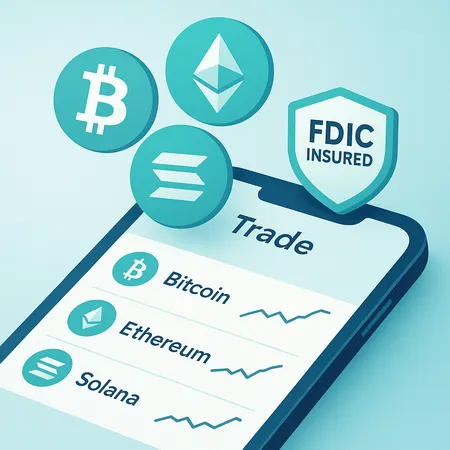
SoFi has announced the launch of SoFi Crypto, a built-in trading product that lets members buy and sell Bitcoin (BTC), Ethereum (ETH) and Solana (SOL) directly from their FDIC-insured SoFi accounts. This is a milestone: SoFi is the first U.S. bank to offer native crypto trading to retail customers, bringing digital assets into a mainstream banking interface and removing some of the friction that has kept mainstream users on the sidelines.
What SoFi's Product Actually Does
SoFi Crypto is designed as an integrated experience inside existing SoFi accounts, meaning customers won't need separate wallets or custodial steps to start trading. Trades settle inside the bank’s infrastructure while users retain exposure to the underlying tokens. By embedding crypto into a familiar banking app, SoFi aims to simplify onboarding, reduce identity verification headaches, and offer a single place for cash, credit, and digital assets. Security and custody details will be critical as customers weigh convenience against control.
Why This Matters for Users and the Crypto Market
This launch lowers the barrier to entry for retail investors who trust banks more than standalone crypto apps. For many consumers, the ability to trade crypto from an FDIC-insured account — even if the insurance doesn’t cover crypto itself — signals a reduction of perceived risk. Institutional and retail adoption could accelerate, impacting liquidity and price discovery across BTC, ETH and SOL. The move also blurs lines between traditional banking services and crypto-native offerings, pushing incumbents and fintechs to evolve quickly. Industry topics like DeFi and NFTs may see indirect effects as more users enter the broader crypto ecosystem.
Regulatory and Competitive Context
SoFi's announcement arrives amid clearer regulatory scrutiny in the U.S., and the bank will need to maintain strong compliance, reporting, and custody safeguards. Competitors — both banks and crypto platforms — will monitor user uptake closely. Some users may prefer self-custody or specialized exchanges for DeFi access or complex trading, while others will value convenience and integration. Services such as Bitlet.app that focus on installment buying, P2P exchange and earn products will likely position their features as complementary alternatives for users seeking different custody models.
How Customers Can Get Started
Existing SoFi members should see the new crypto tab roll out in their app or web dashboard; new users will go through SoFi’s standard onboarding and KYC flow. Customers should review fee schedules, custody terms, tax reporting and withdrawal limits before trading. If you prioritize sovereignty over assets, compare custodial offerings with non-custodial wallets and platforms.
Bottom Line
SoFi’s move to offer native trading of BTC, ETH and SOL marks a notable step toward mainstream adoption by embedding crypto inside traditional banking rails. Expect other banks and fintechs to respond, and watch how users balance convenience against custody preferences as the crypto market continues to mature.