Cardano and Wirex Launch Card to Make ADA a Real-World Payment Asset
Summary
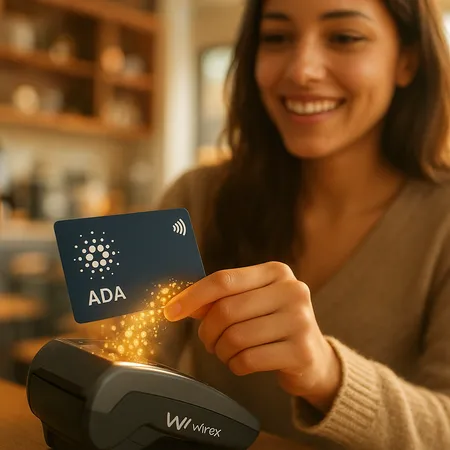
Cardano’s new Cardano Card, developed in partnership with Wirex, represents a practical push to turn ADA into a day‑to‑day payment asset. Instead of keeping ADA locked in trading or staking workflows, holders can now use the card at merchant terminals where ADA is converted to fiat at the point of sale. This bridges the gap between on‑chain value and off‑chain spending, addressing one of the major usability barriers for native blockchain tokens.
Market context and why this matters
Crypto cards are no longer novel, but a Cardano‑branded option brings fresh momentum to ADA’s adoption story. The wider crypto market has been searching for sustainable use cases beyond speculation—payments rank high among them. By enabling card payments, Cardano taps into real‑world utility that can encourage holders to use ADA for everyday purchases rather than treating it solely as an investment or staking token. This development also intersects with evolving rails in DeFi and traditional finance that aim to make crypto more interoperable with merchant ecosystems.
How the Cardano Card works in practice
Wirex’s infrastructure typically performs ADA‑to‑fiat conversion at the time of purchase, so users don’t force merchants to accept crypto directly. The experience mirrors using a debit or credit card: a tap or swipe triggers an automatic conversion and settlement in the merchant’s preferred currency. For users, that means instant purchasing power with ADA balance management handled inside the Wirex app. Key details to watch are conversion rates, fee structure, and whether the card supports native ADA spending without custodial friction—factors that will determine everyday usability.
Potential impact on ADA adoption and network growth
If the Cardano Card gains traction, it could deliver several practical benefits: increased transactional volume for ADA, broader retail familiarity, and new on‑ramps for users to hold ADA for payments. Retail adoption acts as a multiplier — as more merchants and users accept or hold ADA for consumption, the token’s utility profile strengthens relative to pure speculative assets or memecoins. Wider everyday use could also support ancillary markets such as NFTs and DeFi projects on Cardano by expanding the active user base and increasing demand for on‑chain interactions.
What to watch next
Adoption will come down to rollout speed, geographic coverage, and economics. Watch for announcements about supported countries, partner merchants, and promotional programs that lower friction for first‑time users. Fee transparency—conversion spreads and any card or withdrawal fees—will be a deciding factor for long‑term retention. Regulatory clarity in different jurisdictions could either accelerate or constrain expansion, and integration with popular wallets will influence how quickly everyday users transition to spending ADA.
Conclusion
The Cardano Card with Wirex is a tangible step toward making ADA a real‑world payment asset rather than a paper‑only holding. If Wirex and Cardano can deliver low friction, clear pricing, and wide availability, the card could help shift user behavior across the crypto market and provide practical on‑ramps to Cardano’s ecosystem. Services like Bitlet.app that focus on installment, earn, and exchange can capitalize on growing on‑chain activity as ADA becomes more spendable, so the ripple effects may reach DeFi and NFT projects on the network as adoption grows. Keep an eye on launch details and user feedback to judge whether this becomes a meaningful payments solution or a niche product.