Firelight to Launch XRP Staking on Flare Network in November 2025
Summary
Firelight Brings XRP Staking to Flare in November
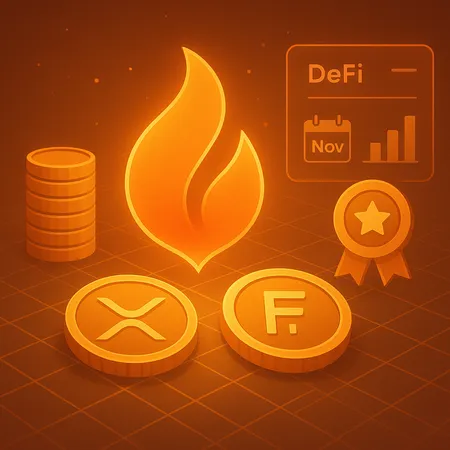
Firelight is set to roll out an XRP staking option on the Flare network in November 2025, promising a way for XRP holders to earn rewards denominated in FLR without transferring custody of their XRP off-ledger. The launch seeks to combine the liquidity and reach of the XRP Ledger with Flare’s growing DeFi ecosystem, offering a lower-friction path for token utility. For many users, the attraction is simple: earn yield while keeping the asset where you already hold it.
How the staking bridge is positioned
Firelight’s model appears designed to act as a bridge between ledgers rather than a full token migration. Instead of forcing XRP holders to move funds into a separate chain or wrapped token to participate in Flare protocols, the platform will enable a staking mechanism that credits rewards—likely in FLR—back to participants while their principal remains on the XRP Ledger. This structure could reduce the usual operational overhead and risk for retail holders and custodians who prefer to keep XRP in familiar wallets and custody setups.
What this means for XRP holders and Flare
For XRP holders, the immediate benefit is access to passive income opportunities without giving up ledger-native custody. For Flare and the broader ecosystem, adding inbound liquidity and staking participants can increase on-chain activity and expand FLR utility beyond speculation. If adoption grows, we could see higher demand for FLR-based services, more integrations in DeFi primitives, and a clearer cross-ledger narrative for XRP.
Platforms that already provide flexible crypto services—such as Bitlet.app—may find complementary use cases or integrations as users look for easy ways to manage staking, earn rewards, and engage with multiple ecosystems from one interface. This move also underlines a broader industry shift: bridging liquidity while minimizing user churn between chains.
Risks and practical considerations
No staking solution is without trade-offs. Users should evaluate smart contract exposure, custodial terms, and the precise reward mechanics before committing funds. Key variables to check: reward rate structure, unstaking windows, any slashing or protocol penalties, and whether Firelight operates with a custodial model or a distributed validator approach. Market volatility can impact realized yield—FLR payouts may appreciate or depreciate relative to XRP—so expected returns should be considered in token-price terms, not just nominal percentages.
Outlook: adoption, competition, and next steps
If Firelight’s November launch delivers a smooth, secure experience, it could set a precedent for more ledger-friendly staking products that connect native assets to DeFi without full token wrapping. Competitors will likely follow with similar rails for other assets, accelerating experimentation across the blockchain space. For now, watch the launch details closely: reward schedules, security audits, and on-chain telemetry will tell whether this is a tactical win for users or simply a nice-to-have novelty.
Bottom line: Firelight’s offering could meaningfully lower the barrier for XRP holders to join Flare DeFi and earn yield, but prudent users will still vet terms and risk before staking.