Polkastarter (POLS) Price Prediction 2025–2030: Could POLS Hit $1 in 2025?
Summary
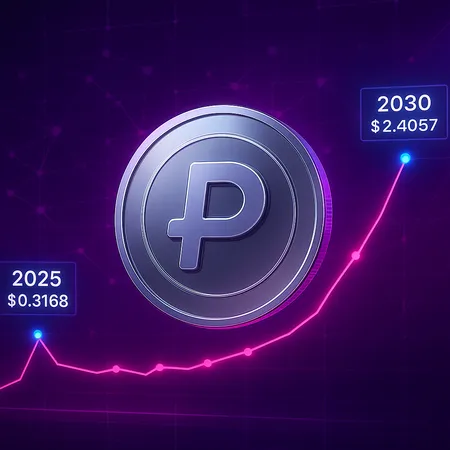
Polkastarter's POLS token is back in focus as analysts and traders debate its near-term ceilings and long-range upside. Built on Polkadot, Polkastarter enables decentralized token sales across different chains and aims to simplify cross-chain fundraising — a niche that could grow as interoperability demand rises. Current forecasts place a 2025 maximum near $0.3168, while some long-term models stretch to $2.4057 by 2030. The central question for many holders: can POLS reach $1 in 2025?
Market context and recent performance
Polkastarter's price action mirrors broader altcoin cycles. After periods of consolidation, POLS typically responds strongly to cross-chain launches, platform upgrades, and macro crypto liquidity. Momentum in the crypto market, inflows into speculative assets like memecoins and NFTs, and favorable DeFi activity tend to amplify gains for fundraising platforms. However, regulatory scrutiny and sell-side pressure from early investors can cap rallies.
Key drivers that could push POLS higher
Several factors would be necessary for POLS to accelerate toward and beyond the $1 mark: a tangible rise in platform usage for IDOs, new partnerships within the Polkadot ecosystem, and meaningful staking or token-lock incentives that reduce circulating supply. Market-wide tailwinds — renewed investor appetite for altcoins and fresh capital flowing into DeFi — would also materially improve probabilities. Conversely, slowing on-chain activity or adverse macro headlines would constrain upside.
Tokenomics and supply dynamics
POLS’s supply schedule and vesting for early investors remain central to price outcomes. If a wave of vested tokens hits the market without matching demand growth, price pressure could persist. On the other hand, protocol updates that introduce burn mechanisms, stronger utility in IDOs, or staking rewards could create scarcity and support higher prices. Traders should watch scheduled unlocks and developer announcements closely.
Forecast: 2025, 2026 and through 2030
Short-term technical and fundamental overlays suggest a 2025 realistic ceiling around $0.3168, barring an extreme market-wide bull run. For 2026–2028, assuming gradual adoption and improved cross-chain tooling, mean projections place POLS in a mid-range recovery band, with upside scenarios reaching above $1 if adoption accelerates. Longer-term (2030), more optimistic models — which assume broader Polkadot adoption and robust IDO demand — estimate potential highs near $2.4057.
These forecasts depend heavily on macro liquidity, competition from alternative fundraising platforms on Ethereum and Layer 2s, and Polkadot’s overall ecosystem growth. Investors should treat the 2030 figure as a high-case scenario rather than a base-case expectation.
Trading strategy and risk management
Short-term traders can exploit volatility with tight stops and position sizing, while longer-term holders should evaluate fundamental milestones: on-chain volume, number of completed cross-chain launches, and token unlock events. Diversification remains essential — pairing POLS exposure with broader crypto assets or use of dollar-cost averaging can reduce timing risk. Retail users monitoring installment or P2P exchange options may find tools on Bitlet.app useful for planning entries and exits.
Conclusion: Is $1 realistic in 2025?
Hitting $1 in 2025 would require an outsized bull market and significant protocol-specific catalysts; under base-case assumptions it appears unlikely. Still, Polkastarter’s cross-chain fundraising utility keeps it well-positioned if interoperability and IDO demand accelerate. Investors should combine on-chain metrics, tokenomics events, and broader crypto market signals before adjusting exposure. Keep an eye on partnerships, platform activity, and unlock schedules — these will be decisive for whether POLS merely recovers or embarks on a sustained uptrend toward the multi-dollar scenarios.