Filecoin Drops 10% After Cracking Key Support Levels
Summary
Filecoin's sharp drop and initial context
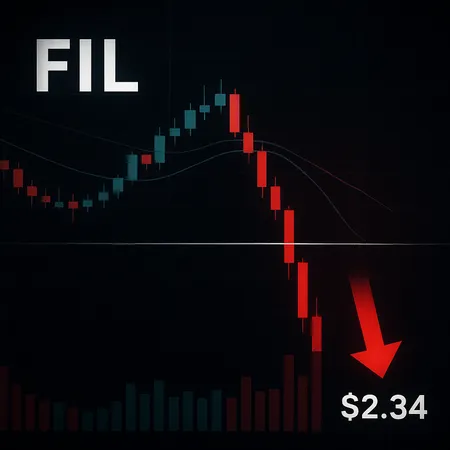
Filecoin (FIL) fell about 10% in the past 24 hours, sliding from around $2.3508 to roughly $2.34, after CoinDesk Research's technical model signaled a breach of critical support. The decline was swift enough to flag alarm bells for traders who had been treating the broken level as a structural floor. While the move alone doesn't determine long-term value, it raises near-term questions around liquidity, sell-side pressure, and whether miners or large holders are reallocating capital.
Market reaction and immediate implications
Market participants reacted quickly: spot liquidity thinned at former support bands and short-interest rose as momentum favored sellers. Lower-timeframe indicators showing increased bearish momentum often attract algorithmic selling and stop-loss cascades, which can amplify percentage moves. For FIL specifically, the sell-off could pressure projects and protocols that rely on Filecoin for decentralized storage, and it may influence speculative flows into adjacent sectors such as NFTs and memecoins.
Technical levels to watch
From a technical perspective, the next meaningful supports are near previous lows and clustered buy zones; watch for volume confirmation on any bounce. If FIL fails to reclaim the broken support and volume remains tilted toward sellers, a move toward lower consolidation bands is more likely. Conversely, a reclaim with expanding volume would signal reduced short-term risk. Traders should monitor on-chain metrics alongside price — wallet concentration, miner outflows, and exchange inflows — for a clearer picture.
Trading signals, risk management, and strategy
Short-term traders should consider tighter risk controls given the volatility: set clear stop-loss levels, scale position sizes, and avoid chasing a snapback without confirmation. For longer-term investors, assess whether the fundamental adoption of Filecoin’s storage network remains intact; technical drawdowns can present accumulation opportunities if the network fundamentals are unchanged. Platforms such as Bitlet.app can be useful for users who want flexible entry strategies or to explore P2P options while managing counterparty exposure.
Broader market context and cross-market flows
Filecoin’s weakness doesn’t exist in isolation — it often correlates with wider risk-off moves in the crypto market and changes in liquidity across DeFi. Watch Bitcoin momentum and DeFi capital flows, which can either stabilize or further pressure altcoins. Additionally, the reallocation of capital between sectors — for example, from storage tokens to trending NFTs or back into DeFi yield opportunities — can change short-term direction quickly.
Conclusion: what comes next
The break of a key support level makes the near-term outlook cautious for FIL. A decisive reclaim of the broken level with volume would reduce downside risk, while sustained failure increases the chance of deeper retracement. Traders and investors should combine technical signals with on-chain data and macro indicators before adjusting exposure. Stay disciplined, watch liquidity, and consider platforms and services that match your timeframe and risk profile.