OKX Adds USDT-Margined Perpetual Futures for DASH and ZEC — Launching Nov 6, 2025
Quick summary
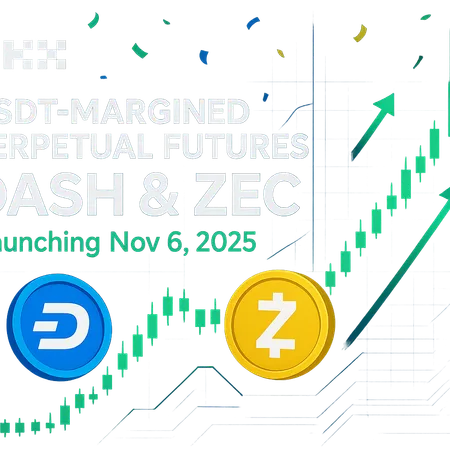
OKX announced it will launch USDT‑margined perpetual futures for DASH and ZEC on November 6, 2025. The move brings two privacy-focused altcoins into the growing derivatives layer, giving traders additional tools for hedging, speculation, and arbitrage.
What OKX is listing
The new products are perpetual futures (no expiry) settled in USDT. Perpetuals are designed to track spot prices via funding payments between long and short positions, and they typically allow for leveraged exposure without an expiry date.
Key facts:
- Launch date: November 6, 2025
- Assets: DASH and ZEC
- Margin/settlement: USDT‑margined perpetual futures
This listing aligns with broader derivatives expansion on centralized venues as exchanges seek to offer a wider set of underlyings beyond Bitcoin and major altcoins.
Why this matters for the market
Adding perpetual contracts for DASH and ZEC has several likely effects:
- Improved price discovery and liquidity. Futures allow larger participants to express views without moving spot markets directly, which can tighten spreads and deepen orderbooks.
- More tools for risk management. Miners, node operators, and holders can hedge exposure using futures rather than spot sales.
- Arbitrage and market-making opportunities. Differences between spot and perpetual markets create flows that professional desks will chase.
This development also fits into the broader narrative of how derivatives are reshaping the crypto ecosystem — from spot trading to DeFi integrations — and reflects ongoing institutionalization of altcoin trading. For readers following infrastructure trends, see our coverage of blockchain and DeFi developments for similar market impacts.
Implications specifically for DASH and ZEC
DASH and ZEC are both best known for privacy features and niche use cases. How derivatives affect each token may differ:
- DASH: Often traded for payments and merchant use cases; futures could attract liquidity from traders betting on adoption cycles or macro-driven moves.
- ZEC: As a privacy protocol, regulatory headlines can move ZEC hard — futures give a way to hedge or speculate around policy-driven volatility.
Overall, adding perpetuals usually increases short-term volatility as speculative flows enter, but it can also make the spot market more efficient over time as price discovery shifts between venues.
What traders should monitor after launch
If you plan to trade these contracts, watch for:
- Funding rates — they reveal directional pressure and can create carry costs or benefits for holders.
- Initial orderbook depth and spreads — early liquidity will determine execution quality.
- Correlation with BTC and major altcoins — privacy coin moves may be amplified or muted by broader market trends.
- News and regulatory headlines — especially relevant for privacy-focused projects like ZEC.
Use prudent risk management: leverage amplifies both gains and losses.
Market context and platform relevance
Derivatives for niche altcoins have proliferated as exchanges compete to capture volume. Listings like these tend to follow demand from retail and institutional participants who want exposure without managing on‑chain custody.
Platforms such as Bitlet.app monitor derivatives and spot activity closely — this kind of listing can affect lend/borrow rates, P2P volumes, and earn product economics across apps that integrate market data.
Risks and regulatory considerations
Privacy coins often draw extra scrutiny from regulators and compliance teams. Exchanges listing such derivatives must balance user demand with compliance obligations, which can affect liquidity availability across jurisdictions.
Investors should be aware that regulatory headlines can cause swift price swings and temporary delisting risks.
Takeaway
OKX's launch of USDT‑margined perpetual futures for DASH and ZEC on November 6, 2025 is a meaningful step toward broader derivatives coverage for privacy-focused altcoins. Expect tighter price discovery and increased speculative flows in the short term, with the usual caveats around leverage and regulatory sensitivity. Traders should monitor funding rates, orderbook depth, and correlation with the wider market to navigate the new products effectively.