Stellar (XLM) Breaks Key Resistance — Price Jumps 3.6% as Volume Surges
Quick Take
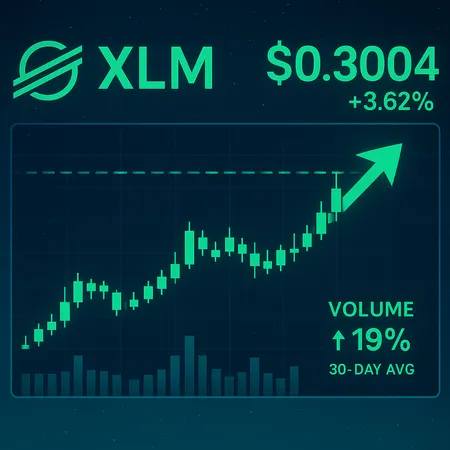
Stellar's native token XLM surged 3.62% to $0.3004 on Tuesday, clearing a key resistance band while trading volume jumped almost 19% above its 30‑day average. The rally outperformed the broader market by 4.86%, nudging XLM toward the 5% relative strength level that traders often watch as a wake-up call for larger trends.
Market Move Explained
The price action is notable for its combination of price breakout and volume confirmation. A simple price uptick without accompanying volume can be a false signal; in this case, volume activity suggests buyers are committing capital rather than simply moving price on low liquidity.
Stellar's network fundamentals — focused on fast, low-cost cross-border transfers — also keep it relevant as traders rotate capital among altcoins. That said, this move sits within a broader context: the wider [crypto market](/en/posts/news?filter=crypto market) has been showing measured strength in recent sessions, and XLM’s outperformance signals renewed interest from both momentum and swing traders.
Volume and Relative Strength: Why They Matter
Volume climbing nearly 19% above the 30-day average strengthens the breakout story. Volume is the market’s way of signaling conviction; higher-than-average turnover on a breakout increases the probability that the move will sustain.
The article’s reference to a 5% relative strength threshold is also meaningful. When a coin outperforms the broader market by around that amount, it often attracts technical momentum traders and algorithmic flows searching for leaders. XLM reaching or surpassing that threshold could accelerate inflows and push it toward the next visible resistance.
Technical Implications and Risk Profile
Clearing a key resistance level puts previous supply zones in XLM behind it and often flips them into near-term support. Traders should consider the following:
- Price structure: The resistance break suggests a short-term bullish bias, but confirmation across multiple timeframes (e.g., daily close above the level) will be important.
- Volume confirmation: Continued above-average volume would support follow-through; fading volume raises the odds of a retest of the breakout level.
- Relative performance: If XLM crosses the 5% outperformance mark, momentum traders may amplify the move.
Remember: breakouts can fail. Use clear stop placement and size positions to account for volatility.
What Traders and Holders Should Watch Next
Traders should monitor on-chain metrics and order flow for clues about sustainability. Key items to watch:
- Whether daily volume remains above the 30-day average.
- Any quick reversion below the pierced resistance, which would signal a false breakout.
- Broader market direction — leadership in altcoins often depends on continued bullishness in the larger blockchain ecosystem.
For holders, consider whether you’re trading short-term momentum or accumulating for a longer-term thesis tied to Stellar’s payment rails. Those looking to act on this move can also compare instruments and service features on platforms like Bitlet.app to find convenient trading or installment options.
Potential Scenarios
Bull case: Sustained volume and a daily close above the breakout zone attract momentum buyers, pushing XLM higher while previous resistance turns into support.
Bear case: Volume peters out and the token slips back under the breakout level, resulting in a consolidation phase or a deeper pullback to earlier support.
Takeaway
Stellar’s XLM has posted a technically important uptick — 3.62% to $0.3004 with volume ~19% above the 30‑day mean — and outperformed the market by 4.86%. That combination is the kind of early signal traders watch for potential sustained rallies, especially as XLM approaches the commonly cited 5% relative strength threshold. Keep an eye on volume, confirmation closes, and overall market risk; if those align, XLM could extend its gains.
For readers following sector rotations or exploring altcoin setups, this is a timely example of how volume and relative strength can validate breakout attempts. Stay disciplined with risk management and monitor broader DeFi and market flows to assess whether this momentum persists.