Finland to Enforce OECD CARF-Aligned Crypto Reporting by 2026 — What It Means for Users
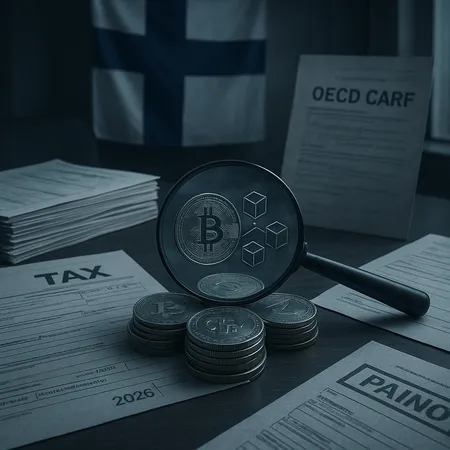
Finland has announced it will implement new reporting rules for crypto assets by 2026, adopting guidelines from the OECD's CARF (Crypto-Asset Reporting Framework). The move is meant to strengthen global tax transparency, but it also raises difficult questions for users, exchanges, and the wider crypto ecosystem — from custodial platforms to decentralized networks.
What Finland's CARF-aligned rules will change
Finland's alignment with the OECD CARF means domestic intermediaries and service providers will be required to collect and report standardized data on crypto-asset transactions and account holders. While Finnish authorities have framed the change as a tool to curb tax evasion, the practical effects are broader:
- Reporting obligations will likely extend to centralized exchanges, custodial wallets, and other intermediaries that facilitate transfers and trades.
- Cross-border information exchange will increase, allowing tax authorities in different jurisdictions to match crypto activity against declared income.
- Users who rely on peer-to-peer trading or non-custodial services may find gaps in reporting coverage, but regulators are already exploring methods to close those gaps.
Why regulators are pushing CARF: transparency vs. friction
The OECD developed CARF to mirror the success of earlier information exchange regimes in the fiat world. The argument in favor is straightforward: more transparency reduces tax evasion and brings crypto assets into comparable oversight with bank accounts and securities.
However, there is a trade-off. New reporting rules can:
- Increase compliance costs for smaller exchanges and startups, which may struggle to implement data capture and reporting systems.
- Create privacy concerns for legitimate users who expect higher levels of anonymity when using certain crypto services.
- Push activity towards less regulated jurisdictions or to on-chain, permissionless protocols where enforcement is harder.
Impact on DeFi, NFTs, memecoins and everyday users
The regulatory push affects different sectors unevenly. Centralized platforms will be first in scope, while decentralized protocols present enforcement challenges.
DeFi and decentralized activity
For the DeFi ecosystem, the CARF alignment could be disruptive. Smart contracts themselves can't report user data — that responsibility falls to service providers that interface with users (wallet providers, fiat on/off ramps, custodial bridges). Expect compliance-focused entities to tighten KYC and restrict integrations that could create reporting liabilities.
NFTs and tokenized assets
Markets for NFTs and tokenized collectibles may see reduced anonymity, especially on marketplaces that act as custodians or offer fiat rails. This could slow speculative trading in some segments, but also attract more institutional buyers who require clear reporting for tax and audit purposes.
Memecoins and retail traders
High-frequency retail trading in memecoins may face extra friction: exchanges could impose stricter reporting thresholds, delist assets with opaque issuer structures, or require additional identity verification for small-scale traders.
Practical implications for businesses and users
Platforms and users should start preparing now. Key steps include:
- Exchanges and custodial services: implement the CARF-compatible data capture and reporting pipelines, and update terms of service to reflect reporting obligations.
- Non-custodial wallet providers and bridges: assess whether they will be classified as reporting intermediaries and adapt onboarding flows accordingly.
- Retail users and investors: keep organized records of trades, transfers, and cost basis; consult tax advisors to understand new filing requirements.
Platforms that offer P2P exchange, installment, or earn products — including those in the Bitlet.app ecosystem — will need to adapt compliance workflows while preserving user experience. Smaller operators should evaluate partnerships or third-party compliance tools to meet reporting deadlines without derailing product roadmaps.
Risks and open questions
Several uncertainties remain:
- Exact scope: Will Finland require reporting from every service that touches a transaction, or just those that custody assets or provide fiat rails?
- Enforcement on-chain: How will authorities handle purely on-chain, non-custodial trades where no clear intermediary exists?
- Privacy safeguards: Will legal frameworks include protections for sensitive user data and limits on how information is shared internationally?
These questions matter because overly broad rules could unintentionally stifle innovation, while narrow rules could leave loopholes that undermine the policy goal.
How users should respond now
- Start keeping meticulous records of all crypto activity, including transfers between wallets and trades on decentralized platforms.
- Use wallets and services that provide clear transaction histories and tax reports.
- Consult a tax professional familiar with crypto taxation in Finland if you have significant holdings or frequent trading.
Bottom line
Finland’s decision to implement CARF-aligned crypto reporting by 2026 is a clear signal that global tax transparency for crypto assets is accelerating. The benefits — chiefly reduced tax evasion and better cross-border cooperation — are real, but so are the costs: privacy trade-offs, higher compliance burdens, and potential shifts in market behavior. Market participants, from retail traders to exchanges and DeFi interfaces, should prepare now to minimize disruption and ensure compliance.
Keep an eye on follow-up guidance from Finnish authorities for precise implementation details and timelines. In the meantime, maintaining clear records, choosing compliant platforms, and seeking professional tax advice will help users navigate the transition.