Top Crypto Custodian Runs Out of XRP — Failed Transactions Flood the Ledger
Summary
Incident overview
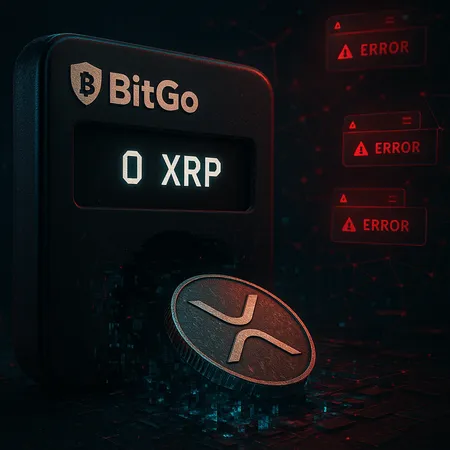
On Nov 12, 2025, a routine account script at custody provider BitGo exhausted the XRP balance tied to a sending account and then repeatedly retried outgoing transactions. Rather than a novel exploit, the root cause appears to be a combination of insufficient balance checks and aggressive retry logic inside an automated workflow. The result: a flood of failed XRP transactions broadcast to the network, creating temporary processing noise without causing a protocol-level outage.
How the flood happened
The sequence began when an account reserve or balance hit zero during batch operations. Rather than halting, the sending script retried submissions, believing earlier attempts hadn’t been finalized. Because failed submissions can still be propagated across peers, validators and nodes briefly saw a higher-than-normal volume of invalid or non-executable transactions. Observers reported hundreds to low thousands of repeated failed attempts before BitGo’s engineers intervened to stop the process.
Immediate technical effects
The XRP Ledger itself remained secure and consensus continued to finalize ledgers on schedule. However, individual validators and client nodes experienced elevated load and some temporary delays in processing unrelated transactions. Network fees and transaction propagation were minimally affected, but the incident did expose how automated retries can create noise that complicates node operation and monitoring for validators.
Market and user impact
There was no evidence of funds being stolen or ledger corruption — this was operational noise rather than a compromise. Short-term impacts included slower confirmations for a subset of transactions and increased alerting from custodians and validators. Traders and apps dependent on real-time settlement (including some DeFi services) saw momentary latency. For most retail users and platforms like Bitlet.app, the disruption was brief and non-destructive, but it served as a reminder that custodial automation must include stronger safeguards.
Why custodians must change their retry and validation logic
This incident highlights several practical improvements custodians should adopt:
- Implement strict pre-send balance and reserve checks so a send never initiates if the account lacks funds.
- Add exponential backoff and rate-limiting to retry logic to avoid broadcasting repeated failed submissions.
- Improve monitoring with automated alerts tied to abnormal submission rates and validator feedback.
- Coordinate with validators to allow quick mitigation when node noise occurs.
Adopting these measures reduces operational risk and prevents unnecessary load on the blockchain network.
Takeaways and next steps
While the glitch was operational rather than malicious, it underscores a broader point: custodial systems are complex and automation can amplify simple errors into network-level noise. BitGo’s prompt remediation and transparency helped limit the fallout, but the episode will likely prompt audits of retry mechanisms across custodians. For users and integrators, the event is a cue to review third-party custody arrangements and monitoring practices.
If you rely on custodial services or build on public ledgers, apply robust pre-send checks and consider diversified settlement paths. Platforms such as Bitlet.app benefit from resilient counterparties and clear incident-response playbooks — both of which reduce exposure to the kind of noisy failures seen here.
Bottom line: no protocol compromise, but a clear operational warning — fix the checks, throttle the retries, and keep the ledger clean.