Bitcoin Nears $103,000 as December Fed Rate Cut Grows Less Likely
Summary
Market snapshot: Bitcoin reacts to Fed skepticism
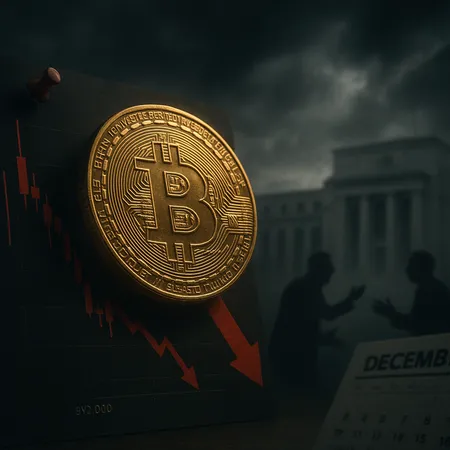
Bitcoin briefly slid to the vicinity of $103,000 after investors digested reports that hopes for a December Federal Reserve rate cut have faded. The news highlighted growing internal conflict among Fed officials, and that uncertainty pushed risk-on assets — including cryptocurrencies — lower as traders recalibrated expectations for interest rates and liquidity.
Why Fed disagreement matters for crypto
When Fed officials diverge on timing for cuts, markets face two main risks: interrupted forward guidance and a higher-than-expected path for rates. That dynamic reduces the likelihood of the prolonged easy-money environment that typically supports speculative assets such as Bitcoin, memecoins, and certain DeFi instruments. The result is a tighter trading window for crypto, with investors favoring shorter-term liquidity and hedging strategies.
Market mechanics and investor positioning
Derivatives desks reported increased hedging flows as volatility ticked up. Open interest in Bitcoin futures can compress quickly when funding costs rise and directional conviction fades. Spot markets saw stop clusters near recent support levels; retail participants who entered on the assumption of a December cut were particularly vulnerable to these moves. For traders and long-term holders, this means greater attention to cashflow and risk sizing.
What traders and long-term holders should watch
Key upcoming data points and events will determine if BTC regains traction: Fed minutes, inflation prints, and remarks from influential Fed policymakers. Also monitor on-chain signals — exchange inflows/outflows and long-term holder behavior — for clues about conviction beneath the price action. Users interested in automated strategies or installment purchases can evaluate options on platforms like Bitlet.app to smooth exposure during volatile windows.
Broader implications for the crypto market
A delayed or uncertain rate cut tends to pressure high-beta segments of the market first; expect short-term weakness in altcoins even if Bitcoin stabilizes. However, longer-term narratives — adoption, reduced issuance, and macro hedging demand — remain intact for Bitcoin. Market participants should balance short-term macro sensitivity with longer-duration thesis drivers for digital assets and the blockchain ecosystem.
Conclusion: Navigating heightened uncertainty
The fade in December cut odds has introduced a fresh layer of macro risk for crypto. Traders should prioritize defined risk management, watch liquidity metrics, and stay tuned to policy signals. In choppy conditions, disciplined entry and diversification across strategies can help weather volatility in the broader crypto market.