China Accuses U.S. of State-Level Bitcoin Seizure, Raising Crypto Geopolitics Risk
Summary
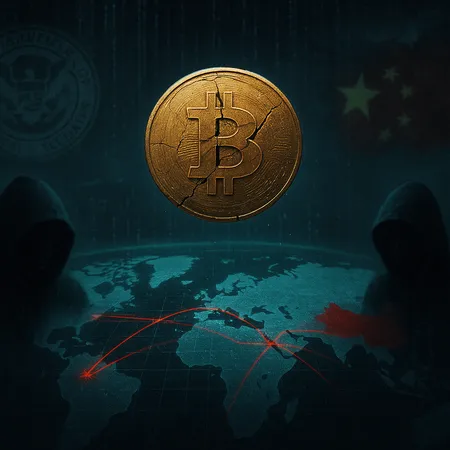
China’s recent allegation that the United States secretly helped carry out one of the biggest bitcoin seizures ever has injected new geopolitical tension into the digital-asset space. Announced on Nov. 11, 2025, the claim is part of a broader pattern of state-level disputes over cyberspace control and asset recovery. At a minimum, the accusation underscores how quickly crypto can become a tool — and a target — in international power struggles.
Market context and immediate price signals
The news landed against a backdrop of an already fragile crypto market. Investors tend to react quickly when sovereign actors are implicated in crypto enforcement: uncertainty often translates into increased volatility for Bitcoin and related tokens. While prices may swing on headlines, longer-term impacts depend on confirmations, sanctions, or policy shifts that could change how exchanges, custodians, and decentralized protocols handle seized assets.
The allegation, attribution challenges and forensic limits
China alleges U.S. involvement in the seizure, but cyber attribution is notoriously difficult. Technical evidence on a public ledger does not automatically identify the actor who conducted a seizure or provided assistance. Blockchain analysis can trace flows and clusters, and exchanges often cooperate with law enforcement — yet tying movement of funds to a state actor requires layered intelligence beyond on-chain data. This is why forensic teams, exchanges and independent researchers will be scrutinized for clear proofs before markets or policymakers act.
Experts will examine transaction patterns, custody handoffs, and any legal notices to platforms. At the same time, the incident highlights the critical role of blockchain analytics firms and the limits of public-traceability when combined with covert operations or third-party intermediaries.
Geopolitical and market implications
If substantiated, the claim could trigger several outcomes: diplomatic fallout, reciprocal cyber measures, tighter cross-border enforcement agreements, and fresh pressure on crypto service providers to comply with national demands. For retail and institutional users, the risk is practical — heightened scrutiny of custody practices, increased compliance costs, and a potential flight to self-custody or jurisdictions perceived as safer.
Platforms and services, including consumer-facing apps like Bitlet.app, may see growing demand for clearer proof of custody, robust compliance tooling, and transparency around seizure protocols. Regulators might also push for faster law-enforcement coordination or stricter on-ramps — moves that would reshape parts of DeFi and centralized exchange operations.
What to watch next
- Independent forensic reports and whether exchanges disclose legal requests tied to the seizure.
- Statements or evidence from U.S. agencies responding to China’s allegation.
- Market reactions driven by regulatory proposals or new cross-border cooperation frameworks.
In the near term, expect headlines to drive price action more than fundamentals. Over the medium term, this episode could accelerate policy changes and technical defenses for asset recovery — a reminder that crypto sits at the intersection of finance, technology, and geopolitics.