TeraWulf Abandons Bitcoin Mining Push, Rebrands Data Centers for AI/HPC
Summary
Industry Pivot: From Bitcoin Mining to AI and HPC
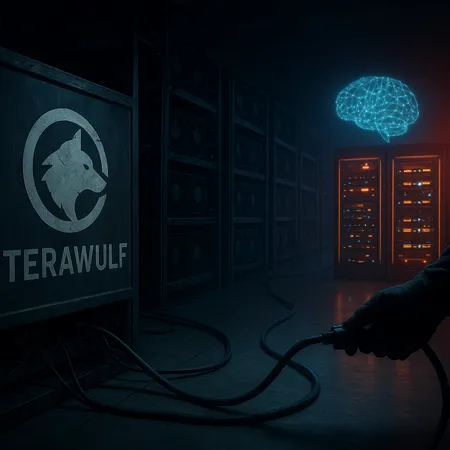
TeraWulf announced a strategic redirection of its energy and facilities away from traditional Bitcoin mining toward high-performance computing (HPC) and artificial intelligence workloads. This shift is part of a broader pattern among miners — including Riot, CleanSpark and Galaxy — that are repurposing data-center capacity to capture demand for AI training and inference services. For companies whose margins have been squeezed by electricity prices and hardware cycles, AI and HPC represent higher-margin, enterprise-facing revenue compared with volatile BTC mining returns.
Why miners are pivoting now
Mining economics have tightened as rewards, difficulty, and operational costs converge. Many publicly traded miners have reported slimmer margins or one-off charges tied to facility build-outs and power contracts, prompting boards to reconsider core strategies. Meanwhile, the global appetite for AI compute has exploded: models require dense, sustained GPU hours and predictable power budgets that repurposed crypto sites can provide.
Energy economics and hardware repurposing
Operators can convert parts of their infrastructure to support GPU clusters or rent rack space to AI firms, selling predictable capacity rather than chasing block rewards. That transition involves capital expenditure and technical rework — cooling upgrades, network changes, and new hardware procurement — but it can offer steadier revenue via contracts, colocation and cloud-like services. Companies that move early may gain pricing power in regional markets where large-scale power and space are scarce.
What this means for the crypto market and stakeholders
The conversion from mining to HPC is not a full exit from crypto: many firms plan hybrid models that keep BTC exposure while monetizing idle capacity. For Bitcoin holders and traders, the immediate effect is more nuanced than a simple sell-off — reduced dedicated hashrate could tighten short-term mining competition, but larger miners still retain significant influence over network security. From an investor perspective, the pivot signals diversification into enterprise tech revenue streams, which some shareholders may welcome as a hedge against BTC cycles.
Risks and opportunities ahead
The opportunity is clear: enterprise AI customers pay for reliability and scale. The risk is execution — repurposing facilities is costly and competitive, as hyperscalers and established data-center operators also chase AI demand. Regulatory scrutiny of power contracts and environmental considerations could add complexity, especially for firms operating in regions with tight grid constraints.
Takeaways for market participants
- TeraWulf joining other miners highlights an industry-level reassessment of where long-term value lies.
- Repurposed sites can capture AI spend, but success depends on contracts, location, and technical execution.
- For crypto users and platforms, shifts like this change the landscape for on-chain economics and off-chain infrastructure.
As the sector evolves, users of services such as Bitlet.app will watch how these infrastructure pivots affect liquidity and institutional participation in the broader crypto market. Similarly, developments in compute and hosting will intersect with other blockchain verticals like blockchain integrations, NFTs and DeFi as operators balance legacy crypto exposure with new enterprise revenue.