Here's the real XRP ETF launch timeline as DTCC is misread again
Summary
Context: DTCC activity vs. regulatory approval
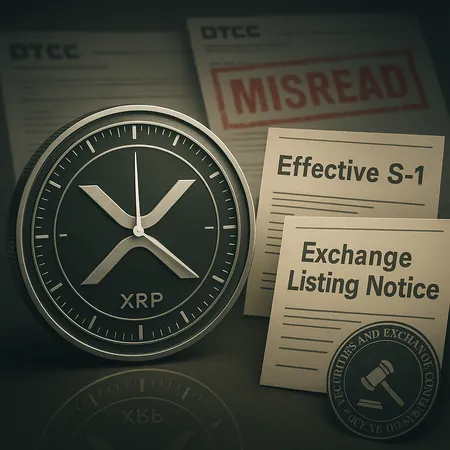
Recent activity on DTCC pages sparked headlines claiming an imminent XRP ETF launch. That reaction is understandable — DTCC records can show detailed operational steps — but it's important to distinguish operational preparedness from regulatory permission. DTCC pages show operational prep, not SEC approval. Traders parsing feeds and dashboards need to keep that distinction front and center.
Why DTCC notices are being misread
DTCC entries typically document custody arrangements, settlement readiness and clearing workflows. Those are necessary plumbing for an ETF to function once authorized, but they are not the legal go‑ahead. In the SEC's new generic‑listing regime, administrative and operational milestones occur before, during, and after regulatory approvals; they do not themselves change the fund's legal status.
The actual legal triggers that start the ETF clock
The SEC's generic‑listing framework creates two clear signals that mark when an ETF can actually launch: an effective S‑1 (or similar registration statement) and a formal exchange listing notice announcing the product. When the S‑1 is declared effective and the exchange posts its listing notice, the countdown to first‑day trading begins. Those filings are the authoritative sources — not DTCC operational pages.
How to monitor filings correctly
Follow the SEC EDGAR feed for the S‑1 status and the exchange's official notices for listing dates. Media summaries and clearinghouse entries can be helpful context, but rely on the primary filings for timing. This discipline prevents confusing operational readiness with regulatory clearance and helps avoid mistimed trades or rumors.
Market implications and trading practicalities
For traders and institutions, the practical consequence is simple: don’t trade the DTCC headline — trade the filings. Market makers and institutional desks will only finalize go‑live setups after the S‑1 is effective and exchange notices are live. Retail platforms and DEX aggregators might show interest earlier, but actual deposit windows and NAV calculations follow regulatory signals.
What investors should watch next
Keep an eye on two items: the S‑1 effectiveness on EDGAR and the exchange listing notice. Also note market structure signals — spreads, premarket activity and custodian announcements — but treat them as secondary. For those tracking broader ecosystem cues, this is also a reminder that news about ETFs, token listings and custody intersects with topics like DeFi and NFTs in market attention cycles.
Bottom line
DTCC activity indicates progress in operations, not legal permission. The real XRP ETF launch clock starts only when an S‑1 is effective and the exchange posts its listing notice under the SEC's generic‑listing regime. Users of platforms like Bitlet.app and other trading services should prioritize primary filings over clearinghouse pages to avoid mistimed positions and misinformation.