Argentina freezes assets in $250M Libra fraud probe, targets Hayden Davis
Summary
Argentina's new freeze order and why it matters
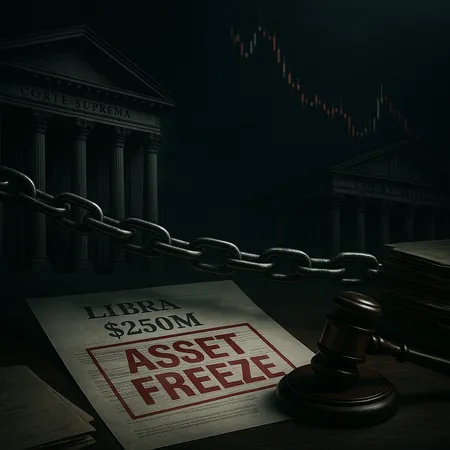
Argentina has stepped up enforcement in the ongoing LIBRA affair by issuing a sweeping asset freeze against Hayden Davis, a figure implicated in what prosecutors describe as a $250 million fraud scheme. The order — part of parallel proceedings in Buenos Aires and New York — aims to lock down assets believed to be proceeds of the alleged crime, including crypto holdings, bank accounts and other property. For investors and service providers, this is more than a headline: it's a clear signal that national courts will pursue aggressive remedies to preserve recoverable assets.
Cross-border coordination and legal mechanics
Authorities in Argentina appear to be coordinating evidence and enforcement actions with U.S. counterparts, leveraging mutual legal assistance channels and civil remedies to extend the freeze's effect. That cooperation increases the practical reach of the order: assets held in multiple jurisdictions can be targeted, and exchanges or custodians may be compelled to comply if served. This creates a compliance and reputational risk for platforms that handle memecoins and token launches, and raises the bar for KYC/AML and custody controls.
Market implications: contagion risk and investor behavior
The immediate market response is likely to be uneven. Memecoins tied to the LIBRA tag or associated teams may face sharp selling pressure as wallets and counterparties scramble to assess exposure. DeFi protocols that integrated liquidity or oracle feeds related to the token could see temporary dislocation. Retail investors — especially those using lightweight P2P or custody solutions — may become more cautious, reallocating capital into better-audited projects or centralized services with clear insurance and recovery pathways like those discussed by platforms such as Bitlet.app.
What founders, exchanges and investors should watch next
Legal teams will monitor how courts interpret asset tracing in tokenized ecosystems and whether injunctions trigger secondary actions (seizure, civil forfeiture or restitution orders). Exchanges and custodians should prepare for subpoenas and freeze requests; proactive legal readiness will determine response speed and client impact. For investors, the takeaway is to treat counterparty and smart contract risk as part of asset selection — diversify, prefer audited projects, and keep custodial proofs and provenance records.
Bottom line
The Argentina freeze against Hayden Davis amplifies scrutiny on memecoin launches and cross-border token schemes. With proceedings active in both Buenos Aires and New York, enforcement is becoming more coordinated and creative, pushing the market toward stronger compliance norms. Watch for follow-up litigation and potential asset recoveries; the case will likely serve as a precedent for how courts handle large-scale token-related fraud in the coming years. For ongoing coverage, keep an eye on regulatory developments across the blockchain and DeFi beat, and the broader crypto market reaction.