Jack Dorsey's Square opens Bitcoin payments to 4M merchants — X users already paying
Summary
A fast path from X to real-world Bitcoin payments
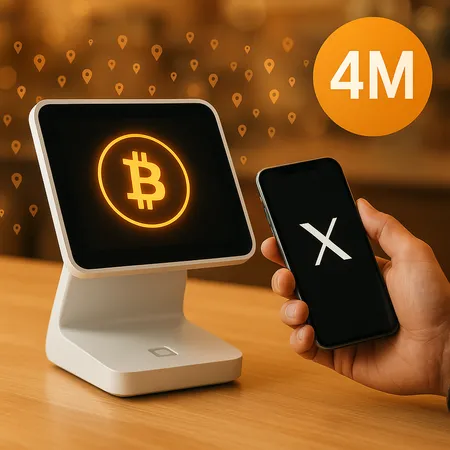
Jack Dorsey’s payments arm, Square, has just enabled a Bitcoin payment feature that effectively opens checkout to about 4 million merchants on its network. Within hours X users began reporting transactions — one user even claimed to be the first person to pay with Bitcoin at a physical business using the new flow. The announcement underscored how social platforms and payments infrastructure are converging to make on‑chain value transfers feel like normal card transactions.
How the Square Bitcoin checkout works and why it matters
Square’s implementation links an X user's Bitcoin wallet to merchants that already use Square’s point‑of‑sale and online checkout tools. Instead of a separate, clunky crypto checkout, the experience routes BTC payments through Square’s rails so merchants see a familiar settlement process. For consumers, this reduces friction for buying goods with Bitcoin and keeps the experience close to what they expect from debit or card payments.
This is significant because it bridges the on‑ramp gap between social discovery and purchase. For everyday users, paying with Bitcoin becomes less about wallets and explorers and more about tapping a familiar pay button — a shift that has meaningful implications for adoption and the broader crypto market.
Early adoption: X users, the first receipts, and merchant reactions
Reports from X indicate early voluntary adoption rather than a forced rollout. Several users posted confirmations and receipts; one notable example touted being the first to ever pay with Bitcoin at a business via Square’s new flow. Merchants meanwhile benefit from minimal integration overhead — many already on Square’s platform can accept BTC without installing special wallet software.
This grassroots start matters: real purchases generate data on settlement times, chargeback behavior, and customer preferences. Developers and merchant services — including platforms like Bitlet.app — should watch these metrics closely as they will inform how installment, P2P, and earn products integrate crypto payments in the near term.
What this means for Bitcoin, merchants, and DeFi rails
Opening Square’s merchant base to Bitcoin doesn't automatically make every store a crypto powerhouse, but it lowers one big barrier: acceptance. If more consumers opt to check out with BTC, payment processors and DeFi builders could innovate faster around liquidity provisioning, stable settlement, and merchant hedging tools. Expect partnerships and new product offers aimed at smoothing volatility exposure and quicker settlement for merchants.
This also nudges legacy payments and crypto infrastructure closer together, creating opportunities for on-ramps, remittance flows, and loyalty programs tied to digital assets. For merchants, the pitch is clear: accept a new customer base with minimal additional effort. For Bitcoin proponents, it's another step toward everyday utility.
Bottom line
Square’s rollout to roughly 4 million merchants — validated by early X user receipts — is a pragmatic move that reduces friction for Bitcoin payments. It’s not a sudden mass conversion to crypto, but it is an important infrastructure upgrade that increases real‑world utility for BTC and creates fertile ground for payment innovators and services in the DeFi ecosystem. Watch for broader merchant uptake and integration data over the coming months as the market digests this capability.