Coinbase Launches Monad Token Sale With New Anti-Flipper Rules – What To Know
Summary
Coinbase returns to U.S. token sales after six years
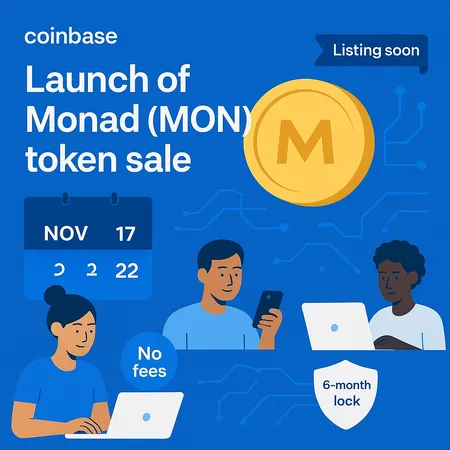
Coinbase has quietly re-entered the U.S. token-sale market, announcing a sale for Monad (MON) running Nov. 17–22 — its first domestic token event in six years. The exchange is pitching the offering as different from past launches: Coinbase says it has added anti-flipper protections and broader allocation mechanics aimed at reducing speculative dumps while letting more retail users participate. The platform also confirmed there will be no user fees during the sale and that issuers were vetted before being allowed to launch.
Coinbase's Monad sale: key details and timeline
Coinbase’s announcement lists several procedural changes that will accompany the MON sale. Most notable are an allocation algorithm meant to distribute tokens more evenly across eligible participants and a six-month lock on allocations to deter immediate reselling. Coinbase intends to list MON on its exchange following the sale, though exact listing timing and markets will depend on internal review and regulatory considerations. For traders watching tickers, MON will be the symbol to track once distribution and listing are complete.
Allocation mechanics and anti-flipper measures
The new allocation algorithm is built to broaden access, not just reward the largest deposits. While Coinbase hasn’t published full technical details, the design reportedly reduces concentration risk by limiting outsized allocations and using randomized or pro-rata mechanisms to reach more users. Combined with six-month locks, these measures are explicitly targeted at flipping behavior — the rapid buy-and-dump trades that can create volatile short-term price swings. Coinbase also emphasized issuer vetting to reduce scams and projects with weak tokenomics.
Why this matters for the crypto market
This relaunch signals a potential shift in how major centralized exchanges manage primary offerings. By coupling no user fees with allocation controls and vendor checks, Coinbase is trying to balance accessibility with market stability. That could pressure other platforms to adopt similar safeguards for token launches, especially as retail interest in new tokens—spanning DeFi projects to experimental memecoins—remains high. Exchanges that better mitigate early volatility may attract long-term investors who’ve been burned by previous flips.
How to participate, risks and what to watch
Users interested in the Monad sale should confirm eligibility requirements on Coinbase and understand the lock-up terms before committing funds. Key risks remain: token fundamentals may underperform expectations, market conditions can change quickly after the lock expires, and regulatory dynamics around U.S. token offerings are still evolving. Watch for Coinbase’s final allocation rules, the schedule for listing MON, and whether competitors adopt similar allocation algorithms or lock periods. Platforms like Bitlet.app provide alternative ways to engage in crypto markets, but centralized sale mechanics like Coinbase’s will likely set industry expectations.
Bottom line
Coinbase’s Monad sale is a high-profile test of a more conservative, access-focused approach to exchange token offerings. With allocation rules, six-month locks, and no fees, the exchange aims to reduce flip-driven volatility while widening participation. How effective these measures are — and whether other exchanges follow suit — will shape the next wave of token launches and secondary-market behavior.