Institutional XRP ETF Boom Looms as DTCC Adds Five Listings, Analysts Map $10 Path
Summary
Why DTCC’s addition matters for institutional XRP access
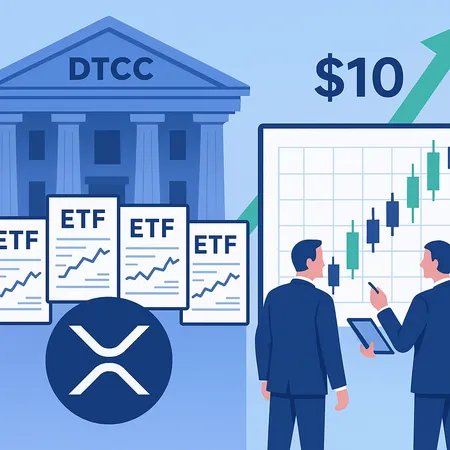
The Depository Trust & Clearing Corporation adding five spot XRP ETF listings to its database is a technical milestone that signals readiness in the plumbing behind institutional products. While the DTCC entry does not equal regulatory approval, it means clearing agents and custodians can begin mapping ticker-level settlement flows — a necessary step before launch. That pre-launch momentum reduces operational friction and makes large-scale institutional participation more plausible if approvals arrive.
How ETF flows could amplify XRP’s price dynamics
ETF listings create a direct on-ramp for allocators who prefer regulated, custody-backed products. Analysts modeling potential inflows point to two compounding effects: concentrated buying pressure into ETF-created supply and tighter tradable float as coins move into institutional custody. Given XRP’s market structure and historical turnover, some analysts argue that multi-billion-dollar inflows could rapidly translate into outsized price moves. That’s the basis for the bullish scenario mapping a $10 pathway — contingent on sustained demand and limited new sell-side supply.
Analyst assumptions behind the $10 thesis
Most bullish models assume: a) multiple billions in net ETF inflows over 6–18 months, b) a significant portion of circulating supply entering custody rather than trading desk inventories, and c) a benign macro backdrop for risk assets. Analysts also factor in XRP-specific variables like on-ledger utility and partnerships that could anchor long-term demand. These assumptions are optimistic and sensitive to timing and investor behavior.
Market structure, custody, and regulatory hurdles
Adding listings at the DTCC lowers operational barriers, but it does not remove legal or regulatory hurdles. The SEC’s posture, potential state-level interpretations, and the readiness of custodians to accept XRP under strict compliance frameworks remain critical. Liquidity providers must also be comfortable quoting tight spreads for an ETF to function smoothly. For traders and yield platforms, shifts in liquidity could ripple into related markets — including DeFi desks and derivatives books. Exchanges and services like Bitlet.app will need to adapt custody and settlement integrations if institutional flows materialize.
Risks and timing to watch
Key risks that could derail or delay the bullish thesis include renewed regulatory scrutiny, slow custodial on-boarding, and macro shocks that push institutional allocators to safer assets. Timing is another variable: even with DTCC readiness, approvals and custodial certifications can take months. Market participants should watch filings, custodian announcements, and early authorized participant (AP) interest. Short-term volatility is likely around any formal ETF approval or launch windows.
Bottom line: a technical milestone, not a guarantee
The DTCC’s addition of five spot XRP ETF listings is a clear step toward institutionalization, tightening the operational pathway for large allocators. Analysts’ $10 scenarios are possible under aggressive inflow assumptions, but they rely on several moving parts falling into place — particularly regulatory clarity and custodial adoption. For traders and investors, this development raises the odds of meaningful institutional activity; for platforms and wallets, it underscores the need to prepare custody and settlement workflows as the market evolves. Keep monitoring official filings and market liquidity signals as the next decisive events approach.
Note: This article focuses on market mechanics and analyst scenarios; it is not investment advice.