Seoul Considers Harder Line on Pyongyang After US Crypto Crackdown
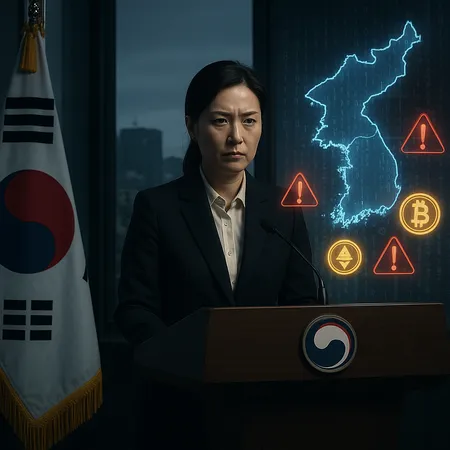
Context: Seoul's Response to a New Crypto Threat
On Nov 6, 2025, Vice Foreign Minister Kim Ji-na said South Korea may alter its approach to sanctions because of the growing threat from North Korea's cryptocurrency thefts. Her remarks came in the wake of intensified U.S. enforcement actions targeting illicit crypto flows, highlighting how state-backed cyber-theft is forcing governments to rethink sanctions, compliance, and cross‑border coordination.
Why this matters for the crypto market
North Korea has repeatedly been accused of using hacked crypto funds to finance its programs, blurring lines between cybercrime and state policy. Seoul’s consideration of tougher or more flexible sanctions is significant because:
- It acknowledges that traditional financial restrictions are less effective when illicit actors convert seized funds into crypto.
- It signals greater cooperation with the U.S. and other partners on tracking and disrupting illicit blockchain flows.
- It raises the compliance bar for South Korean exchanges and regional intermediaries, which could face stricter reporting and delisting requirements.
These dynamics will affect liquidity, regional exchange access, and the operational risk calculus for DeFi protocols and centralized platforms alike.
What Seoul could change — plausible moves
South Korea’s policy options range from technical upgrades to broad diplomatic shifts. Likely measures include:
Stronger regulatory enforcement and AML measures
Expect tougher Anti‑Money Laundering (AML) rules, mandatory on‑chain tracing, and faster suspicious activity reporting windows for exchanges. Platforms may be required to integrate enhanced sanctions screening and forensic tools.
Targeted crypto sanctions and designations
Seoul could adopt more precise asset-level sanctions, freezing addresses and tools tied to identified Pyongyang-linked operations rather than broad sectoral bans.
Closer intelligence and law-enforcement coordination
Greater data‑sharing with U.S. agencies and private blockchain analytics firms is a logical step. That coordination would enable quicker attribution and sanctions designations.
Tactical flexibility in sanctions policy
South Korea may try to blend punitive measures with narrow carve-outs that let humanitarian transactions continue while cutting illicit revenue streams.
Implications for exchanges, DeFi, and users
Centralized exchanges operating in South Korea or serving Korean customers will likely face the steepest short-term impact: increased compliance costs, possible delistings, and more aggressive transaction monitoring. DeFi protocols could face pressure indirectly through infrastructure providers (oracles, bridges) required to comply with regional rules.
For ordinary users, the policy shift may mean stricter KYC, longer withdrawal review times, and sharper scrutiny on cross‑border transfers. Privacy‑focused tools and unvetted bridges could come under renewed regulatory attention.
Market and geopolitical ripple effects
A Seoul pivot would reinforce U.S. momentum on crypto enforcement and could push other Asia-Pacific governments to tighten standards. It may also incentivize bad actors to obfuscate flows more creatively, propelling demand for advanced chain analytics and custody controls.
That creates commercial opportunities for compliance vendors and could accelerate the institutionalization of blockchain monitoring across the crypto market. Platforms like Bitlet.app, which must balance user service with regulatory expectations, will need to adapt tooling and policies accordingly.
How industry players should prepare
- Exchanges and custodians should accelerate adoption of chain‑forensics and sanctions‑screening tools.
- DeFi developers need to assess dependency risks (bridges, relayers, oracles) and consider permissioned controls where necessary.
- Compliance teams must plan for faster cooperation with law enforcement and clearer escalation paths when illicit activity is suspected.
Final takeaways
Seoul’s warning — voiced by Vice Foreign Minister Kim Ji-na — is more than rhetoric: it reflects the reality that state-backed crypto theft challenges the existing sanctions toolkit. Expect a blend of technical, legal, and diplomatic responses that will tighten enforcement in the region and ripple across the global crypto ecosystem.
For users and platforms, the message is clear: the era of lax crypto borders is drawing to a close, and preparation will determine who adapts successfully.
For more background on how blockchain tools are used in both legitimate and illicit contexts, see resources on blockchain and evolving standards in DeFi.