Armstrong: Crypto Spreads Capitalism — Coinbase CEO Champions Economic Freedom
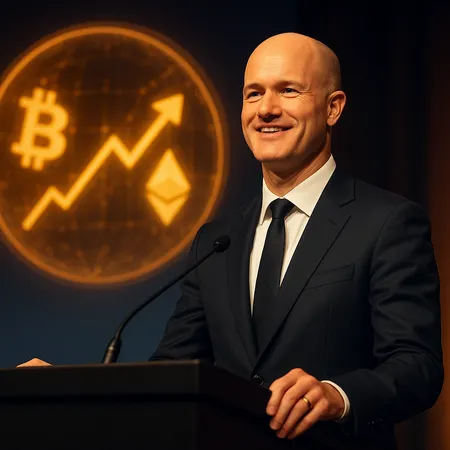
Armstrong's Claim: Crypto as a Vehicle for Economic Freedom
In a recent social post, Coinbase CEO Brian Armstrong asserted that cryptocurrency promotes economic freedom and spreads capitalism globally. The remark distills a long-running argument from many industry leaders: decentralized digital assets and permissionless finance can open new economic pathways for people shut out of traditional systems.
Why Armstrong Says Crypto Spreads Capitalism
Armstrong's view rests on a few core ideas. First, crypto enables borderless value transfer without gatekeepers, reducing reliance on legacy intermediaries. Second, on-chain financial services provide programmable money and property rights in ways that can be permissionless and censorship-resistant. Third, markets that emerge around digital assets create new incentives and entrepreneurial opportunities across jurisdictions.
Advances in blockchain and protocols in DeFi have made these capabilities more practical: lending, tokenized assets, and non-custodial wallets let users interact directly with financial primitives. Those innovations are reshaping parts of the crypto market and pushing adoption in regions with limited banking infrastructure.
Practical examples
- Remittances and cross-border payments that reduce fees and settlement time.
- Tokenized ownership that lowers barriers to investment in real estate or creative works.
- Permissionless lending markets where anyone can earn yield or obtain credit without traditional credit underwriting.
Counterpoints: Limits and Legitimate Concerns
While Armstrong frames crypto as a promoter of capitalism and freedom, there are important caveats. Critics point to high volatility, regulatory uncertainty, and concentration of holdings that can reproduce old power imbalances in new forms. Money-laundering concerns and consumer protection issues remain central to policymakers’ focus.
Regulation will shape how widely Armstrong’s vision can materialize. Clear rules could foster institutional participation and consumer confidence — but heavy-handed approaches risk stifling innovation. The balance between oversight and openness will determine whether crypto becomes a distributed engine of opportunity or an additional speculative asset class concentrated among a few.
What This Means for Users and Industry Platforms
For everyday users, Armstrong’s thesis highlights potential benefits: greater access to financial services, lower friction for payments, and new income streams. For platforms, it underscores responsibility: building safer products, improving on-ramps, and working with regulators.
Services like Bitlet.app, which provide installment, earn, and P2P exchange options, illustrate how consumer-facing platforms can translate crypto’s promise into practical financial tools — especially when they pair innovation with clear user protections and education.
Bottom Line: Aspirational, but Dependent on Execution
Brian Armstrong’s statement that crypto spreads capitalism globally is a concise expression of an optimistic industry narrative: crypto can expand economic freedom if infrastructure, regulation, and user protections evolve together. The idea is compelling, but outcomes will depend on real-world implementation, market dynamics, and policy choices. Watch for continued innovation in blockchain protocols and evolving regulatory frameworks to see whether Armstrong’s vision scales beyond rhetoric.