Argentina Freezes Assets in $120 Million Libra Crypto Scandal
Summary
Argentina's sweeping court action
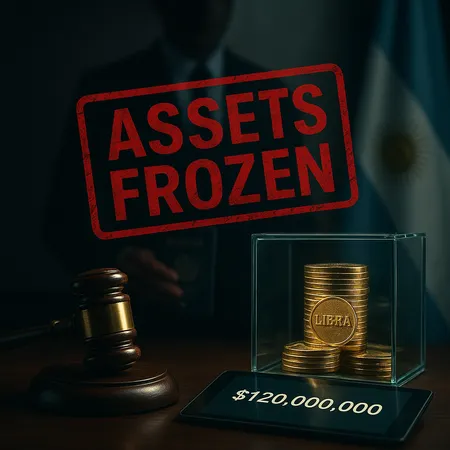
Argentina's judiciary has intensified an investigation into one of Latin America's largest crypto scandals, issuing a broad asset freeze linked to the collapse of the Libra memecoin. The order targets U.S. citizen Hayden Davis and two regional associates accused of orchestrating a scheme tied to roughly $120 million. Courts froze bank accounts, crypto wallets and real estate as prosecutors said they seek to preserve funds while building cases that allege fraud, market manipulation and possible money-laundering.
Details of the asset freeze and legal steps
Judicial documents describe a multi-jurisdictional probe: the freeze is intended to prevent dissipation of assets while investigators pursue forensic traces across on-chain transfers and traditional finance channels. Authorities are coordinating with foreign counterparts to subpoena exchange records and trace wallet flows. If prosecutors prove illicit enrichment or coordinated market manipulation, Argentine courts could move from freezes to seizures and restitution claims. Legal experts say the speed and breadth of measures are meant to limit contagion and protect potential victims.
The accused and regional ties
Hayden Davis, named in the filings, is accused of being a central organizer, with two unnamed regional associates allegedly facilitating operations across Latin American jurisdictions. The case centers on a memecoin called Libra (ticker: LIBRA) — distinct from earlier stablecoin proposals — and highlights how cross-border token schemes can amplify enforcement challenges. Observers note this pattern often involves rapid token launches, social-media-driven promotion, and swift capital flows that complicate standard investigative timelines. See how memecoins have behaved in past episodes for context.
Market implications and contagion risk
The immediate market reaction included sharp liquidity stress for LIBRA and increased volatility among similar tokens. Exchanges and OTC desks may delist or suspend trading to limit exposure, which could force distressed selling and deeper price drops. DeFi protocols that integrated the token or used it as collateral face smart-contract and liquidity risks, underscoring the need for careful protocol design and audits. Traders and portfolio managers should watch order-book depth and on-chain flows closely as the broader crypto market digests the news.
Regulatory precedent and regional fallout
This enforcement action sets a notable precedent in Latin America: Argentine authorities are signaling a willingness to pursue cross-border crypto cases aggressively. Expect greater emphasis on KYC/AML compliance by local exchanges, expanded cooperation with U.S. and international regulators, and possible legislative responses to tighten oversight of token launches and promotional practices. The case could accelerate regulatory clarity for investors and platforms operating in the region.
What investors and platforms should watch now
For investors: prioritize custody practices, diversify exposure, and perform robust due diligence before buying low-liquidity tokens. Monitor exchange notices, on-chain transparency tools and court filings for signs of asset seizures or recovered funds. Platforms and users of P2P or installment services should prefer regulated counterparts; for example, services like Bitlet.app emphasize regulated flows and risk controls that can help mitigate exposure in volatile token episodes.
Bottom line
Argentina's asset freeze connected to the Libra memecoin probe is a reminder that rapid token growth can attract intense legal scrutiny. Stay cautious, verify counterparties, and follow official filings — the coming weeks will likely reveal whether prosecutors can convert freezes into long-term recoveries or prosecutions, and how the episode reshapes memecoin governance and regional enforcement.