China Accuses U.S. of State-Sponsored Hack in $13B Bitcoin Seizure
Summary
Background: The Seizure and the Accusation
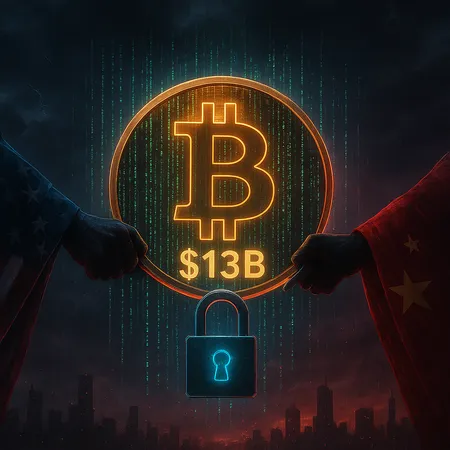
Chinese authorities claim that U.S. agencies used state-sponsored hacking techniques to take custody of $13 billion worth of Bitcoin tied to Chen Zhi. The allegation — if true — would represent one of the largest cross-border crypto intervention claims in history and raises urgent questions about jurisdiction, sovereignty, and the limits of digital asset enforcement.
The details released so far are sparse and politically charged. U.S. law enforcement has not publicly confirmed the hacking claim in the same terms; previous large-scale Bitcoin seizures have involved court orders, blockchain tracing, or cooperation with exchanges. This new accusation thrusts chain forensics and intelligence operations into the spotlight and complicates already tense U.S.–China relations.
Immediate Market Impact and Volatility
Markets reacted quickly to the news, with traders citing the story as a catalyst for heightened volatility in BTC and related assets. While price swings are normal in crypto, geopolitical narratives tend to amplify fear, uncertainty, and doubt — especially when the narrative involves state actors and massive asset movements.
Institutional desks and retail platforms adjusted exposure, and some liquidity providers pulled back pending clarity. Longer-term investors are weighing whether this episode will accelerate adoption of privacy tools, self-custody, or the flight of capital into alternative rails and on-chain privacy solutions.
Geopolitical and Legal Implications
This dispute blurs the line between criminal enforcement and state-level cyber operations. If U.S. agencies did use offensive cyber means, the case will test international law around cross-border asset seizures and could invite reciprocal actions. For China, framing the seizure as a state-sanctioned hack becomes a diplomatic lever — potentially justifying new controls on cross-border crypto flows or retaliatory cyber measures.
On the legal front, courts and regulators worldwide will be watching for precedent. Claims about hacking change how evidence is presented in asset-forfeiture cases and may force judges to consider classified or technical testimony that is hard to audit publicly.
Chain Forensics, Privacy, and DeFi Risks
This episode underscores how powerful on-chain analytics have become — yet also how imperfect they are. Blockchain tracing firms can follow funds, but attribution and custody proofs often rely on off-chain intelligence. That gap creates both investigative opportunities and contested narratives.
Expect renewed interest in privacy-preserving technologies, mixers, and Layer-2 solutions that obfuscate flow history. At the same time, regulators and firms will push back: stronger compliance tooling, stricter Know Your Customer (KYC) checks, and closer monitoring of DeFi rails could follow.
Platforms such as Bitlet.app and other custodial services will need to reassure users about security, transparency, and legal compliance when geopolitical risk touches private keys and exchange custody.
What Traders and Institutions Should Watch
- Official statements from U.S. agencies and Chinese authorities for verification.
- On-chain movements tied to the contested wallets and any attempts to liquidate or split holdings.
- Regulatory or legislative responses that could affect cross-border transfers and custodial liabilities.
Keep an eye on the broader blockchain investigative community and reporting in the crypto market beat for timely, verified updates.
Bottom Line
China’s accusation reinscribes geopolitics into the crypto narrative and may reshape enforcement norms, privacy debates, and market behavior. Regardless of final fact-finding, the episode is a reminder that digital assets operate at the intersection of technology, law, and statecraft — and that platforms, traders, and developers must plan for scenarios where those spheres collide.