Bitcoin Hits 95%: How the 20 Million BTC Milestone Rewrites Miner Incentives and Network Security

Summary
Why the 95% milestone matters
Bitcoin crossing the symbolic threshold of roughly 20 million coins mined — about 95% of the 21 million cap — is not merely a headline. It marks a long-expected transition from a miner economy dominated by the block subsidy to one where the fee market must shoulder a much larger portion of miner revenue. Media coverage and chain analyses have flagged the milestone: CryptoSlate highlights that 95% of Bitcoin is now mined, with fewer than one million BTC left before the 21M cap, and independent outlets also confirm the 20M figure. These milestones matter because Bitcoin's security budget today is still heavily influenced by subsidy economics; as that component declines, the composition of miner revenue becomes the central pivot for network security assumptions.
As that pivot happens, the questions are practical: will transaction fees grow to replace the subsidy, will higher BTC prices compensate miners in fiat terms, or will a combination of market structure and technological change create new security pressures? And crucially, how do current market trends—derivatives deleveraging and low exchange balances—alter the likely pathways? We'll unpack the mechanisms and then outline plausible scenarios for the next decade.
Miner revenue today: subsidy, fees, and the growing delta
Today, miners earn two revenue streams: the scheduled block subsidy (the protocol-driven BTC issued per block) and transaction fees paid by users. Historically the subsidy has been the dominant piece, but as issuance approaches the cap, the subsidy component shrinks by design. That doesn't happen overnight, but the marginal significance of fees increases with every mined coin.
A careful breakdown requires three moving parts: the BTC amount paid per block in subsidy, average fees per block, and BTC price (which converts BTC-denominated miner revenue to operational fiat costs). If fees remain a small fraction of a block’s BTC, then miner revenue in fiat terms will be increasingly sensitive to spot price. Conversely, if fee revenue scales with demand and congestion, miners could sustain hashpower even as the subsidy tapers.
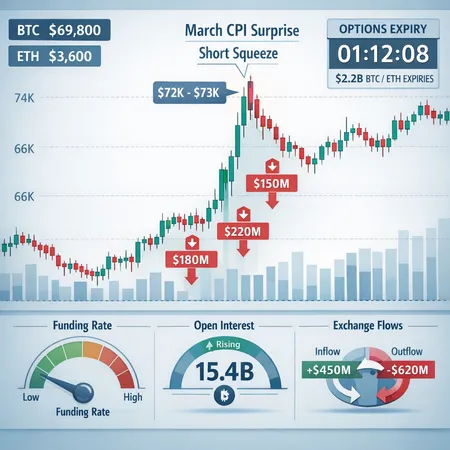
This is not theoretical arithmetic alone: market structure matters. Recent exchange and derivatives behavior — including a reduction in leverage ratios on major venues — changes short-term volatility and thus the fee environment in which miners operate. BeinCrypto documents a drop in Bitcoin leverage ratios on Binance and broader deleveraging trends; lower leverage tends to reduce forced liquidations and extreme price moves, which can dampen temporary fee spikes tied to panic trading.
How the fee market could evolve
Transaction fees are an auction: users bid for scarce block space. The auction’s clearing price depends on demand (number of on‑chain transactions, settlement needs), supply (block space per 10 minutes), and off-chain scaling (Layer‑2s and batching). Three dynamics will be decisive:
Demand-side elasticity: If everyday payments, DeFi activity, and high-frequency settlement keep demand for on‑chain settlement high, fees will have persistent floor levels. Conversely, if bulk of activity moves to Layer‑2 (Lightning, rollups that settle periodically) on‑chain demand could fall sharply.
Fee concentration: Even if daily transaction counts drop, periodic settlement spikes (large rollup settlement windows, exchange rebalancing) can create concentrated fee revenue that sustains miners.
Market microstructure: Fee estimation algorithms, mempool dynamics, and user expectations influence volatility of fee income; poor estimators can cause wide swings in realized fees.
A plausible outcome is a more volatile but higher-tail fee market: typical blocks carry modest fee revenue, but occasional congestion events produce outsized fees. Miners that survive those quiet stretches need either capital reserves, hedges, or sufficiently low cost structures.
Network security: cost-to-attack, hash rate economics, and new equilibria
Bitcoin’s security is, in practice, the product of hash rate and the economics behind it. The cost to perform a 51% attack scales with the capital cost of hardware and the expected revenue stream forgone by diverting hash power. If miner revenue (in fiat) remains attractive, hash rate stays high and attacks are prohibitively expensive. If revenue collapses relative to capital/operational costs, hash rate can fall, lowering the economic barrier for attackers.
Three substitution channels could reduce the security budget:
- Lower on‑chain fees than expected, making miners reliant on ever-smaller subsidies.
- Elevated energy or capital costs that outpace BTC-denominated revenue declines.
- Consolidation in mining (regional, pool-level) that increases centralization risk even with similar total hash rate.
Countervailing forces include BTC price appreciation (which raises fiat-denominated BTC rewards), continued efficiency gains in ASIC hardware, and diversified revenue strategies (e.g., miners offering co-located services or capturing fees from settlement batches). Holders and infrastructure teams should not assume an automatic, linear handoff from subsidy to fees—it's a negotiated economics problem realized on-chain and in markets.
How derivatives deleveraging and low exchange balances interact with structural shifts
Recent deleveraging in derivatives markets—lower leverage ratios on major venues—changes volatility and liquidity dynamics. BeinCrypto’s analysis on leverage declines points to a calmer liquidation landscape. Lower forced-liquidation cascades tend to reduce extreme fee spikes that accompany margin squeezes. That means short-term fee windfalls from leveraged panics could shrink, pressuring miners who might have counted on occasional high-fee blocks.
On the other hand, low exchange BTC inventories (a trend documented elsewhere in market reports) reduce sell‑side liquidity and can amplify price moves on flows, potentially pushing BTC price higher when demand exceeds available exchange supply. Higher BTC prices increase the fiat value of miner revenue even if BTC-denominated fees/subsidies decline, which supports security.
The net effect is ambiguous and path-dependent: deleveraging smooths fee spikes (negative for miners relying on tail events), while low exchange balances can elevate price and thus miner fiat income (positive). Infrastructure researchers should treat these as interacting variables rather than independent offsets.
Scenario analysis: three plausible trajectories for the next decade
Scenario A — Fee-sustained security (moderate demand + periodic tails)
In this scenario, Layer‑2s absorb everyday microtransactions, but increasing institutional settlement, DeFi on base layer anchors, and periodic rollup settlement create recurring fee events. Average fees per block rise sufficiently to compensate for subsidy reduction when paired with stable to modestly growing BTC prices. Hash rate remains high, attacker costs stay prohibitive, and miner business models shift toward operational efficiency and batching services.
Implications: holders enjoy steady security, miners that invest in efficiency survive, and services that coordinate settlement windows (exchanges, custodians, rollup operators) capture value. Watch indicators: median fees per block, frequency of fee spikes, and hash rate stability.
Scenario B — Price-compensated security (low fee growth, strong BTC price)
Here, on‑chain demand softens more than expected because Layer‑2 adoption accelerates rapidly and DeFi builds elsewhere. Fees remain a small share, but BTC’s price appreciates substantially (macro-driven adoption, monetary shocks). Miner revenue in fiat terms stays sufficient despite low BTC-denominated fees. Security is maintained by price, not fee economics.
Implications: higher BTC price mitigates security risks but centralizes economics toward miners with lower fiat break-evens. Holders are exposed to macro drivers; miners are exposed to price swings. Watch indicators: BTC price velocity relative to miner operating costs and concentration of hashpower.
Scenario C — Fee shortfall and consolidation risk (weak fees, modest price)
Worst-case for distributed security: Layer‑2 and batching reduce fee demand, BTC price only inches higher, and miners face revenue pressure. Some marginal miners exit, hash rate declines, and pool consolidation intensifies as operators merge to smooth revenue. Attack costs decline, and even if a full 51% attack remains expensive, the system becomes more brittle (e.g., longer reorgs, censorship risk).
Implications: holders face increased counterparty risk from custodians and exchanges; infrastructure teams must design for replay/rollback scenarios; miners need capital or consolidation. Watch indicators: sustained hash rate drops, rising pool concentration, prolonged low fee-per-block in BTC and fiat.
Practical signals to monitor (what investors and researchers should track)
- Fee metrics: median and 95th-percentile sats/vByte per block, and average fee per block in BTC and USD.
- Mempool behavior: persistence of backlog, sudden spikes in backlog that indicate latent demand.
- Hash rate and difficulty: persistent declines or rapid drops in difficulty can signal miner stress.
- Exchange reserves: growing or shrinking exchange balances affect liquidity and price pressure.
- Derivatives leverage: leverage ratios, open interest, and liquidation events on major venues.
- Concentration statistics: share of hash rate by pools and geographic/regional centralization trends.
These variables together tell a story; no single metric is decisive.
Tactical takeaways for holders and miners
For holders
- Monitor fee economics and L2 adoption closely; a robust off-chain ecosystem reduces on-chain demand but can increase the value of settlement events.
- Keep an eye on exchange balances and derivatives leverage—both modify volatility risk and therefore fee opportunities.
- Consider custody diversification and on-chain proofs of reserve practices if centralization risks rise.
For miners
- Prioritize cost efficiency: lower power costs and newer ASICs extend survivability if fee revenue is volatile.
- Diversify revenue: offer settlement batching, co-location, or other services that monetize settlement activity beyond pure block rewards.
- Use hedging where appropriate: derivatives markets aren’t perfect but can smooth short-term fiat revenue exposure.
As Bitcoin infrastructure vendors and services evolve, platforms across the ecosystem — including payments and swap services like Bitlet.app — will adapt to capture settlement value in new ways.
Conclusion: a negotiated security future, not an automatic outcome
The 95% / 20 million BTC milestone signals a structural negotiation between demand for settlement and the economics of securing the chain. There is no single inevitable path: higher fees driven by settlement demand, higher BTC price, or operational consolidation could each sustain security, but the social and market trade-offs differ.
For crypto-native investors and infrastructure researchers, the smart posture is empirical: watch fees, mempool patterns, hash rate, exchange reserves, and derivatives leverage; model how combinations of these variables affect miner fiat revenue. The timeline is long, but decisions being taken now—by developers, miners, exchanges, and Layer‑2 teams—will shape whether Bitcoin’s security continues to rest on decentralised proof‑of‑work economics or slides into a different equilibrium.
Sources
- 95% of all Bitcoin is now mined — raising a new question about security (CryptoSlate)
- Bitcoin reaches a new milestone with 20 million coins already mined (CoinTribune)
- Bitcoin leverage ratio drops as geopolitical tensions spur deleveraging (BeInCrypto)
For many traders, Bitcoin remains the primary market bellwether, and broader settlement and scaling decisions will echo into DeFi and other on-chain activity in years ahead.