Binance CEO Warns of Rising WhatsApp Phishing Attacks Targeting Users
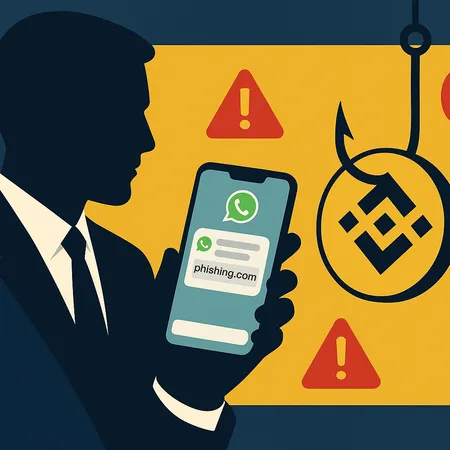
Binance Issues Alert on WhatsApp Phishing Surge
Binance CEO Richard Teng has warned users about a growing wave of phishing scams being distributed via WhatsApp. According to Teng, attackers are increasingly using messaging apps to impersonate customer support, send malicious links, and trick users into revealing private keys, 2FA codes, or other sensitive credentials.
This alert comes as phishing tactics grow more sophisticated across the broader crypto ecosystem, affecting everything from centralized exchanges to wallets used in DeFi and NFT transactions.
How These WhatsApp Scams Work
Scammers commonly adopt social-engineering techniques to lower a user’s guard. Typical tactics include:
- Impersonating exchange support or well-known figures to request urgent account verification.
- Sending links that lead to fake login pages designed to harvest credentials.
- Posing as a contact to share a malicious file or sign-in prompt.
Attackers rely on speed and urgency — they try to get you to act without thinking. Unlike phishing emails, WhatsApp messages can feel personal and immediate, which increases their effectiveness.
Why Crypto Users Are High-Value Targets
Crypto account holders are attractive targets because compromised credentials or private keys can lead to irreversible fund loss. Phishing can affect users interacting with centralized platforms like Binance, as well as those participating in DeFi protocols or buying and selling NFTs. Once a private key or seed phrase is exposed, funds can be drained in minutes.
Practical Steps to Protect Yourself
Security hygiene matters more than ever. Follow these actionable precautions:
- Never share private keys or seed phrases. Legitimate support will never ask for them.
- Verify contact identity. Confirm support messages through official channels listed on the service’s website, not via in-message links.
- Enable strong 2FA. Prefer hardware or app-based 2FA and avoid SMS-based codes when possible.
- Inspect links before clicking. Hover to preview URLs and use official apps or bookmarked sites for logins.
- Use withdrawal whitelists and account notifications. These add layers of protection against unauthorized transfers.
Consider using custodial or non-custodial services with strong security reviews — platforms like Bitlet.app emphasize user safety features that can reduce exposure risk during trading or P2P exchange.
What Exchanges and Messaging Platforms Should Do
Exchanges and wallet providers must continue improving user education, fraud detection, and rapid-response support. Messaging platforms should also bolster reporting tools and remove fraudulent accounts quickly. Collaborative threat intelligence sharing between exchanges, wallets, and messaging apps can reduce attackers’ ability to scale these campaigns.
Takeaway: Stay Skeptical and Verify
Binance’s warning is a timely reminder that phishing evolves as communication channels change. WhatsApp adds convenience but also a potent vector for attackers. Stay skeptical of unsolicited messages, verify through official channels, and adopt layered security practices to protect your crypto holdings and personal data.
If you receive a suspicious message claiming to be from an exchange, pause and verify — a few extra seconds can prevent a major loss.