45% of ETF Investors Plan to Buy Crypto ETFs — Schwab Finds Interest Matches Bonds
Growing Appetite for Crypto ETFs
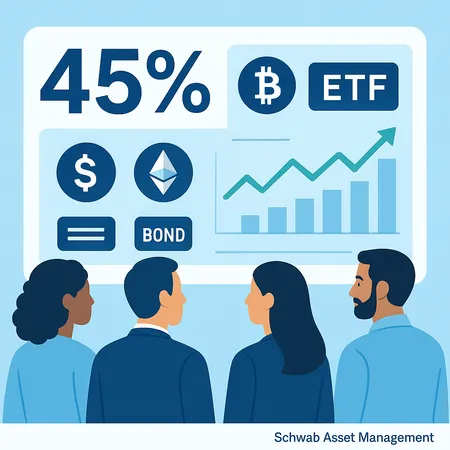
Schwab Asset Management's latest finding that 45% of ETF investors plan to purchase crypto ETFs sends a clear signal: interest in cryptocurrency products has moved firmly into mainstream investor conversations. Remarkably, Schwab notes this level of interest is on par with investor appetite for bond ETFs, underscoring how digital-asset funds have shifted from niche to mainstream consideration.
Why Investors Are Looking at Crypto ETFs
Several structural and behavioral drivers help explain this surge in interest:
Regulatory and product maturation
After key approvals and product launches over the past few years, ETF wrappers have made crypto exposure easier to access and understand. Many investors view ETFs as a more familiar, regulated entry point compared with direct custody of digital assets.
Portfolio diversification and yield search
Investors are increasingly treating the crypto allocation as a potential diversification tool or a tactical allocation within a broader ETF sleeve. With traditional yields still constrained, some are exploring crypto ETFs for non-correlated return potential.
Broader market awareness
Media coverage, institutional custody options, and integration with traditional broker-dealers have reduced friction and increased comfort levels for retail and institutional ETF investors alike.
What This Means for ETF Issuers and Asset Managers
Issuers will likely accelerate product development and marketing around crypto ETFs. We can expect:
- More variety in fund structures and underlyings (spot vs. futures, multi-asset crypto baskets).
- Competitive fee adjustments as managers vie for initial flows.
- Educational campaigns targeted at investors used to bond and equity ETFs.
ETF managers who can blend clear custody solutions, transparent fees, and robust compliance will be best positioned to capture inflows.
Investor Implications and Risks
While the interest figure is noteworthy, it’s important to balance enthusiasm with prudence.
Volatility and correlation risk
Crypto assets remain more volatile than traditional bond and equity ETFs. Even when packaged as ETFs, underlying price swings can be large and sudden — investors should size positions accordingly.
Liquidity and tracking
Not all crypto ETFs will behave the same. Differences in liquidity, tracking methodology, and expense ratios can materially affect outcomes over time.
Regulatory and tax considerations
Ongoing regulation could reshape product design and taxation. Investors should consult advisors and read prospectuses carefully before allocating.
Broader Market Context and Opportunities
This level of interest ties into wider trends across the [crypto market](/en/posts/news?filter=crypto market): increasing institutional custody options, evolving exchange-traded product structures, and growing retail access via brokerage platforms. Additionally, innovation in related areas such as DeFi may spur complementary investment products, though those remain distinct from ETF exposures.
Platforms that offer crypto services, including mainstream newcomers and specialists, will need to adapt. For example, users of Bitlet.app and similar services may find new ETF offerings relevant as they consider how to blend direct crypto holdings with ETF-based exposure.
Takeaway
Schwab’s finding that 45% of ETF investors plan to buy crypto ETFs — matching interest in bond ETFs — illustrates a significant mainstream shift. Product maturity and investor familiarity are enabling broader consideration, but volatility and structural differences mean careful due diligence remains essential. For investors and issuers alike, the next year should reveal whether expressed interest converts into sustained flows and how crypto ETFs reshape traditional portfolio allocations.
Key insight: crypto ETFs are no longer a fringe conversation — they’re part of the core ETF playbook investors are actively considering.