Western Union, Rain and Anchorage Launch USDPT on Solana — Cash-Accessible Stablecoin and Retail Network
A new bridge between cash and crypto
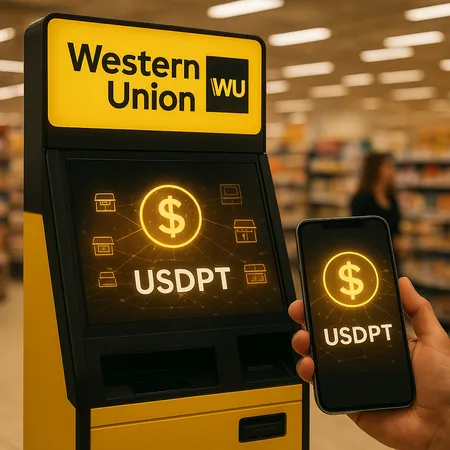
Western Union has taken a significant step into digital assets with the launch of USDPT, a U.S. dollar-pegged stablecoin built on the Solana blockchain. Announced on November 10, 2025, the move comes via a partnership with crypto firm Rain and issuance in collaboration with Anchorage Digital Bank. Alongside USDPT, Western Union unveiled a Digital Asset Network designed to connect digital wallets with its global retail footprint — a model that could make stablecoins directly spendable with cash in/out at physical locations.
What USDPT and the Digital Asset Network mean
USDPT: a dollar-pegged token on Solana
USDPT is described as a dollar-backed payment token that leverages Solana’s fast, low-cost settlement layer. The choice of Solana signals an emphasis on high throughput and cheap microtransactions, which are important if consumers will use the token at retail counters or for everyday payments. The token is issued in collaboration with Anchorage Digital Bank, which adds a regulated custody and issuance layer.
Digital Asset Network: connecting wallets to retail cash rails
The Digital Asset Network aims to link consumers’ digital wallets with Western Union’s existing agent locations worldwide. In practice, that could mean users convert USDPT to cash (and vice versa) at agent shops, enabling a smooth fiat on/off ramp without traditional bank rails. This hybrid model blends digital payments with Western Union’s century-old retail distribution, opening paths for remittances, P2P transfers and in-person purchases.
Why this matters for the crypto market and users
Improved on/off ramps and real-world utility
One persistent barrier for mainstream crypto adoption is seamless fiat access. By integrating a stablecoin with a massive retail network, Western Union lowers friction for people who lack bank accounts or rely on cash. That has implications for remittances — a long-standing Western Union use case — where stablecoins can reduce settlement time and fees while still offering cash payouts at agent locations.
Faster, cheaper transactions on Solana
Building USDPT on Solana positions the token for microtransactions and retail use thanks to Solana’s low fees and fast finality. That technical choice supports use cases that other higher-fee networks struggle with, such as small-value transfers or point-of-sale flows.
Institutional backing and regulatory signaling
Having Anchorage Digital Bank involved in issuance signals an attempt to marry crypto-native infrastructure with regulated banking practices. This could help address concerns about reserves, custody and compliance, though the program will still attract regulatory scrutiny about reserve audits, AML/KYC and consumer protections.
Risks and open questions
- Reserve transparency: Users and regulators will want clear, verifiable evidence that USDPT is fully backed. Regular audits and real-time proof-of-reserve mechanisms could be expected.
- Regulatory oversight: Cross-border cash rails and stablecoins remain a focus for regulators. Western Union’s global footprint means many jurisdictions will evaluate the model.
- Centralization and counterparty risk: Relying on a single corporate network and a bank issuer concentrates risk compared with decentralized stablecoins.
Broader implications for DeFi, payments and platforms
This initiative bridges traditional finance and crypto payment rails. If successful, it could accelerate real-world stablecoin use for remittances, payroll, and retail payments. It could also influence how decentralized finance integrates with legacy systems — for instance, enabling faster off-ramps from DeFi protocols into cash via Western Union agents.
Platforms that offer consumer-facing crypto services may explore partnerships or integrations. For example, businesses like Bitlet.app that provide installment and P2P exchange products could leverage these rails to offer customers easier fiat access and cash pickup options, improving onboarding and liquidity.
What to watch next
- Adoption pilots: Look for pilot regions and agent-level rollouts to judge consumer uptake.
- Reserve disclosures: Frequency and rigor of audits will shape trust.
- Regulatory responses: How financial authorities in major markets treat the program will be critical to scaling.
Conclusion
Western Union’s USDPT and Digital Asset Network represent a pragmatic, retail-focused approach to making stablecoins usable in the physical world. By combining Solana’s technical strengths with Anchorage’s regulated issuance and Western Union’s agent network, the project could materially improve fiat on/off ramps — while also inviting deserved scrutiny on transparency and compliance. If executed well, this model may become a template for how legacy financial providers enter the crypto ecosystem, bringing everyday cash users into the digital asset era.