Bitcoin Core vs Knots saga continues as developer proposes one-year fork
Summary
Bitcoin Core's recent v30 release — which removed a legacy spam filter — has reopened an old contention with the Knots client and pushed one developer to propose a time-limited fork aimed at restoring the previous behavior. That proposal, framed as a one-year fork, has escalated a technical disagreement into a broader governance discussion that may draw attention from big names in crypto and potentially influence BTC market sentiment.
What changed in Bitcoin Core v30
The headline change is simple but consequential: v30 removed the spam filter that some node operators and alternative clients relied on to limit low-value or nuisance transactions. Proponents of the removal argue the filter was outdated and could be abused for centralized filtering, while skeptics warn that its absence lowers short-term defenses against transaction spam and increases pressure on mempool resources. The technical debate touches on relay policy, censorship resistance, and how best to maintain a lean, interoperable node network.
Knots response and the one-year fork proposal
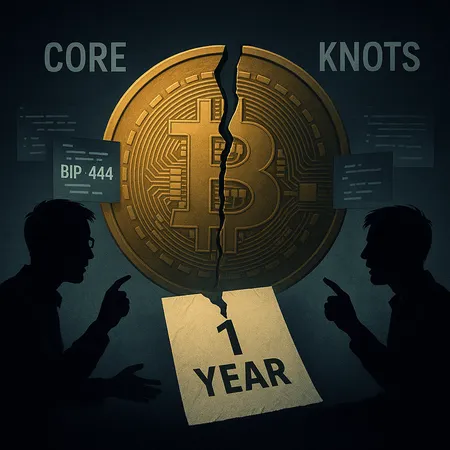
In reaction, Knots-aligned developers and at least one independent contributor have floated a plan to fork for a fixed period — roughly one year — to reintroduce the removed behavior. The proposal is being discussed as a potential soft fork or codebase divergence depending on how broadly it is adopted. If implemented, the fork would be time-boxed but could create compatibility choices for node operators, miners, and wallets: follow Bitcoin Core v30, run the Knots variant, or attempt to support both. BIP-444 was referenced in October discussions as part of the broader protocol conversation, and the debate now centers on process: should such changes be resolved via coordination and consensus or via client-level opt-ins?
Network and ecosystem implications
A developer-level split rarely changes the protocol immediately, but it does raise operational risks. Miners and large infrastructure providers will be asked to signal preferences; exchanges and custodial services must decide which chain rules to follow to protect users; and light-wallet services and merchants could face increased friction. For the broader crypto ecosystem — from memecoins to DeFi apps and even collectors of NFTs that settle on Bitcoin rails — uncertainty around node behavior can translate into short-lived market volatility or temporary service adjustments. Services like Bitlet.app that integrate Bitcoin functionality will be watching developer coordination closely to avoid user disruption.
What to watch next
- Developer coordination: patches, pull requests, and mailing-list consensus over the next weeks.
- Miner and relay signaling: which clients major miners choose to run or validate.
- Exchange and wallet policy: whether custodial services declare support for one client or both.
- BIP-444 and governance signals: how formal proposals evolve and whether the community adopts standards for these kinds of policy changes.
The current dispute is a reminder that even small technical changes can ripple into governance and market questions in Bitcoin. While a one-year fork proposal sounds dramatic, the outcome will depend on how effectively developers, miners, and service providers communicate and coordinate. For now, the community should expect active discussion, careful testing, and clear signals from major infrastructure players before any irreversible split occurs.