How the SEC’s Crypto ‘Redraw’ Narrows KYC and Frames Bitcoin, XRP, and Solana as Commodities
Summary
Executive overview
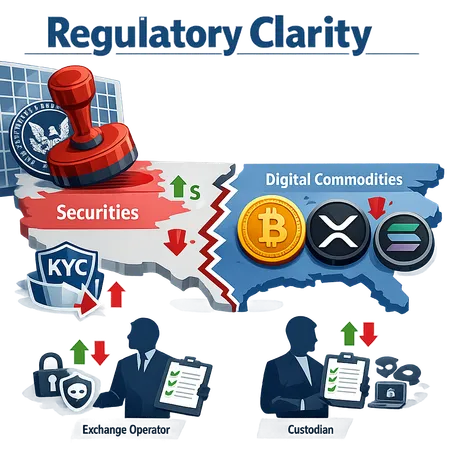
Regulators are rarely subtle, but the U.S. Securities and Exchange Commission has been quietly redrawing the lines that separate securities enforcement from other forms of regulatory oversight. The practical result: a narrower set of KYC expectations for certain tokens when those tokens are increasingly framed as digital commodities rather than securities. That shift is not a free pass — it changes the compliance calculus for exchanges, custodians, and policy-minded investors, and it leaves a much smaller lane for truly privacy‑focused tech.
This article breaks down what changed, why BTC, XRP and SOL are singled out, how exchange and custody compliance programs should respond, the continued risks around privacy tools, and the likely short-term market winners and losers. For many traders and compliance teams, Bitcoin remains the primary market bellwether; the SEC’s repositioning around BTC in particular reverberates through policy and product roadmaps.
What the SEC actually changed
The best way to describe the move is not a formal rulemaking but a shift in enforcement posture and public messaging. Reporting from CryptoSlate documented how the SEC has, in recent months, de-emphasized KYC pressure on assets it views as non-securities — notably Bitcoin, XRP, and Solana — even as the agency continues vigorous action in other areas like tokenized investment products and some DeFi activities (CryptoSlate analysis).
Two practical consequences flow from that posture. First, tokens the SEC treats as digital commodities are less likely to attract securities‑style registration demands tied to their distribution or listings. Second, enforcement resources and messaging are being reallocated to tackle market manipulation, custody failures, or novel fundraising structures that still look like investment contracts.
Concrete examples: BTC, XRP, SOL
BTC (Bitcoin)
Bitcoin has long been treated by many federal actors as a commodity in practice. The SEC’s recent posture further reduces the likelihood that one-off BTC custody or standard exchange listings will trigger securities-law KYC issues — though AML obligations remain. Exchanges can take some comfort that routine BTC flows are less likely to be recast as securities offerings, but operational KYC, the travel rule and suspicious-activity reporting still apply.
XRP
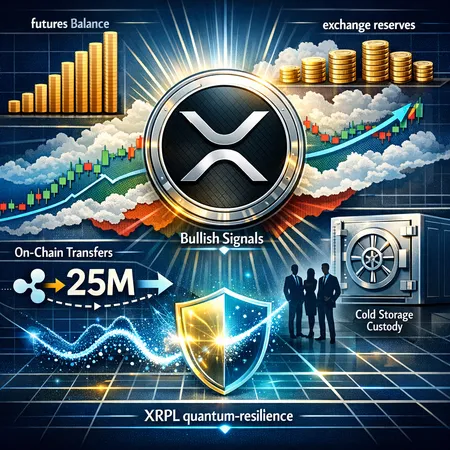
XRP’s arc has been litigation-heavy, and the SEC’s evolving framing has real commercial implications. As coverage has noted, the shift in regulatory tone helped create openings for institutional use cases and treasury strategies that assume XRP is outside the classic securities label (see reporting tying corporate bids and merchant treasury interest to regulatory status changes) (Blockonomi on XRP Evernorth). That doesn’t mean all XRP uses are risk-free — distribution mechanics and promises made at token launches can still invite scrutiny.
SOL (Solana)
Solana’s classification as a digital commodity in recent reporting is a concrete example of the SEC’s reframing at work. Market reaction was perceptible: SOL price moves followed the news that the SEC had effectively labeled SOL a commodity in its public posture, which prompted traders and some platforms to reassess listing and custody risk (Blockonomi on Solana gains). Exchanges that had hesitated to list SOL out of securities concerns now face fewer legal headwinds — again, without absolving them of AML and custody responsibilities.
What this means for exchanges and custodians' compliance programs
The redraw does not eliminate KYC or AML obligations; it narrows where securities law is likely to be the governing risk. Compliance officers should think in practical layers:
- Token taxonomy first. Maintain a documented, governance-approved classification for tokens you list or custody. Treat SEC commodity framing as an input, not the sole determinant. Keep legal memos and decision logs.
- Risk-based KYC/EDD. Where tokens are treated as commodities, apply proportional KYC rather than one-size-fits-all intensity. High-value accounts, cross-border flows, or accounts linked to higher-risk jurisdictions still require enhanced due diligence.
- Custody segregation & operational controls. Even for commodity‑classified tokens, custody obligations — safekeeping, proof of reserves, reconciliations, and clear terms of service — remain critical. Weak custody is still a regulatory target.
- Listings and delistings. Revisit token onboarding policies. For tokens with an emerging commodity framing, exchanges can document why a listing is allowed while retaining exit rights if new facts change legal assessments.
- Coordination with AML teams and law firms. The SEC’s posture should be integrated with AML, FinCEN, and state-level guidance. Exchanges should update suspicious-activity‑reporting triggers and ensure legal counsel reviews new product launches.
Platforms that provide custodial services — including industry players like Bitlet.app — will need to strike a balance between leveraging reduced securities risk and maintaining robust AML/KYC guardrails that satisfy banking partners and correspondent institutions.
The narrower lane left for privacy‑focused technology
One of the most important caveats in the redraw: privacy tech remains exposed. The SEC’s commodity reframing applies to the token classification question, not to anti-money‑laundering rules. Privacy coins, mixers, coin-join services, and certain zero-knowledge primitives that materially facilitate obfuscation face sharper scrutiny from AML regulators and law enforcement.
Even if a privacy coin were considered a commodity, exchanges and custodians should treat on‑ramps and off‑ramps that materially obscure beneficial ownership as high‑risk. The compliance playbook includes stricter KYC, transaction monitoring tuned to privacy heuristics, and conservative inbound/outbound limits until additional regulatory clarity is obtained.
Short-term market winners and losers
- Winners: BTC, SOL, XRP — clearer commodity framing reduces a tail regulatory risk and can prompt renewed liquidity and listings across exchanges; projects with strong institutional use-cases or treasury demand stand to gain.
- Winners (infrastructure): Major centralized exchanges that can lawfully list these tokens may capture flows from smaller venues; custodians with audited custody controls will see demand.
- Losers: Privacy tokens and projects that rely on ambiguous token economics or tokenized investment offers; platforms whose business model depends on obscured flows will be squeezed by AML enforcement even if the underlying token is a commodity.
- Ambiguous: DeFi protocols that combine governance, revenue-sharing, and secondary markets — they remain on regulators’ radar and can experience volatility as legal analysis evolves.
Short-term price moves already reflected some of this: Solana experienced measurable gains after being publicly described as a commodity in market reporting, and interest in XRP treasury strategies was linked to softer securities concerns in press coverage (Blockonomi on Solana, Blockonomi on XRP shifts).
Practical checklist for compliance officers and exchange operators
- Update your token classification register and re-document why each token is treated as a commodity, security, or utility. Maintain counsel sign‑off.
- Recalibrate KYC tiers: lighter, documented KYC for clearly commodity tokens; enhanced KYC for privacy-related or high‑risk tokens.
- Strengthen custody controls: multi-sig/backups, proof-of-reserves cadence, and clear customer communications.
- Revisit listing playbooks: require legal memos, market‑abuse monitoring, and onboarding limits for new tokens.
- Align AML/TRO/transaction-monitoring rules with the new posture; update SAR triggers and scenario playbooks.
- Maintain an escalation path to legal and senior management for any novel token sale or fundraising structure.
Looking ahead: why uncertainty remains
This redraw is meaningful but not definitive. It reflects a shifting enforcement emphasis rather than an ironclad statutory change. Courts, congressional action, state regulators, and international counterparts will continue to shape outcomes. Investors and operators should treat the SEC’s posture as a helpful signal that reduces one regulatory tail risk — but not as a substitute for comprehensive compliance and conservative operational safeguards.
Regulatory clarity is improving in pockets. That helps capital efficiency and product design. Yet the areas the SEC continues to police — fundraising mechanics, deceptive disclosures, custody failures, and facilitation of illicit finance — will remain enforcement priorities for the foreseeable future.
Final takeaway
The SEC’s quiet redraw narrows KYC expectations where assets are framed as digital commodities, and it sends a practical green light of varying strength to BTC, XRP, and SOL listings and custody arrangements. But AML obligations and the imperative for strong controls remain unchanged. Compliance officers and exchange operators should treat this as an opportunity to modernize token governance, document decisions carefully, and tighten controls where privacy or novelty creates risk.
For policy-minded investors, the shift reduces one layer of uncertainty — and reintroduces another: as legal contours harden, markets will reprice winners and losers more quickly. Keep a running taxonomy, stay engaged with counsel, and monitor both enforcement actions and reputable reporting for the next directional clues.