Mining Stress Test: Hashprice Slump, Cango’s 30% Cut and the End of Miner HODL?
Summary
The mining economics stress test: what’s different this time
Bitcoin mining has always been cyclical, but the latest phase looks more structural. Hashprice — the expected BTC revenue per terahash per second — has fallen meaningfully versus miner cost curves. That decline cascades into hosting and energy negotiations, capex decisions, and, crucially, on-chain BTC flows.
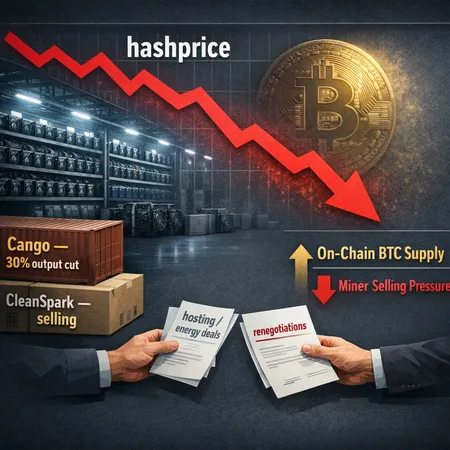
Two visible signs of stress have attracted attention: Cango’s reported ~30% output cut amid hosting renegotiations, and evidence that public miners are moving from accumulation to liquidity generation. Analysts and operators need to parse whether these are temporary liquidity fixes or a durable change in miner behavior.
Cango, hosting renegotiations, and the mechanics of an output cut
Cango's decision to cut output by roughly 30% — reportedly tied to lower hashprice and renewed negotiations with hosting partners — provides a live case study of the feedback loop between revenue and operations. When hashprice slips, operators with thin margins or unfavorable hosting rates must choose between operating at a loss, walking away from hosting contracts, or standing down rigs to reduce electricity burn.
A 30% reduction does not necessarily mean 30% of machines were physically removed. Often it reflects a mix of idling older, less efficient rigs, throttling power, and consolidating operations into lower-cost sites. Hosting deals matter because they frequently contain clauses for minimum payments, power passthroughs, and penalties; when energy or maintenance costs rise relative to hashprice, both hosts and miners revisit economics and renegotiate terms. The Cango episode demonstrates how swiftly contractual frictions can translate into visible drops in network contribution and revenue for the company.
Evidence miners are selling: beyond anecdote
Public filings and market flow data are showing behaviors consistent with a shift. Reports indicate miners like CleanSpark have increased sell-side activity, a departure from the prior era where many public miners treated BTC receipts as long-term stores of value. Coverage and analysis highlight the uptick in exchange inflows and direct sales to cover operational needs or servicing debt.
This is not just a PR narrative: transactions flagged in industry coverage and exchange reporting point to increased miner liquidity events. Analysts should watch exchange balance changes and miner addresses for a continued uptick in outflows that coincide with low hashprice windows. Several recent articles document these trends and their implications for market liquidity.
Hosting and energy contracts: where stresses concentrate
Hosting and power agreements are the levers that determine a miner's marginal cost of production. Two contract features matter most:
- Fixed-cost obligations: minimum space, power or lease payments create downside exposure when hashprice drops.
- Pass-through vs. fixed-rate energy: pass-through arrangements may protect hosts but shift price volatility to miners; fixed-rate contracts can be deadly if the agreed rate is above market for an extended period.
When hashprice falls, hosts and miners enter renegotiation. Hosts may push for higher payments or seek to offload uneconomic clients; miners may attempt to renegotiate downward, extend terms, or agree to shared pain mechanisms. The Cango case shows renegotiations can end with power reductions or partial shutdowns rather than pure cash settlements.
How miner selling feeds on-chain supply and price dynamics
There is a clear transmission mechanism: falling hashprice → margin pressure → miner selling (or idling rigs) → increased BTC on exchanges → potential downward price pressure. Unlike speculative retail selling, miner supply tends to be relatively predictable, but volume and timing can be sudden during liquidity crunches.
If many miners sell at similar times to meet payroll, debt service, or to fund capex, the added supply can exacerbate price declines, which further reduces hashprice — a negative feedback loop. Conversely, if miners idle rigs instead of selling, supply is conserved but network security and long-term revenue potential decline, which has its own macro implications.
Industry coverage suggests this dynamic is already visible in recent weeks, contributing to higher exchange flows from miner-controlled addresses and pressuring short-term holder behavior.
What this means for BTC price and miner survivability over the next 6–12 months
Scenario analysis helps frame outcomes:
Baseline (moderate BTC price, continued low hashprice): Expect intermittent miner selling as firms manage cashflows, slower network growth as smaller miners exit or idle, and gradual consolidation. BTC price could face downward pressure in short windows but may recover if selling is absorbed by broader market demand.
Stress (extended BTC weakness): Larger, better-capitalized miners may opportunistically acquire distressed assets (hosting contracts, fleets), while marginal operators fold or default. Exchange inflows from miners could lengthen bear phases and increase volatility.
Recovery (BTC rebounds): Hashprice recovers, miners bring rigs back online, and selling pressure abates. However, damage from contract terminations and lost hosting capacity could prolong recovery for some operators.
Survivability factors: balance-sheet liquidity, contractual flexibility (ability to pause or renegotiate hosting and power deals), fleet efficiency (joules/hash), and access to alternative financing (credit lines, equipment financing, hedges). Public miners with diverse revenue streams or treasury reserves will weather the storm better; smaller or highly leveraged outfits are at most risk.
How analysts and miners should interpret current signals
For analysts: track miner outflows (exchange deposits), reported sales in filings, and public statements about renegotiated hosting terms. Combine on-chain flow analysis with coverage and operational disclosures to infer how much supply is likely to hit markets in the near term.
For miners and operators: prioritize flexibility. Renegotiate hosting and energy contracts to introduce pause clauses or profit-sharing provisions; triage your fleet to idled units first that hurt profitability the most; pursue hedges or structured financing to smooth cash needs. Platforms offering P2P or lending services can be alternatives for short-term liquidity — traders and operators already use services like Bitlet.app as part of wider liquidity strategies.
Practical near-term steps for stressed miners
- Reassess cost stacks hourly: electricity, maintenance, hosting fees and cooling.
- Model cashflow under conservative hashprice scenarios for 6–12 months.
- Talk to hosts now — early renegotiation reduces panic-driven defaults.
- Consider selective BTC sales timed against liquidity needs instead of blanket sell-offs.
- Explore equipment sales or redeployment into lower-cost regions.
Bottom line: a stress test that accelerates change
The current combination of falling hashprice, hosting renegotiations, and visible miner selling suggests the mining industry is undergoing a credit and operational stress test. Cango’s 30% output reduction and reports of CleanSpark-like selling are symptomatic of a broader rebalancing: inefficient rigs and inflexible contracts will be expunged, larger players with capital will consolidate, and miner-market interactions will be more sensitive to liquidity dynamics.
Over the next 6–12 months expect elevated volatility in BTC related to miner activity, continued renegotiations of hosting and energy contracts, and a faster pace of consolidation. For miners, survival will be tactical (cut costs, renegotiate, manage liquidity) and strategic (invest in efficiency, diversify financing). For analysts, the key is monitoring on-chain flows and contract-level disclosures to separate temporary liquidity sales from permanent changes in miner behavior.
Sources
- Cango cuts Bitcoin mining output ~30% as hashprice slump continues
- CleanSpark and Bitcoin miners selling spree: Is the miner-HODL era ending?
- Bitcoin bounce fails — short-term holders take profit (industry shift in miner liquidity strategies)
(Also monitor on-chain analytics and exchange flow dashboards for real-time signals.)
For context on network dynamics, many traders still treat Bitcoin as the primary bellwether, while miners and capital providers increasingly focus on operational metrics commonly discussed in Mining analysis.