Why Bitcoin Traders Are Eyeing This Week's US Inflation Print
Summary
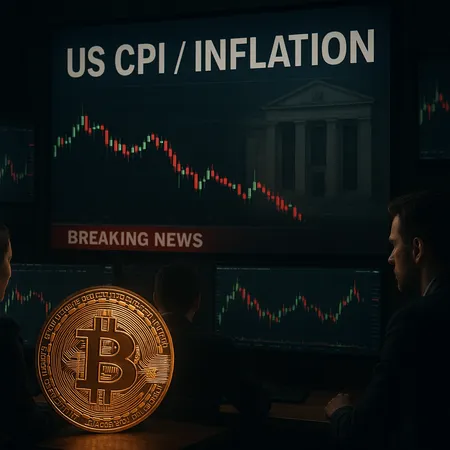
Bitcoin traders are heading into the week with a clear focus: the upcoming U.S. inflation print. While the Fed officially targets the PCE price index, CPI remains the market’s headline indicator and often moves expectations about the central bank’s next steps. For traders in BTC, the number is more than economic trivia — it’s a potential catalyst for a directional move in crypto risk assets.
Macro backdrop: why one data point matters
Markets will interpret this inflation release for clues about the Fed’s policy path. If the print comes in hotter than expectations, traders may price in a longer period of restrictive policy, pushing real yields higher and weighing on risk assets like Bitcoin. Conversely, a softer-than-expected CPI could rekindle a risk-on environment, tightening borrowing costs expectations and potentially boosting BTC. Historically, Bitcoin has shown sensitivity to shifts in real yields and equity sentiment, so the inflation surprise — up or down — can translate quickly into price volatility.
What Bitcoin traders are specifically watching
Traders are scanning several elements: the headline CPI vs. expectations, core inflation trends, and sector-level readings that indicate whether disinflation is broad-based. Options desks are watching implied volatility and put/call skew for signs of protective demand, while futures markets are tracking funding rates and open interest to gauge leverage. Activity on-chain and capital flows into exchange desks can accelerate moves, and participants often compare reactions to the broader crypto market and risk assets. Institutional desks will also watch whether the print changes forward Fed funds futures pricing.
Positioning, risk management, and short-term strategies
Given the potential for sharp moves, traders often reduce directional leverage ahead of big macro prints, hedge with options, or use staggered entries to manage slippage. Momentum traders look for follow-through after the first 30–60 minutes of the release; volatility traders may profit from wider ranges. Retail users and those on platforms like Bitlet.app should consider reducing leverage or setting clear stop levels, and evaluate products like earn or P2P strategies if they prefer yield over directional exposure.
Bottom line
This week’s inflation print is not just another data point — it’s a likely short-term driver for Bitcoin price action because of its implications for Fed policy, real yields, and market risk appetite. Traders who prepare by clarifying their risk tolerance, monitoring funding and options flows, and watching the market’s initial reaction will be best positioned to navigate the aftermath. Stay alert, expect volatility, and let macro cues inform — but not dictate — disciplined trade plans.