DC Reopens Funding — What the Stopgap Means for Your Bitcoin (BTC)
Summary
Washington reopens the taps
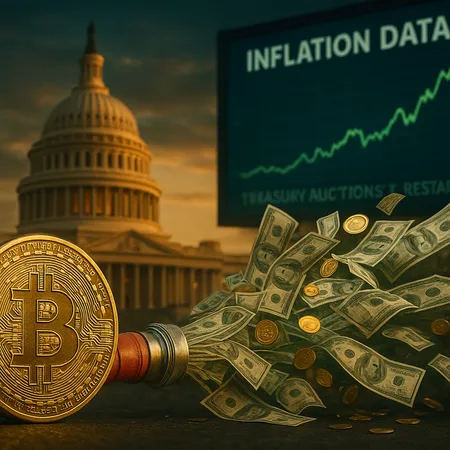
The Senate-backed continuing resolution would fund federal agencies through Jan. 30, 2026, and — pending House approval — ends the temporary freeze on several government activities. That matters for crypto because it restarts the release of regular economic statistics (like CPI and employment data) and normalizes the Treasury's auction calendar. Markets no longer face the uncertainty of delayed reports or ad-hoc issuance, which historically has produced abrupt repricing across rates, equities, and digital assets such as Bitcoin.
What the funding fix restores
With the stopgap in place, furloughed statistical agencies will resume scheduled publications and the Treasury will return to routine auctions. That means scheduled inflation prints and debt supply numbers will again be market events rather than uncertain or postponed headlines. For institutional desks and macro funds that trade BTC as a risk/hedge instrument, predictable data points and auction sizes improve planning and reduce the chance of surprise liquidity vacuums.
Why inflation and Treasury issuance matter for BTC
Bitcoin’s short-term price moves often react to real yields, dollar strength, and investor risk appetite — all influenced by inflation data and Treasury supply. Higher-than-expected CPI can push real yields up, tightening liquidity and pressuring risk assets; conversely, cooler inflation tends to ease the yield burden and can support BTC. Similarly, heavy Treasury issuance can absorb liquidity and lift yields, while lighter supply can have the opposite effect. Put simply: renewed data and issuance schedules mean BTC is likely to see clearer, repeatable macro-driven swings.
Short-term market mechanics and trading windows
Expect event-driven volatility around CPI releases and large auctions. Spot markets may widen spreads temporarily, while futures and options volumes typically spike as hedgers and speculators size positions. Derivative players should watch basis and funding rates, and spot investors should be mindful of possible short squeezes or rapid risk-off moves. Liquidity providers on centralized and decentralized venues will adjust quotes, and participants in DeFi pools may see shifting yields as capital rotates.
Practical takeaways for Bitcoin holders
If you hold BTC, consider these concise actions: 1) Review position sizing ahead of major CPI prints and auctions; 2) Use dollar-cost averaging to reduce timing risk; 3) Monitor yield curves and short-term funding rates for signs of stress. Platforms such as Bitlet.app can simplify installment buys and recurring purchases during these periods of renewed macro clarity. Longer-term holders should view this as a return to normal market signals — volatility will come, but so will more transparent price discovery.
Conclusion
The stopgap funding bill effectively turns the money hose back on: scheduled inflation reports and Treasury auctions return as predictable market inputs. For Bitcoin traders and holders, that means more frequent macro-driven trade opportunities and clearer correlation dynamics with yields and the dollar. Stay disciplined, watch the calendar, and use tools and strategies that fit your risk profile as the crypto market readapts to a normalized flow of data and supply.