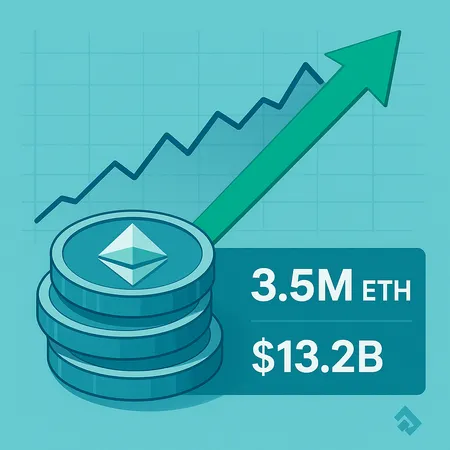
BitMine Rallies After Acquiring $13.2B — 3.5M ETH Now About 3% of Supply
Summary
Market reaction: why BitMine’s disclosure moved shares
BitMine’s confirmation that it now holds 3.5 million ETH (approximately $13.2 billion) produced an immediate bullish reaction in its stock as investors digested the scale and strategic intent behind the purchase. The firm’s stake now approaches 3% of Ethereum’s circulating supply, a level that can meaningfully change perceptions about future liquidity and price elasticity for ETH. Traders priced in potential upside from institutional accumulation while also factoring in how a large on‑chain holder might behave during market stress.
How traders and ETH responded
On-chain observers watched wallet flows and staking activity after the announcement; ETH traded with higher-than-normal volume as market participants reassessed supply dynamics. Larger holders can affect short-term liquidity and create narrative tailwinds for rallies, especially when sentiment is already constructive for the network. For investors tracking concentrated positions, the move underlines the importance of monitoring staking, validator operations, and off-chain custody arrangements.
Broader implications for supply concentration and market structure
A single entity controlling close to 3% of supply raises questions about market concentration that go beyond immediate price moves. When ownership is concentrated, routine events — like rebalances, margin calls, or strategic sales — can produce outsized price swings. That risk has implications for traders, long-term holders, and projects building on top of Ethereum; protocols in DeFi especially need to account for counterparty and liquidity risks tied to large holders.
Liquidity, staking and systemic considerations
A position of this size interacts with staking dynamics: if a meaningful portion of that ETH is staked, it reduces liquid supply but increases network security. Conversely, unstaking or liquidating large tranches could pressure markets. Institutions and exchanges may respond by tightening risk limits or expanding OTC channels to move inventory without disrupting spot markets. For users of products and services — including platforms like Bitlet.app that monitor on-chain flows and offer crypto financial services — these developments are relevant when designing custody and liquidity solutions.
Regulatory and strategic outlook
Large concentrated holdings tend to attract regulatory scrutiny because they can affect market integrity and investor protection. Authorities may increase reporting expectations or examine potential market‑manipulation vectors if concentrated on-chain positions become a systemic concern. Strategically, other institutional players could view BitMine’s move as a signal to scale up treasury allocations to crypto or to seek partnerships that manage execution risk across spot and derivatives markets.
Key takeaways
BitMine’s accumulation of 3.5 million ETH (~$13.2B) is notable both for its size and for the broader conversations it sparks about supply concentration, liquidity risk, and the evolving institutional footprint in crypto. Short term, markets will watch how much of that ETH is active versus staked and whether the holding changes trading and custody behavior. Longer term, the episode highlights why monitoring on‑chain positions matters for investors, projects, and service providers in the blockchain ecosystem.
If you’re tracking these trends, remain attentive to wallet disclosures, staking flows, and institutional filings — they often presage bigger shifts in the crypto market and help platforms tailor products that balance yield, custody, and liquidity.