Why Bitcoin Dropped Below $70K: How a 48‑Hour Geopolitical Ultimatum Transmitted Into Crypto Markets

Summary
Executive overview
On March 22, markets reacted violently after a social‑media driven ultimatum from President Trump that threatened Iranian power infrastructure, and Bitcoin slipped below the $70,000 mark in a matter of hours. The move was not purely macro — it was a cascading liquidity event where concentrated leveraged longs, thin spot liquidity, and a spike in risk‑off sentiment combined to produce outsized volatility. For intermediate traders and asset managers, understanding how headlines transmit into crypto — and the options and hedging dynamics that follow — is essential for navigating the next 48–72 hours.
Timeline: from tweet to tumble
Early headline: Social posts and brief official statements amplified the geopolitical risk. Within minutes, risk assets repriced as market participants digested the possibility of rapid escalation. CoinDesk covered the immediate price move and noted the timeline around the 48‑hour ultimatum reporting the market reaction and liquidations.
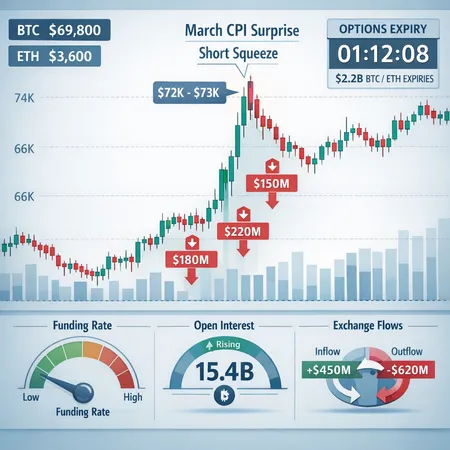
First hour: Spot liquidity thinned. Large market orders hit order books and slippage increased on major venues. On crypto derivatives platforms, concentrated perpetual long positions were bread and butter for leveraged yield — until they weren’t.
Two to four hours: Liquidation cascades accelerated the decline. Coverage quantified hundreds of millions in leveraged losses across venues as stop‑losses and margin calls mechanically converted into market orders, deepening the drawdown (see reporting from CryptoPotato and CryptoSlate).
Six to 24 hours: Options desks and hedgers rebalanced. Implied volatility rose, skew changed as protective put demand increased, and some analysts questioned whether the move was overblown versus a washout opportunity (AMBCrypto analysis).
This compressed timeline shows how a geopolitical tweetstorm can turn into a liquidity spiral in crypto far faster than in many traditional markets.
How liquidations and concentrated longs amplified volatility
Two mechanics deserve emphasis: concentrated positioning and the mechanics of crypto derivatives.
Concentrated longs: A material share of perpetual futures open interest often sits in large long positions. When price gaps down, margin requirements rise and exchanges liquidate accounts that fall below maintenance margins. Liquidations act like additional market sell orders, pushing price lower and triggering more liquidations — a classic feedback loop.
Leverage and thin order books: Crypto spot books are still shallower than many OTC or futures markets. High leverage combined with thin depth means even a modest percentage move can produce outsized realized slippage. Reporting from the market coverage shows this exact effect: rapid price moves coincided with sizable leveraged losses and liquidation totals across venues (CoinDesk, CryptoPotato).
Social momentum: Tweets and breaking headlines compress the time frame in which liquidity providers can adjust. Market‑making algorithms widen spreads or withdraw when tail risk rises, increasing execution cost for anyone trying to exit large positions.
These forces turned a political flashpoint into a market microstructure problem: news → directional flow → liquidity withdrawal → forced selling → price gap.
Why this move matters for macro risk‑off flows and cross‑asset linkages
Bitcoin has matured as a macro risk asset in many investors’ books: it behaves less like a pure alternative asset and more like a risky beta exposure under stress. When geopolitical risk spikes:
Risk‑off reflexes favor USD and cash proxies. Traders delever everywhere to convert to liquidity, pressuring beta assets including BTC.
Equity selloffs can be synchronous with crypto declines, reinforcing margin pressure for multi‑asset leveraged funds.
Flight to safety can boost demand for Treasuries and the dollar while draining flows from risky crypto strategies.
These macro linkages were on display during the move below $70k. The short‑term implication: even if BTC remains a long‑term hedge in some portfolios, it behaves like a risk asset when headline risk intensifies, and managers should treat it as such during acute geopolitical events.
Options markets and hedging dynamics after the drop
The options landscape reacts fast and can either damp or amplify moves depending on dealer flows and hedging costs.
Implied volatility and skew: News‑driven downside moves push up implied volatility on puts more than calls, steepening skew. Dealers who sold calls or structured products start buying puts or delta‑hedging by shorting spot, which can add downward pressure in the short term.
Demand for protection: Asset managers and larger traders typically seek downside protection with puts or collars. That demand pushes up premium for near‑dated puts, making fast, cheap protection harder to obtain.
Hedging mechanics: Dealers who sold options will delta‑hedge, and rapid put buying can cause dealers to sell spot into the move. That dynamic partially explains why options flows can aggravate a sell‑off transiently.
AMBCrypto’s analysis noted debate about whether the drop represented an overreaction or the start of a larger trend; either way, options desks reacted by repricing risk and increasing hedging costs analysis link.
For active traders: watch changes in implied volatility term structure and the put/call flow for short‑dated tenors — these are real‑time signals about where professional hedgers expect risk to concentrate.
Practical risk‑management playbook: next 48–72 hours
Below are actionable steps for intermediate traders and asset managers preparing for continued headlines.
Reassess leverage immediately
- Reduce or eliminate cross‑asset leverage. Even small adverse moves can cascade through concentrated derivatives positions.
- If you run funds with margin access, size margin buffers assuming a 5–15% intraday stretch depending on your horizon and liquidity needs.
Prefer options for asymmetric protection
- Buy near‑dated puts or construct collars if you own spot BTC and want to cap downside while preserving upside participation.
- Consider time‑spreaded protection (e.g., short a cheaper further‑dated put while long a near‑dated put) to reduce cost, but be mindful of added tail risk.
Execution discipline
- Avoid large market sells during thin liquidity windows; use limit orders, TWAP or slicing. Exchanges and market makers will widen spreads in stress.
- If you must exit quickly, consider routing across centralized venues and OTC desks to reduce slippage — platforms like Bitlet.app have P2P and OTC alternatives that can help with execution in stressed conditions.
Watch liquidity and order‑book metrics
- Monitor book depth at top exchanges and perpetual funding rates. Rapidly rising negative funding or surge in basis mispricing indicates forced deleveraging is ongoing.
Scenario plans and stop architecture
- Instead of hard stop‑losses that can be executed at a point of minimal liquidity, use layered stops or alerts to review positions before execution.
- Predefine scenarios: de‑escalation (quick repricing higher), contained escalation (rangebound volatility), and sustained conflict (risk‑off grind). Allocate capital and hedge size by scenario probability.
Communication and liquidity windows for funds
- Asset managers should notify investors of liquidity risks and potential gating mechanisms — transparency reduces panic and redemptions that amplify selling.
Trade ideas and cautious tactics (not investment advice)
Short‑term protective collar for spot holders: buy a short‑dated put ~3–7% OTM and sell a further‑dated call to offset premium. This preserves upside if news resolves quickly.
Tactical long re‑entry: if you’re a mean‑reversion trader, scale in with small limit orders below major support zones rather than a single large buy. Use visible liquidity as a guide.
Volatility trade for options traders: if implied volatility has spiked, consider selling a carefully sized short‑dated strangle only if you have strong risk controls and the ability to dynamically hedge.
How to read the market signals in real time
Funding rates: sudden shifts to extreme positive or negative funding signal crowded leverage. A large positive funding often means crowding on longs.
Open interest & liquidation heatmaps: look for clustered open interest around price levels — heavy OI concentration is a potential magnet for liquidations.
Option skew and term structure: enormous front‑month put demand suggests immediate risk aversion; a flattening term structure shows short‑dated fear.
Spot order book depth: watch for thinning and widening spreads; this is an execution risk indicator.
Conclusion
The drop below $70k following President Trump’s 48‑hour ultimatum on Iranian power plants demonstrates how geopolitics — amplified by social media — can rapidly morph into a crypto liquidity event. The market response was classic: headline → forced deleveraging → liquidation cascade → repricing of options and higher hedging costs. Traders and managers should treat Bitcoin as a macro risk asset during acute geopolitical stress, prioritize liquidity and hedges, and use execution discipline to avoid compounding losses.
Short‑term, expect elevated volatility for the next 48–72 hours. Watch funding, open interest, option skew, and order‑book depth; use options for asymmetric protection where appropriate, and temper leverage until headlines settle.
For ongoing context on market mechanics and execution alternatives during stressed events, platforms that combine spot, derivatives and P2P liquidity can be a helpful part of an execution toolbox.
Sources
- CryptoSlate — Bitcoin crashes to $68,000 as US threatens to obliterate all Iranian power plants: https://cryptoslate.com/bitcoin-crashes-to-68000-as-us-threatens-to-obliterate-all-iranian-power-plants/
- CoinDesk — Bitcoin drops below USD69,200 as Trump gives 48‑hour ultimatum on Iran power plants: https://www.coindesk.com/markets/2026/03/22/bitcoin-drops-below-usd69-200-as-trump-gives-48-hour-ultimatum-on-iran-power-plants
- AMBCrypto — Bitcoin slips below 70k but is BTC’s 45k crash call overblown?: https://ambcrypto.com/bitcoin-slips-below-70k-but-is-btcs-45k-crash-call-overblown/
- CryptoPotato — Bitcoin price tanked to 68k as Trump threatened to obliterate Iran’s power plants: https://cryptopotato.com/bitcoin-price-tanked-to-68k-as-trump-threatened-to-obliterate-irans-power-plants/
For deeper background reading on BTC market microstructure and perennial liquidity dynamics, see coverage of Bitcoin and parallels in DeFi liquidity behavior.