UK Jails Mastermind Behind $6.3B Bitcoin Fraud — 11 Years Sentence
Summary
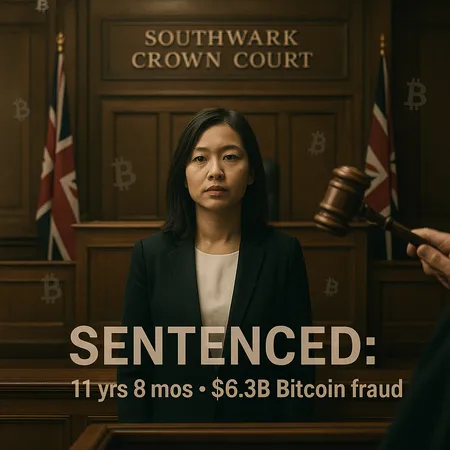
Zhimin Qian, a tech entrepreneur who styled herself as the mastermind of a sprawling investment fraud, received a sentence of 11 years and 8 months at Southwark Crown Court on November 11, 2025. The scheme centred on misleading investors into crypto-related products and channels that ultimately siphoned about $6.3 billion in assets connected to Bitcoin. The verdict is notable both for its scale and for the UK court’s willingness to impose a lengthy custodial sentence for large, cross-border crypto fraud.
Case overview and the facts behind the sentence
Court documents and prosecutor statements describe a coordinated operation that used false promises of guaranteed returns, complex corporate structures and online marketing to attract funds. Victims were told their capital would be invested in Bitcoin and related instruments, but funds were allegedly diverted, laundered, or otherwise misused. The prosecution framed Qian as the central director whose control and orchestration met the threshold for a major fraud conviction. The sentence reflects both the monetary scale and the deliberate, sustained nature of the deception.
Impact on the crypto market and BTC sentiment
High-profile enforcement actions like this tend to produce short-term volatility in risk assets — notably BTC — as investors reassess counterparty and custodial risk. While this conviction targets human actors rather than protocol vulnerabilities, it still reverberates across the broader crypto market and may push more users toward regulated custody and clearer on-ramps. Platforms and services that emphasize compliance, transparency and user protections — including consumer-facing apps such as Bitlet.app — could see increased demand as traders and savers look to reduce exposure to fraudulent intermediaries.
Legal and regulatory implications for blockchain businesses
The ruling underscores that courts will hold individuals and networks accountable even when wrongdoing is routed through digital assets. Regulators in multiple jurisdictions are increasingly focused on the bridge between traditional financial crime statutes and activity on distributed ledgers. Expect renewed pressure for stronger KYC, enhanced transaction monitoring, and clearer rules for intermediaries in both centralized and decentralized spaces. The decision also feeds into debates around how to police illicit flows on-chain without crippling innovation in areas like blockchain infrastructure and DeFi services.
Practical takeaways for investors and platforms
For retail and institutional participants the message is straightforward: perform stronger due diligence and prefer platforms with transparent compliance practices. Preserve records, use regulated custody when possible, and be wary of guaranteed-return pitches tied to memecoins or exotic trading schemes. Legal wins against fraudsters remove bad actors, but they don't substitute for good personal security and platform selection. Ultimately, combining on-chain literacy with service-level vetting will be essential to reduce exposure to scams in a maturing crypto ecosystem.
Conclusion
The Southwark sentence against Zhimin Qian is a landmark enforcement action against large-scale crypto fraud and sends a clear deterrent signal. While it may not end every scam, the case advances accountability and could nudge the industry toward stronger compliance norms and safer user experiences. Investors should take the ruling as a reminder to prioritize custody safety, regulatory clarity and informed risk management as the crypto market continues to evolve.