Why OpenSea Postponed the SEA Token: Market Timing, Risks, and a Launch Playbook
Summary
What happened and why it matters
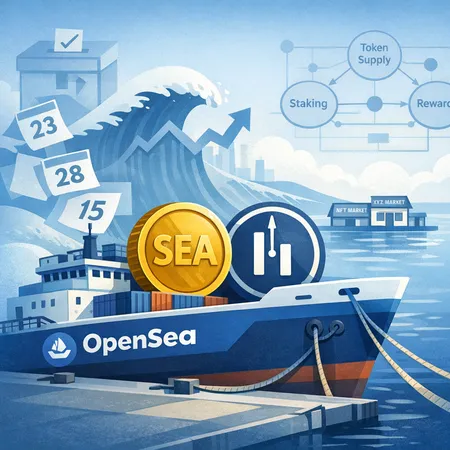
OpenSea announced it would postpone the launch of its SEA token indefinitely, a move the company characterized as choosing market timing over a rushed launch. Early reportage framed the delay as a strategic pause driven by market conditions and the desire to avoid launching into a turbulent environment; follow-up coverage confirmed the indefinite postponement and included statements from OpenSea’s leadership explaining the decision. For many in the NFT ecosystem, this is more than a calendar change — it’s a reminder that token launches are complex product events with economic, regulatory, and social dimensions.
For many traders and observers, OpenSea remains the primary market bellwether for NFT marketplaces. A token launch from the market leader would not just mint a governance mechanism; it would alter incentives for creators, collectors, and trading bots. That prospective impact is exactly why a mis-timed launch can do real reputational and economic damage.
The articulated rationale: "market timing over a rushed launch"
OpenSea’s public messaging emphasized timing. Reporters noted that the company cited market timing concerns when delaying the SEA token, warning against launching during heightened volatility and regulatory apprehension. The initial report outlines the company’s position that a hurried rollout could lead to poor economic outcomes and disruption to the user base. Follow-up coverage corroborates that management decided to pause indefinitely while assessing the environment and refining token mechanics.
See the initial reporting on the delay for context and quotes about timing and market concerns, and the later confirmation and CEO commentary for the company’s framing:
- AmbCrypto coverage of the delay and timing rationale
- Blockonomi confirmation and leadership statements
Risks that likely drove the postponement
Below are the concrete risk categories that almost certainly influenced OpenSea’s calculus. Each can sink a token launch if not modeled and mitigated.
1) Market conditions and liquidity risks
NFT markets are cyclical and correlated to broader crypto risk-on moves. Launching a token during high volatility can:
- Expose early token holders to extreme price swings and front-running.
- Create shallow liquidity that amplifies price manipulation.
- Lead to misaligned on-chain incentives where speculative flows swamp product-led adoption.
Teams must model scenarios where trading volume collapses after the initial mint and where liquidity providers withdraw support quickly.
2) Regulatory scrutiny and legal risk
Token launches invite regulator attention. Key vectors:
- Classification risk: Is the token a security, commodity, or utility? Different jurisdictions will answer differently. Poor legal positioning can trigger enforcement or force painful redesigns.
- Marketing and disclosure: Promises about future value or governance could be interpreted as investment solicitation.
Given heightened enforcement and litigation across crypto, delaying to tighten legal frameworks and disclosures is prudent.
3) Tokenomics and distribution design
Token supply, vesting, allocation to insiders vs. community, and governance/quorum thresholds all determine long-term health.
- Poor vesting invites immediate dumps and hurts price stability.
- Overly concentrated governance can disenfranchise the community and invite backlash.
- Imbalanced incentive schedules can distort marketplace behavior (e.g., rewarding short-term volume over sustainable liquidity).
OpenSea likely wanted more time to stress-test tokenomics against extreme behaviors.
4) UX, contract security, and oracle dependencies
A rushed smart contract rollout risks bugs, oracles misreporting, or faulty integrations with marketplace mechanics. Even minor technical flaws can lead to loss of funds and reputational damage that are far costlier than a delayed launch.
5) Community and reputational risk
Token launches are social events. Poorly managed airdrops, confusing governance mechanics, or perceived unfair allocations can fracture communities and hurt long-term engagement.
Implications for tokenized governance and marketplace incentives
Postponing a token matters to how governance and incentives are structured across NFT marketplaces.
Governance credibility: A delayed launch can be seen two ways—responsible prudence or lack of conviction. If OpenSea uses the pause to deepen community involvement and transparency, governance legitimacy will increase. If the delay lacks communication, trust may erode.
Incentive alignment: Tokenized incentives (fee rebates, creator rewards, staking) must balance short-term liquidity against long-term platform health. A poorly timed launch can create incentive cascades—bots harvesting rewards and creators leaving for greener pastures.
Competitive signaling: By not rushing, a market leader avoids setting a precedent of haste, forcing competitors to either mimic a conservative approach or double down on rapid tokenization and risk taking.
Competitive consequences for other NFT marketplaces
OpenSea’s delay reshuffles the competitive chessboard.
Opportunity for challengers: Smaller marketplaces that believe they can execute clean token launches might use this downtime to capture mindshare. But success depends on whether they actually deliver better tokenomics and user experience.
Copycat risk: Rivals rushing launches risk repeating the same pitfalls OpenSea is avoiding. The market may punish a rushed token if it’s obviously inferior.
Market expectations recalibrate: Other platforms must now factor in that the dominant marketplace prioritized risk mitigation. That raises the bar for disclosure, legal prudence, and token design across the sector.
Lessons for web3 product teams: a practical launch playbook
For founders, community managers, and crypto product strategists, the OpenSea pause offers tactical takeaways. Treat a token launch as a multi-month product and legal sprint, not a single-day event.
1) Pre-launch modeling and stress tests
- Run macro and micro scenario models: stress-test token supply under 10x/0.1x trading volume and simulate large holder exits.
- Model behavioral responses: how will makers, takers, creators, and bots react to each incentive?
2) Governance-first communications
- Publish a clear roadmap and rationale for every allocation, vesting schedule, and governance threshold.
- Use iterative engagement: proposal previews, community audits, and test governance votes before seeding real tokens.
3) Legal and compliance integration early
- Treat legal as a product partner. Get opinions on utility vs. security, disclosures, and KYC/AML implications for certain flows.
- Consider voluntary transparency (whitepapers, audits, legal memos) to reduce enforcement risk.
4) Staged rollouts and opt-in mechanics
- Consider phased token distribution: private round → community airdrop → public mint with caps.
- Offer opt-in governance: let community members choose to lock tokens for voting power, earning boosted rewards. This reduces immediate sell pressure.
5) Strong economic primitives and anti-abuse measures
- Vesting, cliffs, and staggered unlocks for team and investor allocations.
- Anti-whale caps, bonding curves, or Dutch-auction mints to reduce front-running and bot dominance.
6) Technical hardening
- Full audits, bug bounties, and production-simulated loads.
- Failure modes documented: what happens if an oracle lags or a marketplace index flips?
7) Alternative approaches to capture value
- Retroactive public goods funding (retroactive airdrops) reward historical contributors without a risky immediate mint.
- Off-chain governance or multisig stewardship as intermediate steps before on-chain tokenized governance.
Signals to watch before launching
Before flipping the switch, watch leading indicators that matter:
- Crypto market volatility (ETH and major altcoins).
- NFT floor volatility and turnover rates across major collections.
- Liquidity provider activity and DEX slippage for similar tokens.
- Regulatory actions or statements in key markets.
- Community sentiment and readiness for participation.
These signals help answer whether the environment supports a meaningful, non-manipulated launch.
Final takeaways for product strategists
OpenSea’s indefinite SEA token postponement is a textbook reminder: token launches are product launches first and airdrops second. Rushing for headlines undermines long-term platform value. Thoughtful timing, rigorous tokenomics, integrated legal review, and staged technical execution are not optional — they’re essential.
For teams building in the NFT space, consider the pause an invitation to refine incentives, strengthen community governance, and design mechanics that survive real-world stress. Platforms that match product maturity to market conditions will win trust, which is the most durable moat in web3.
And for anyone designing token mechanics, remember: a well-timed, well-built launch delivers sustained product utility; a rushed launch delivers headlines and headaches.
Platforms across the ecosystem, including services like Bitlet.app that offer installment and P2P solutions, will be watching how mature marketplaces convert community capital into long-run governance and utility.
Sources
- AmbCrypto — Sea token delayed: OpenSea chooses market timing over a rushed launch: https://ambcrypto.com/sea-token-delayed-opensea-chooses-market-timing-over-a-rushed-launch/
- Blockonomi — OpenSea postpones SEA token launch indefinitely amid market turbulence: https://blockonomi.com/opensea-postpones-sea-token-launch-indefinitely-amid-market-turbulence/